Why are AI-Generated Product Images Crucial for Shopify in 2026
AI-generated product images are crucial for Shopify in 2026 because they offer unmatched scalability, cost-efficiency, and personalization capabilities that traditional photography cannot match. Modern consumers demand a rich visual experience, and AI enables brands to deliver this without the hefty price tag or logistical complexities of conventional photoshoots.
The primary benefits of using AI for Shopify product visuals
The primary benefits include significant cost reduction, accelerated content creation, enhanced personalization, and the ability to scale visual content rapidly across diverse campaigns and product variations. Businesses can generate hundreds of unique images in minutes, tailored to specific audiences or marketing angles, a critical advantage in competitive markets.
AI images impact conversion rates on Shopify
AI images significantly impact conversion rates by providing more engaging, contextually relevant, and visually appealing content that resonates deeply with target audiences. By showcasing products in diverse settings, on various models, or with localized aesthetics, AI helps potential customers better visualize themselves using the product, reducing purchase friction. Learn more about how enhanced photo content boosts dropshipping sales in 2026 by reading our guide on How Enhanced Photo Content Boosts Dropshipping Sales in 2026.
How Has AI Evolved for E-commerce Visuals
The evolution of AI in e-commerce visuals has moved from basic background removal to sophisticated scene generation and predictive styling, now offering hyper-realistic and context-aware imagery. Early AI tools were limited to simple edits, but today's advanced models can create entire virtual photoshoots, complete with realistic lighting, shadows, and human-like models.
How has AI product photography changed in recent years
AI product photography has evolved from simple automation to highly creative and generative capabilities, allowing for the creation of entirely new scenes and concepts from a single product shot. Where once designers spent hours on mockups and photo manipulation, AI now generates complex scenarios, offering a wide array of visual narratives that capture consumer attention.
The limitations of generic AI image generators for e-commerce
Generic AI image generators like Midjourney or DALL-E, while powerful, often require extensive prompt engineering, numerous iterations, and significant post-processing to achieve e-commerce-ready quality in terms of product geometry, realism, placement, and consistency. They serve as foundational building blocks but typically lack the specialized features needed for precise product representation without significant manual intervention, making them less efficient for high-volume, production-level product creative workflows.
"AI-powered visual content is no longer a luxury for e-commerce; it's a strategic imperative. Brands that fail to adopt these technologies risk being left behind in a visually-driven market."
What Are the Key Benefits of AI for Shopify Product Imagery
AI for Shopify product imagery delivers unparalleled benefits in terms of creative versatility, global market adaptation, and operational efficiency, empowering brands to innovate their visual strategy. These advantages translate directly into stronger brand presence and better sales performance.
AI enhance creative control and experimentation
AI enhances creative control and experimentation by enabling brands to explore countless visual concepts, styles, and scenarios without the typical time and budget constraints. With AI, you can test different product placements, backgrounds, lighting conditions, and even seasonal themes instantly, allowing for rapid iteration and identification of the most impactful visuals. This also ties into how AI content saves costs, as detailed in How to Cut Shopify Content Costs by substantial with AI.
AI help localize product images for global markets
Yes, AI can significantly help localize product images for global markets by generating visuals that resonate with specific cultural contexts, demographics, and regional preferences. This includes adapting backgrounds, models, props, and even seasonal elements to appeal directly to different international audiences, greatly improving engagement and relevance. Explore more on this topic with The Localization Hack: Capture Global Markets with AI Presets.
How Does AI Create High-Converting Shopify Product Photos
AI creates high-converting Shopify product photos by leveraging advanced algorithms to generate diverse, contextually rich, and emotionally resonant visuals that directly address customer pain points and desires. It moves beyond simple product shots to tell a story.
What role does AI play in background and scene generation
AI plays a pivotal role in background and scene generation by synthesizing photorealistic environments, from urban settings to natural landscapes or minimalistic studios, to perfectly frame a product. This allows brands to showcase their items in ideal contexts, creating aspirational or relatable scenarios that enhance product appeal. For dropshippers, this capability is a game-changer, as discussed in AI Product Photography for Dropshipping in 2026: The Ultimate Guide.
AI ensure product consistency and realism across images
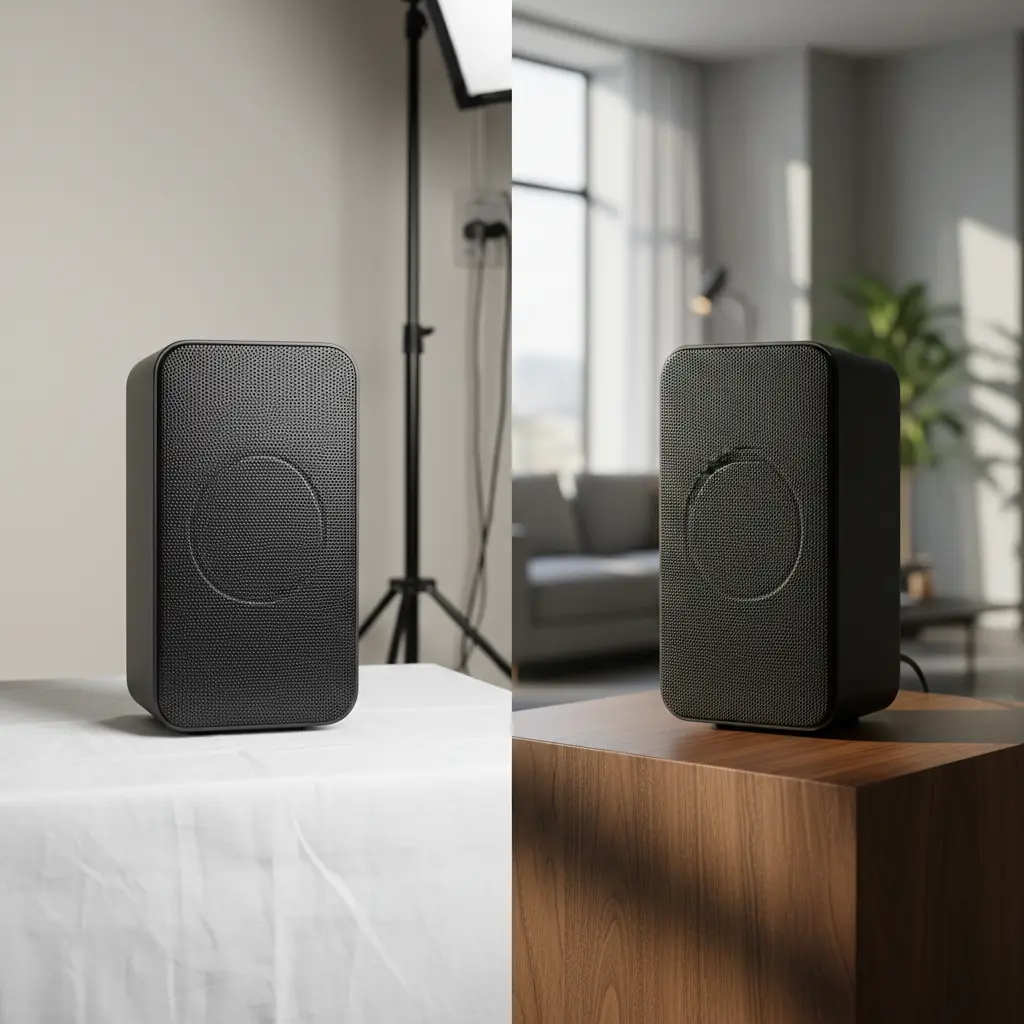
AI ensures product consistency and realism across images by maintaining precise control over product rendering, lighting, and textural details, even when generating images in vastly different scenes or angles. Specialized AI platforms use 3D models or advanced segmentation to ensure the product itself remains accurate and authentic, regardless of the generated environment, overcoming a common challenge with generic image generators.
How to Choose the Right AI Tools for Your Shopify Store
Choosing the right AI tools for your Shopify store involves evaluating their ease of integration, specialization in e-commerce visuals, scalability, and ability to produce consistent, high-quality output. Focus on platforms designed specifically for product imagery rather than general-purpose AI art generators.
What features should a Shopify AI image generator have
A Shopify AI image generator should feature direct Shopify integration for product import and export, template-based generation, easy background and prop customization, consistency controls, and bulk processing capabilities. Look for solutions that simplify the entire workflow, from upload to publishing, like My UGC Studio, which has an official app in the Shopify App Store for seamless integration.
My UGC Studio streamline AI image creation for Shopify
My UGC Studio streamlines AI image creation for Shopify by offering a specialized platform that integrates directly with your store, allowing you to import products and save generated photos/videos back to your listings in one click. It provides curated styles and powerful generation features tailored for e-commerce, ensuring high-quality, consistent results without the need for complex prompt engineering or manual fixes common with general-purpose AI tools.
How to Optimize AI Images for Shopify SEO and Page Speed
Optimizing AI-generated images for Shopify SEO and page speed requires careful attention to file formats, compression, alt text, and structured data to ensure maximum visibility and fast loading times. Beautiful images are only effective if customers can find and load them quickly.
The best practices for image file formats and compression on Shopify
The best practices for image file formats and compression on Shopify involve using modern formats like WebP or AVIF for optimal compression without sacrificing quality, coupled with efficient image resizing to match display dimensions. Shopify automatically optimizes images uploaded to its platform, but starting with well-compressed files further improves performance.
AI images enhance Shopify SEO
AI images can enhance Shopify SEO by enabling the creation of diverse visual content that allows for more relevant alt text and descriptions, ultimately improving image search rankings and overall page authority. Generating a wider variety of visuals also means more opportunities to target specific keywords and user queries through image metadata. This is a critical component of a broader AI-powered content strategy for dropshipping success, as explored in AI-Powered Content Strategy for Dropshipping Success in 2026.
AI Personalize Product Experiences on Shopify
Yes, AI can significantly personalize product experiences on Shopify by dynamically generating or recommending images tailored to individual customer preferences, browsing history, and demographic data. This level of personalization creates a more relevant and engaging shopping journey.
Dynamic AI imagery adapt to individual customer preferences
Dynamic AI imagery can adapt to individual customer preferences by utilizing machine learning algorithms to analyze user behavior and then display product images that match their inferred style, context, or even potential use case. For example, a customer interested in minimalist aesthetics might see products in clean, uncluttered environments, while another might see the same product in a vibrant, lively setting.
The privacy considerations for AI-driven personalization
Privacy considerations for AI-driven personalization include ensuring transparent data collection practices, obtaining explicit user consent, anonymizing data where possible, and adhering strictly to data protection regulations like GDPR and CCPA. Brands must prioritize user trust and data security when implementing personalized visual experiences.
How to Implement an AI Image Workflow for Shopify
Implementing an AI image workflow for Shopify involves a streamlined process from product upload to final publishing, leveraging dedicated AI tools to automate and enhance visual content creation. This systematic approach ensures efficiency and consistent output.
- Install My UGC Studio from Shopify App Store: This connects your store and allows direct product import.
- Upload Product Photos: Provide clear, high-contrast images of your products.
- Select Styles & Prompts: Choose from preset styles or describe your desired background, scene, or model.
- Generate & Review: AI creates multiple image variations. Review and select the best ones.
- Refine (Optional): Make minor adjustments or generate more variations if needed.
- Publish & Sync to Shopify: With one click, push the approved images directly to your product listings.
Teams collaborate effectively using AI image tools for Shopify
Teams can collaborate effectively using AI image tools for Shopify through shared workspaces, version control, and annotation features that allow designers, marketers, and product managers to provide feedback and approve visuals in real-time. This ensures brand consistency and accelerates the content approval process.
Common challenges in AI image workflow implementation
Common challenges in AI image workflow implementation include maintaining brand style consistency across diverse AI outputs, managing large volumes of generated assets, and ensuring seamless integration with existing e-commerce platforms. Overcoming these requires robust tool features and clear internal guidelines.
| Feature | Traditional Photography | AI-Generated Imagery |
|---|---|---|
| Cost per image | High (studio, photographer, models, props) | Low (subscription, per-generation) |
| Time to produce | Weeks (planning, shooting, editing) | Minutes to hours |
| Scalability | Limited, high cost per additional variation | Virtually limitless, easy to scale |
| Consistency | Challenging across multiple shoots | High, precise control over product |
| Customization | Expensive, rigid | Flexible, easy to iterate |
| Localization | Very expensive, complex | Simple, cost-effective |
Next: Next for AI and Shopify Product Pages
The future of AI and Shopify product pages will see even deeper integration, hyper-personalization, interactive 3D models generated from 2D images, and AI-driven predictive content generation. The goal is an increasingly seamless and intelligent visual merchandising experience.
Will AI enable interactive 3D product visualization from 2D images
Yes, AI is rapidly advancing to enable the creation of interactive 3D product visualizations directly from existing 2D product images, allowing customers to rotate, zoom, and even customize products in a virtual space. This immersive experience will significantly enhance online shopping, bridging the gap between physical and digital retail.
Future: AI-driven analytics optimize product image performance
AI-driven analytics will optimize product image performance by analyzing visual engagement metrics, A/B test results, and conversion data to identify which image styles, contexts, or elements drive the most sales and then recommending optimal visual strategies. This data-driven approach allows for continuous improvement and maximizing ROI on visual content. For more insights on leveraging AI for content, explore AI Photoshoot 2026: The Future of E-commerce Product Photography.
Future: AI-powered tools assist in A/B testing product visuals
AI-powered tools will assist in A/B testing product visuals by automatically generating diverse image variations, setting up test parameters, and analyzing performance data to identify the most effective visuals for specific audience segments or marketing goals. This automation will significantly reduce the manual effort and time required for optimization.
How to Avoid Common Pitfalls with AI Product Imagery
Avoiding common pitfalls with AI product imagery requires vigilance regarding authenticity, ethical considerations, and maintaining brand consistency. While AI offers immense potential, it's not a set-it-and-forget-it solution.
The ethical considerations when using AI-generated models or scenes
Ethical considerations when using AI-generated models or scenes include avoiding bias in model representation, ensuring diverse and inclusive visuals, and being transparent if images are synthetic. It's crucial to prevent perpetuating stereotypes or creating unrealistic body standards. For discussions on authentic content, refer to How to Generate UGC Images with AI in 2026: The Ultimate Guide.
Brands maintain authenticity and trust with AI visuals
Brands can maintain authenticity and trust with AI visuals by combining AI-generated content with genuine user-generated content (UGC), clearly communicating when AI is used, and ensuring the AI imagery accurately reflects the product. Transparency and a balanced approach are key to leveraging AI without sacrificing consumer trust. A comprehensive guide on AI UGC Generator for Shopify: Complete 2026 Buyer Guide can provide further insights.
Human oversight crucial in AI product image creation
Human oversight is crucial in AI product image creation to ensure brand alignment, quality control, ethical compliance, and to inject the nuanced creative direction that AI models cannot yet fully replicate. While AI automates generation, a human touch ensures the final output truly resonates with the brand's vision and target audience.