UGC and Why is it Crucial for Small Shopify Brands in 2026
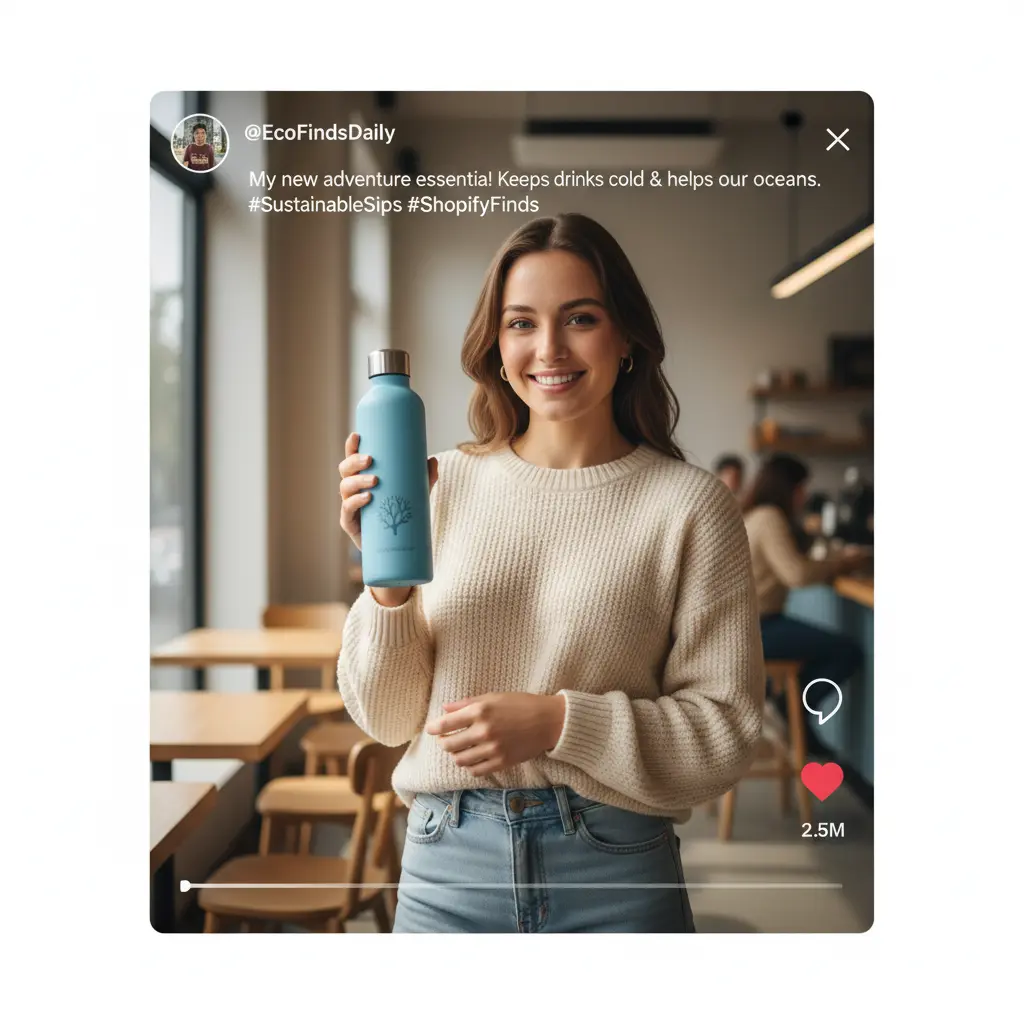
User-Generated Content (UGC) refers to any form of content—images, videos, reviews—created by customers rather than the brand itself. In 2026, UGC is non-negotiable for small Shopify brands because it builds trust, enhances authenticity, and significantly drives conversion rates, especially in a saturated e-commerce market.
Building Trust and Authenticity
UGC inherently builds trust as consumers find content from real people more credible and relatable than polished brand advertisements. Small brands often lack the budget for extensive traditional marketing, making authentic UGC a powerful equalizer.
Boosting Engagement and Conversion Rates
Content featuring real customers interacting with products dramatically increases engagement on social media and product pages. This translates directly into higher conversion rates, as potential buyers see tangible proof of product value and fit. For instance, lifestyle images on product pages can increase conversion by 25-40%.
Cost-Effective Content Solution
Traditional content creation is expensive and time-consuming, whereas modern AI-powered UGC generation offers a highly cost-effective alternative. Small Shopify brands can escape the 'Content Tax,' significantly reducing their content budget, as highlighted in How to Cut Shopify Content Costs by 90% with AI.
Challenges Do Small Shopify Brands Face with UGC Generation
Small Shopify brands often struggle with UGC generation due to limited budgets, time constraints, and the difficulty of consistently sourcing high-quality, relevant content. Traditional methods are simply not scalable for lean teams.
Sourcing Authentic Content Manually
Manually collecting UGC involves outreach, incentive programs, and tracking, which are resource-intensive for small teams. This often results in a sporadic and inconsistent flow of content, making it hard to maintain a fresh social presence or update product listings regularly.
Maintaining Quality and Consistency
Ensuring a consistent visual quality and brand aesthetic across diverse user-submitted content is a significant hurdle. Raw UGC can vary widely in lighting, composition, and relevance, requiring extensive editing or curation that small brands may not have the capacity for.
Legal and Rights Management Complexities
Navigating content rights and permissions for UGC can be a legal minefield for small businesses without dedicated legal teams. Brands must ensure they have proper authorization to use customer content, adding another layer of complexity to the workflow.
AI Streamline UGC Workflows for Shopify
AI can revolutionize UGC workflows for Shopify by automating content generation, ensuring consistent quality, and dramatically reducing both time and cost. Specialized AI platforms can create hyper-realistic lifestyle images from simple product photos, eliminating the need for photoshoots.
Automated Lifestyle Image Generation
AI tools can transform standard product images into dynamic, user-scenario lifestyle photos without actual models or sets. This capability is a game-changer for dropshippers and small brands, as it provides an endless supply of visually compelling content instantly. Generic AI image generators like Midjourney or DALL-E offer creative potential but often require significant prompt tuning and manual fixes for product geometry and consistency, making specialized tools more efficient for e-commerce.
Consistent Brand Aesthetic at Scale
AI ensures that all generated UGC adheres to predefined aesthetic guidelines, maintaining brand consistency across all marketing channels. This eliminates the variability inherent in manual UGC collection, presenting a unified brand image to consumers.
Rapid Content Iteration and A/B Testing
The speed of AI generation allows brands to create multiple variations of UGC for A/B testing, optimizing for higher conversion rates. This iterative process is crucial for understanding what resonates best with specific audience segments and refining ad campaigns.
The 2026 Step-by-Step AI-Powered UGC Workflow for Shopify
Implementing an AI-powered UGC workflow for your Shopify store involves a few simple, automated steps that integrate directly with your product catalog. This streamlined process drastically cuts down on manual effort and accelerates content deployment.
-
Step 1: Install the AI UGC Generator App
Begin by installing a specialized AI UGC generator like My UGC Studio from the Shopify App Store. This direct integration allows seamless import of your existing product catalog. You can learn more about choosing the right tools in the AI UGC Generator for Shopify: Complete 2026 Buyer Guide.
-
Step 2: Select Products and Define Styles
Import your desired products from your Shopify store and select the specific lifestyle styles or scenarios you want for your UGC. My UGC Studio lets you choose from various settings, models, and actions to match your target audience and product use cases.
-
Step 3: Generate and Review Content
Initiate the AI generation process and review the resulting images and videos. The platform will produce high-quality, realistic UGC assets within minutes. This step allows for quick adjustments and selection of the best visuals.
-
Step 4: Publish and Sync to Shopify
With a single click, publish your new AI-generated UGC and sync it directly back to your corresponding Shopify product pages. This automation ensures your listings are always updated with fresh, engaging content, enhancing the shopper experience. The simple My UGC Studio Shopify flow is: 1) Install from the Shopify App Store, 2) Select products and styles, 3) Publish and sync assets.

Measuring Success: KPIs for UGC Content on Shopify
Measuring the impact of UGC involves tracking key performance indicators (KPIs) such as conversion rate, average order value (AOV), customer acquisition cost (CAC), and engagement metrics. These KPIs provide tangible evidence of UGC's effectiveness.
Conversion Rate and Average Order Value (AOV)
Monitor changes in conversion rates on product pages featuring UGC versus those without, and observe any uplift in AOV. Authentic lifestyle images can justify higher price points and encourage more significant purchases. Check out Reduce Customer Acquisition Cost with AI UGC Content in 2026 for more on this.
Customer Acquisition Cost (CAC) Reduction
Effective UGC can significantly lower your Customer Acquisition Cost by increasing ad performance and organic reach. By making ads more relatable and trustworthy, you can achieve better returns on your ad spend.
Social Media Engagement and Reach
Track likes, comments, shares, and overall reach on social platforms where UGC is deployed. High engagement indicates content resonance and boosts brand visibility. This is particularly relevant for platforms like TikTok, as discussed in How to Create High-Converting UGC Video Ads for TikTok in 2026.
Beyond Shopify: Extending UGC to Other Platforms
The UGC generated for Shopify can be repurposed across various other e-commerce and social platforms, maximizing its reach and impact. This multi-channel approach ensures consistent branding and leverages content investment efficiently.
Amazon A+ Content and Listings
AI-generated lifestyle images are ideal for enhancing Amazon product listings and A+ Content, crucial for standing out in a competitive marketplace. On Amazon, you have about 0.2 seconds to capture a click, and compelling visuals significantly improve conversion rates, potentially justifying 20%+ higher prices.
TikTok and Social Media Ad Creatives
UGC-style assets are highly effective for platforms like TikTok, Instagram, and Facebook, where authentic, native-looking content performs best. This helps small brands create viral ad campaigns without needing expensive studio productions, as explored in TikTok Ads 2026: Why AI UGC Converts Better Than Studio Productions.
Comparing Traditional vs. AI-Powered UGC Workflows
An AI-powered UGC workflow offers significant advantages in cost, time, and scalability compared to traditional manual methods. This table highlights the stark differences:
| Feature | Traditional UGC Workflow | AI-Powered UGC Workflow (My UGC Studio) |
|---|---|---|
| Content Sourcing | Manual outreach, contests, incentivization | Automated generation from product images |
| Cost per Asset | High ($50-$500+, including shipping, incentives, editing) | Low (typically <$5 per image/video, subscription-based) |
| Time to Produce | Weeks to months | Minutes to hours |
| Scalability | Limited, labor-intensive | High, easily generate hundreds of assets |
| Consistency | Variable quality and style | High, consistent brand aesthetic enforced by AI |
| Integrations | Manual uploads to Shopify/social | Direct Shopify App Store integration, one-click sync |
“In 2026, the competitive edge for small Shopify brands isn't just about having good products, but about how quickly and authentically they can tell their story through visuals. AI-powered UGC makes this accessible to everyone, not just big brands.”
— E-commerce Industry Analyst
The Future Trends in AI UGC for Small Businesses
The future of AI UGC for small businesses will see even more personalization, advanced video generation, and seamless integration with emerging social commerce platforms. These advancements will further democratize high-quality content creation.
Hyper-Personalized Content
Future AI will allow for even more granular personalization of UGC, tailoring visuals to individual customer segments based on their browsing history or demographics. This creates incredibly relevant and compelling ad experiences.
Advanced Video UGC Generation
Expect significant advancements in AI's ability to generate dynamic, high-quality video UGC, complete with diverse models and complex scenarios. This will be crucial for platforms increasingly dominated by short-form video content. Brands can already start exploring options for UGC content in dropshipping.

Small Shopify Brands Get Started with AI UGC
Small Shopify brands can begin leveraging AI UGC by identifying their most popular products, selecting a robust AI platform like My UGC Studio, and focusing on creating a diverse range of lifestyle assets. The key is to start small, test, and scale what works.
Identify High-Impact Products
Prioritize products that have the highest potential for sales or those needing a boost in visual appeal. Focusing on these items first will provide the most immediate ROI from your AI UGC efforts.
Choose the Right AI Platform
Select an AI UGC platform specifically designed for e-commerce, offering robust Shopify integration, diverse style options, and consistent output quality. My UGC Studio is built for multiple e-commerce models, including dropshipping and fashion brands, providing tailored solutions.
Iterate and Optimize
Continuously experiment with different AI-generated visuals, track their performance, and refine your approach based on data. This iterative optimization ensures your UGC strategy remains effective and contributes to ongoing growth.