Overcoming the Generic Image Problem in Dropshipping
Dropshipping offers a low-barrier entry to ecommerce, but it frequently presents a critical challenge: generic product images. Dropshipping offers a low-barrier entry to ecommerce, but it frequently presents a critical challenge: generic product images. Suppliers often provide basic, sometimes low-quality photos that thousands of other sellers utilize. This visual uniformity makes it difficult to stand out, build a distinct brand identity, or capture customer attention effectively. Shoppers often encounter identical visuals across numerous stores, leading to a perception of low value and a lack of trust. The absence of unique branding directly hinders conversion rates and reduces the effectiveness of paid advertising campaigns. To thrive in a competitive dropshipping market, merchants must move beyond these stock images. Establishing a unique visual presence that differentiates offerings and resonates with the target audience is crucial. This is where AI-powered content generation becomes an indispensable asset, providing a scalable solution to transform basic inputs into compelling visual assets without requiring physical inventory or expensive photoshoots. Many dropshippers overlook the critical impact of unique visuals, relying solely on what the supplier provides. A strong, tailored visual strategy is fundamental for driving sales and creating a memorable brand impression in a crowded online marketplace. For more depth, read our guide on Transforming Generic Dropshipping Images into Branded Visuals with AI.
AI Tools for Elevating Supplier Photos
Modern AI tools empower dropshippers to transform raw supplier photos into high-quality, branded creatives, often in minutes. Modern AI tools empower dropshippers to transform raw supplier photos into high-quality, branded creatives, often in minutes. These advanced platforms employ sophisticated algorithms to remove backgrounds, generate entirely new environments, seamlessly integrate professional models, and even animate static images into dynamic videos. This streamlined process bypasses traditional requirements for physical product samples or costly professional photoshoots, dramatically reducing both time-to-market and operational costs. By simply uploading a supplier's product image, sellers can instantly create a diverse range of visual content tailored for specific marketing channels, from optimized Amazon product pages to engaging TikTok ads. The goal is to generate visuals that appear professionally shot and uniquely branded, helping products stand out against competitors using identical source material. This capability is especially beneficial for rapid product testing and scaling ad campaigns, as numerous creative variations can be produced in mere minutes rather than days or weeks. My UGC Studio, for instance, allows users to upload a clear photo of your product and then generate unique scenes and models around it. The focus remains on making the product the hero while enhancing its context and appeal through AI-driven environmental and lifestyle imagery.
Background Removal and Scene Generation
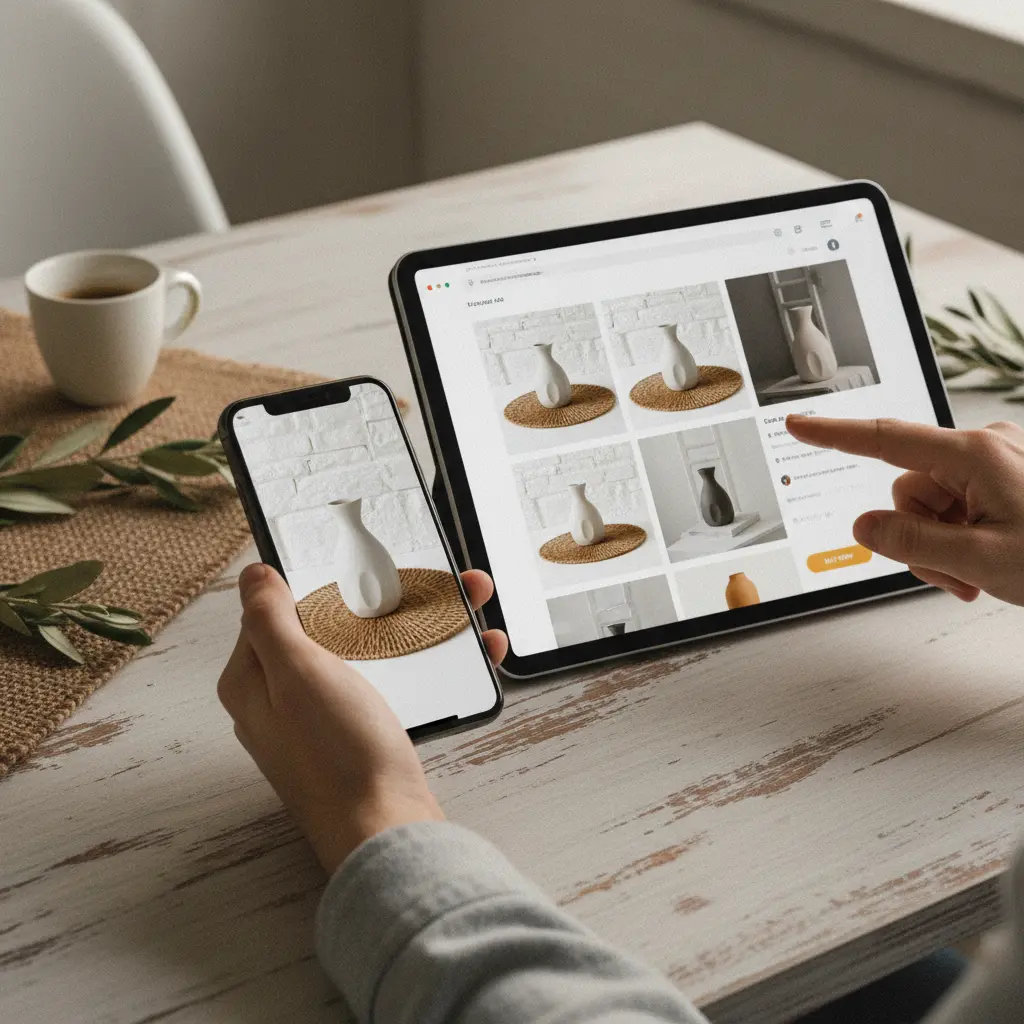
One of the most immediate and impactful benefits of using AI for supplier photos involves removing cluttered or unappealing original backgrounds. One of the most immediate and impactful benefits of using AI for supplier photos involves removing cluttered or unappealing original backgrounds. Once the product is cleanly isolated, AI can place it into a wide array of new, carefully curated environments. These options range from minimalist studio setups emphasizing product features to rich, aspirational lifestyle scenes showcasing the product in its intended use. For a smart home device, AI might place it on a sleek, modern living room shelf, while a premium skincare product could gracefully appear on a pristine marble bathroom counter. This contextualization helps potential buyers visualize the product in their own lives, directly addressing a key limitation of generic product-only shots. Precise control over background elements also allows for brand consistency, ensuring visuals align perfectly with a specific aesthetic or established brand guideline, even when working with varied supplier inputs.
Adding AI Models for Lifestyle Context
Incorporating human elements significantly boosts customer engagement and relatability. Incorporating human elements significantly boosts customer engagement and relatability. AI can seamlessly integrate diverse virtual models into product photos, making a generic item instantly more appealing. For a fitness product, an AI might generate a model actively using it during an intense workout, conveying dynamism and potential results. For apparel items, models can expertly showcase fit, drape, and overall style. This approach eliminates logistical challenges and costs associated with traditional model photography, including casting, scheduling, and studio fees. The ability to select different models-by age, ethnicity, or style-also supports targeted marketing and localization efforts, allowing brands to represent their diverse customer base more accurately. This functionality bridges the gap between basic product shots and aspirational lifestyle imagery, which is critical for building strong emotional connections with shoppers.
Crafting High-Converting Product Listings
Product listings on popular platforms like Shopify, Amazon, and eBay demand a precise and strategic visual approach. Product listings on popular platforms like Shopify, Amazon, and eBay demand a precise and strategic visual approach. While supplier photos often provide basic, product-only shots, these typically require significant augmentation to drive conversions effectively. AI allows for the rapid creation of a full suite of listing images: clean white background shots (often a mandatory requirement), detailed close-ups emphasizing features, clear scale images, and compelling lifestyle photos. Success lies in achieving both variety and clarity across all visuals. For Amazon listings, specific image requirements are stringent, making AI invaluable for quickly generating compliant and compelling visuals that meet marketplace standards. On Shopify, high-quality images directly impact perceived brand value, customer trust, and ultimately, sales. An efficient AI workflow enables dropshippers to generate images that not only meet stringent platform guidelines but also narrate a cohesive story about the product. This includes creating comparison images, highlighting key features, and visualizing user benefits that extend far beyond what a typical supplier provides. Explore more on this topic in our guide on How to Create Shopify Product Page Images with AI That Increase Conversion Rate.
| Use Case | Best Creative Approach with AI | What To Avoid |
|---|---|---|
| Shopify Product Page | Diverse lifestyle images, feature infographics, clear product shots. | Relying solely on white-background product shots. |
| Amazon Main Listing | Pure white background, high-resolution product-only image. | Cluttered backgrounds, watermarks, busy scenes for main image. |
| Amazon Secondary Images | Lifestyle shots, scale images, infographics, comparison charts. | Low-resolution images, images that violate Amazon's guidelines. |
| TikTok/Reels Ads | Short animated videos from static images, trending models, engaging text overlays. | Still images with generic music, lengthy videos without clear hooks. |
| Pinterest Catalog | Aspirational lifestyle pins, product in context, diverse models. | Single product shots, low-quality or inconsistent branding. |
| Localized Marketing (e.g., EU) | Culturally relevant scenes, local models, subtle aesthetic adjustments. | Generic global creatives, visuals that do not resonate locally. |
| New Product Launch (Fast Test) | Batch-generate 10-20 creative variations for A/B testing. | Delaying launch for traditional photoshoots, limited creative options. |
| Email Marketing | Curated lifestyle images, before/after shots, UGC-style creatives. | Text-heavy emails without strong visual support, repetitive images. |
Optimizing Visuals for Amazon and eBay
Amazon and eBay represent highly competitive online marketplaces. Amazon and eBay represent highly competitive online marketplaces. Product images must be meticulously optimized for search visibility, conversion rates, and strict adherence to platform rules. For Amazon, the primary product image should ideally be a clear, product-only shot on a pure white background, but subsequent images can effectively feature lifestyle scenarios, informative infographics, or comparative visuals. AI significantly aids in generating these diverse variations swiftly and efficiently. For eBay, where sellers often have less direct control over listing templates, unique and enhanced images can differentiate a product even more powerfully. Instead of simply reposting generic supplier photos, dropshippers can leverage AI to add distinct branding elements, create appealing lifestyle scenes, or highlight unique selling propositions that set their products apart. This provides a substantial competitive advantage over rivals who rely solely on unenhanced, generic visuals. Our article on eBay Listing Images with AI: How to Refresh Marketplace Creatives Without a Photoshoot offers deeper insights into these strategies.
Image-to-Video Workflows for Dropshippers
Converting static product images into short, engaging videos is a transformative capability for social media marketing strategies. Converting static product images into short, engaging videos is a transformative capability for social media marketing strategies. AI platforms can take a single supplier photo and quickly generate a variety of video formats, including brief product demonstrations, animated lifestyle scenes, or quick product showcases designed for maximum impact. This is particularly useful for platforms where video content overwhelmingly dominates user feeds and engagement. For instance, a dropshipper selling a portable blender could use an AI to turn a static product shot into a compelling 15-second video clip showing the blender in effortless action, perfectly mixing a healthy smoothie. These AI-generated videos are not only significantly more engaging than still images but also convey product benefits and features far more effectively. The remarkable speed and cost-efficiency of AI-driven video generation allow dropshippers to maintain a consistent flow of fresh, high-quality content, a crucial factor for staying relevant and competitive on today's fast-paced digital platforms. My UGC Studio even allows you to instantly turn a static photo into a viral video with minimal effort. This process streamlines content creation for platforms that demand video-first strategies, making it easier for dropshippers to compete with larger brands.

Localization and Diverse Creative Batches
Successfully reaching global markets requires more than just translating text; it demands genuinely localized content. Successfully reaching global markets requires more than just translating text; it demands genuinely localized content. Product visuals need to intrinsically resonate with the cultural preferences, aesthetic standards, and demographic nuances of different regions. AI provides dropshippers with the ability to generate culturally appropriate versions of product images and videos from a single source photo. This means placing products in authentic, culturally relevant settings, utilizing models that accurately reflect local demographics, and even subtly adjusting lighting or overall mood to align with specific regional tastes. For instance, a home decor item might be elegantly displayed in a minimalist Nordic-style living room for a European audience, but presented in a warmer, more vibrant, family-oriented setting for a Latin American market. This level of precise customization, which has traditionally been prohibitively expensive and time-consuming, becomes scalable and highly efficient with AI, allowing dropshippers to expand into new international markets with relevant, high-impact visuals that truly connect with local consumers. Learn more about localizing creatives in How to Localize Ecommerce Product Creatives for Global Markets with AI.
Practical Scenarios for Dropshipping Visuals
Dropshipping success hinges on efficient content creation that adapts seamlessly to various sales channels and marketing needs. Dropshipping success hinges on efficient content creation that adapts seamlessly to various sales channels and marketing needs. Here are six practical scenarios demonstrating how AI transforms basic supplier photos into high-impact assets, driving engagement and conversions:
- Shopify Product Page Refresh:
- Situation: You are launching a new fitness tracker and only have a basic product-on-white photo from the supplier.
- Recommended Creative Approach: Use AI to generate a series of dynamic lifestyle images showing diverse models wearing the tracker during different activities (running, yoga, sleeping). Also, create an infographic-style image clearly highlighting key features with concise text overlays.
- Alternative Option: Use a simple product mockup generator, but this lacks the realism, diverse representation, and dynamic scenes AI offers.
- What to Avoid: Populating your entire Product Detail Page with only white-background shots. Customers need context and inspiration to make a purchase decision.
- Explanation: Aspirational lifestyle photos on a Shopify product page effectively build desire and visually demonstrate the product's benefits, directly influencing conversion rates.
- Amazon Listing Image Update:
- Situation: Your current Amazon listing for a popular kitchen gadget uses bland, uninspiring supplier photos, leading to suboptimal click-through rates.
- Recommended Creative Approach: Generate a pure white background main image for strict platform compliance, then use AI to create 5-7 compelling supporting images. Include aspirational lifestyle shots of the gadget in a modern kitchen setting, sharp close-ups highlighting unique features, and a clear comparative image showing usage benefits over an older model.
- Alternative Option: Rely on customer reviews for images, which is inconsistent and uncontrolled.
- What to Avoid: Directly using supplier images that show competitors' branding or are low-resolution.
- Explanation: Diversified, high-quality images satisfy Amazon's strict requirements while enhancing customer perception and decision-making, improving conversion.
- eBay Listing Revamp without Photoshoot:
- Situation: You want to differentiate your eBay listing for a generic phone accessory but cannot invest in a professional photoshoot.
- Recommended Creative Approach: Employ AI to place the phone accessory in several realistic, diverse settings, such as a professional office desk, a casual coffee shop, or a cozy home environment. Generate images that suggest different user demographics.
- Alternative Option: Use basic stock photos, which will not feature your specific product and can appear disconnected.
- What to Avoid: Listing the product with only one or two poor-quality photos, especially if they are identical to competitors.
- Explanation: Unique and aspirational lifestyle imagery on eBay helps your product stand out in a crowded marketplace, signaling quality and attention to detail, even without physical samples. Find more tips in our article about eBay Listing Images with AI.
- TikTok Short-Form Ad Test:
- Situation: You need to test multiple ad creatives for a trending dropshipping product (e.g., a portable mini-projector) to see what resonates best with a young audience.
- Recommended Creative Approach: Utilize AI's image-to-video capability to transform a static supplier photo into 3-5 distinct 15-second video clips. Each video should feature different virtual models, trending music, and text overlays highlighting various use cases (e.g., outdoor movie night, bedroom entertainment, gaming setup).
- Alternative Option: Create simple slideshows with text in a video editor, which often lack the dynamic engagement of AI-generated content.
- What to Avoid: Launching ads with only static images or generic templates, as they perform poorly on TikTok.
- Explanation: AI allows for rapid iteration of video creatives, enabling quick A/B testing to identify high-performing ad variations tailored for short-form video platforms. See more on Transforming Product Photos into High-Converting TikTok Video Ads.
- Pinterest Creative Batch for Catalog:
- Situation: You are building a Pinterest catalog for a new line of minimalist home decor items and need visually appealing, cohesive pins.
- Recommended Creative Approach: Take a single product image and use AI to generate 8-10 lifestyle pins. Each pin should feature the product in a different styled room-e.g., a living room, bedroom, and home office-all adhering to a consistent minimalist aesthetic.
- Alternative Option: Manually searching for stock photos that match your aesthetic, which is time-consuming and may not feature your exact product.
- What to Avoid: Using inconsistent or off-brand imagery that disrupts the visual flow of your Pinterest boards.
- Explanation: AI-generated lifestyle images create a cohesive and aspirational visual narrative across your Pinterest catalog, driving discovery and inspiring purchases. Our Pinterest Product Creative Workflow offers detailed steps.
- Localization Rollout for EU Market:
- Situation: You are expanding a personal care product (e.g., organic shampoo) into the German and French markets and need culturally relevant visuals.
- Recommended Creative Approach: Start with the original supplier photo. Use AI to generate distinct lifestyle scenes for each country, featuring virtual models that reflect local demographics. For Germany, place the product in a clean, modern bathroom with an emphasis on efficacy. For France, use a slightly softer, more elegant aesthetic, highlighting natural ingredients.
- Alternative Option: Generic visuals that might not resonate with cultural nuances, potentially leading to lower engagement.
- What to Avoid: Direct translation of ad copy without adapting visuals; this can seem impersonal or even culturally inappropriate.
- Explanation: Tailored localized visuals enhance trust and relatability with specific geographic audiences, making marketing efforts significantly more effective in international markets. For broader context, visit the My UGC Studio blog.