Why Video Dominates Short-Form Social Advertising
Today's consumers navigate social feeds at a rapid pace, making immediate visual impact essential for capturing attention. Today's consumers navigate social feeds at a rapid pace, making immediate visual impact essential for capturing attention. While static images are fundamental for product detail pages, they often lack the dynamic appeal necessary for platforms like TikTok. Video content, particularly short-form, excels at engaging viewers quickly, communicating product benefits, and driving action. An animated product can highlight intricate details, demonstrate usage, and create a sense of movement that static visuals cannot achieve. In the current digital landscape, 'over-produced' advertisements often fail to resonate; instead, the 'Native Loop' approach thrives, where AI-generated UGC mimics trusted social recommendations and can convert five times better than glossy studio ads.
For many ecommerce businesses, from dropshippers to established brands managing extensive product catalogs, traditional video shoots for every item are both financially and logistically prohibitive. Converting existing product images into video directly addresses this challenge, democratizing dynamic content creation and allowing brands of all sizes to compete effectively on visually-driven platforms. The goal is to produce video that feels authentic to the platform, seamlessly blending with organic user-generated content rather than interrupting the scroll with obvious commercial messaging.
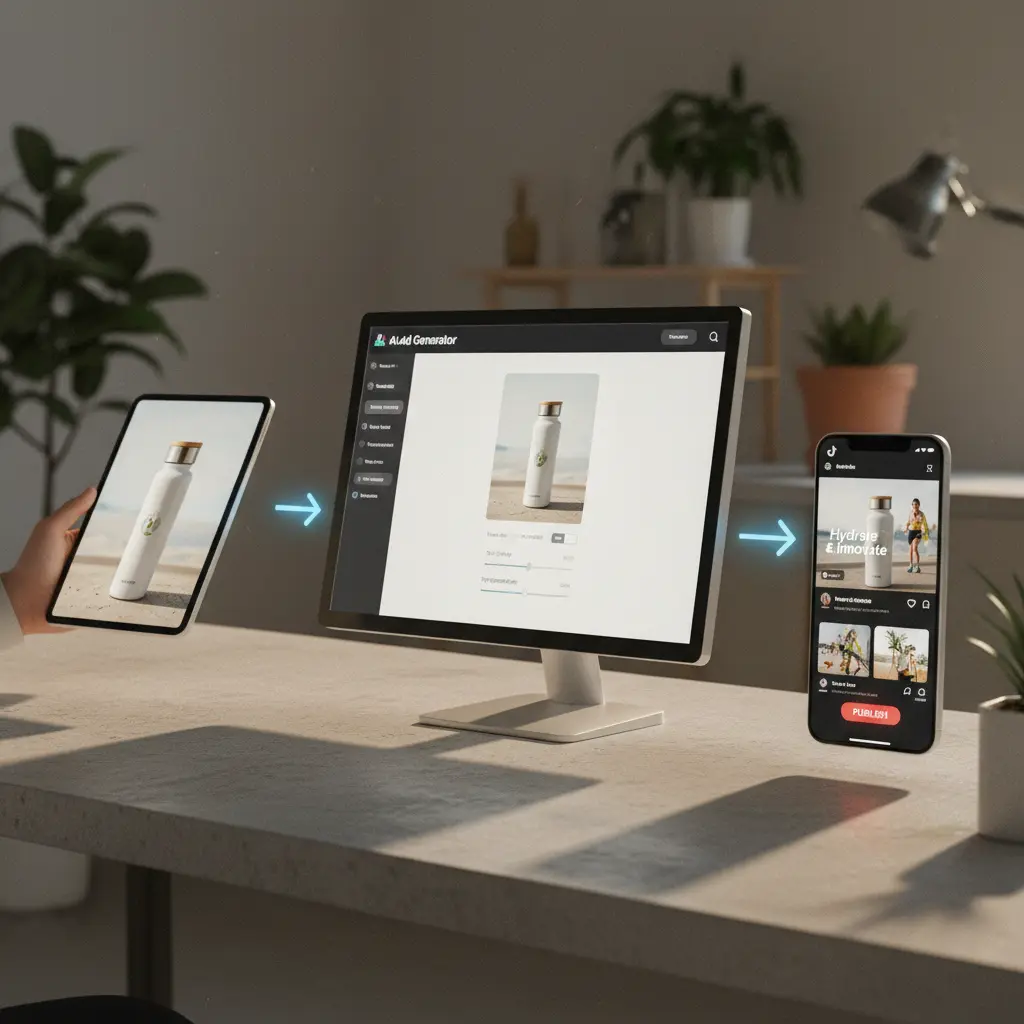
Leveraging AI to Animate Static Product Visuals
Specialized AI platforms now enable ecommerce teams to transform static product images into engaging video clips within minutes. Specialized AI platforms now enable ecommerce teams to transform static product images into engaging video clips within minutes. These tools typically offer features such as intelligent background removal, diverse scene generation, seamless model integration, and subtle animation effects, all specifically tailored for retail products. The core process involves uploading a product image and then using AI to either animate the product itself or place it within various dynamic environments. For instance, a simple click on a play icon can instantly turn a static photo into a viral video for TikTok or Reels, significantly increasing customer attention and ad click-through rates.
Imagine a brand selling stylish sunglasses. Instead of a flat product shot, an AI tool could animate the glasses gently turning, reflecting light, and being worn by an AI model in a sunny, vibrant outdoor setting. This transforms a basic visual into an immersive micro-story that highlights the product's appeal. For further insights into automated video creation, explore guides like How to Turn Product Images into TikTok, Reels, and PDP Videos with AI. These platforms substantially reduce the reliance on expensive videography equipment, studio bookings, and human talent, making high-quality video production accessible for routine ad creative generation and testing.
Crafting Compelling Narratives for Short-Form Video
Even when beginning with static images, an effective TikTok ad requires a clear narrative to captivate viewers. Even when beginning with static images, an effective TikTok ad requires a clear narrative to captivate viewers. The objective is to communicate a product's key benefit or highlight a crucial feature within seconds. AI tools assist in constructing these narratives by: situating the product within relevant contexts (e.g., a handbag carried through a bustling city market), adding subtle animations (e.g., a piece of jewelry sparkling under light), or creating visually engaging before-and-after comparisons. The brevity of the format demands strong hooks and unequivocal calls to action.
For example, an ad for a new protein supplement could start with an image depicting low energy, then use AI animation to transition to someone using the product, culminating in a visual of vitality and strength. Each visual segment builds a micro-story of transformation or enhancement. Focus on delivering one impactful message per ad, avoiding the temptation to overcrowd a short video with too many features. The most effective TikTok ads often employ a 'native loop' structure, where the ad seamlessly integrates into the platform's organic content stream, encouraging viewer engagement rather than presenting as an overt sales pitch. Detailed strategies for such content are available in UGC Video Ads for TikTok in 2026: Master Hooks, Angles & Creative Matrix.
Optimizing for TikTok: Length, Aspect, and Sound
TikTok is designed for brief, vertical video content. TikTok is designed for brief, vertical video content. Most successful ad creatives typically range from 15-30 seconds, though even more concise 5-10 second clips can perform exceptionally well if they deliver an immediate impact. The aspect ratio is paramount: prioritize 9:16 (vertical) to occupy the entire screen and provide an immersive viewing experience. Horizontal videos appear with distracting black bars, significantly reducing their effectiveness and professional appeal.
When converting images to video, select AI tools that directly output in the vertical format. Pay close attention to pacing; rapid cuts between animated product shots or contextual scenes maintain viewer engagement. Text overlays, a popular feature on TikTok, should be succinct, legible, and add context or a clear call to action without cluttering the visual field. Music and trending audio are fundamental to TikTok's cultural landscape; selecting sounds that align with current trends can substantially enhance an ad's reach and potential for virality. Testing various audio tracks and observing audience reactions is a critical step in optimization.
Real-World Scenarios for AI-Powered TikTok Ad Creation
Converting product images into dynamic TikTok ads is a versatile strategy applicable across numerous ecommerce situations. Converting product images into dynamic TikTok ads is a versatile strategy applicable across numerous ecommerce situations. These scenarios highlight how businesses can efficiently generate engaging video content without traditional production hurdles.
- Shopify Product Page Launch: When launching a new seasonal collection, quickly animate existing product shots into diverse TikTok creatives. This approach allows for rapid A/B testing of various product angles, backgrounds, and AI models to identify top-performing ads for the new line. What to avoid: Using a single, generic animation for all products. Instead, customize animations to each item's unique features.
- Amazon Listing Refresh: Update existing Amazon product photos by converting them into short, engaging video snippets. These can be used for TikTok campaigns driving traffic to product listings, showcasing dynamic features that static images cannot. What to avoid: Directing users to a non-mobile-optimized landing page. Ensure the link points to a seamless Amazon mobile experience. See more about Amazon visuals in Optimizing Amazon Product Visuals.
- Dropshipping Store Scale: For dropshippers, transform generic supplier images into unique, branded, dynamic TikTok ads. This helps differentiate products, build brand identity, and overcome the perception of generic visuals. What to avoid: Relying solely on raw supplier photos; always enhance them with AI for better branding. Discover more at Transforming Generic Dropshipping Images into Branded Visuals with AI.
- Fashion Brand Campaign: Create a batch of TikTok ads from high-quality fashion photography. Animate models wearing outfits in various AI-generated scenes, allowing for quick testing of different styles and target audiences. What to avoid: Overly complex animations that distract from the garment itself. Focus on natural movement.
- Localization for EU Markets: Adapt standard product images into TikTok ads with culturally relevant AI models and backgrounds for European audiences. This ensures visuals resonate locally without needing costly international photoshoots. What to avoid: Using generic models and scenes across all markets, which can alienate local viewers. More on this in How to Localize Ecommerce Product Creatives for Global Markets with AI.
- Holiday Promotion Push: Rapidly generate themed TikTok video ads for Black Friday, Cyber Monday, or seasonal sales using existing product images. This enables quick iteration and deployment of many creatives to test which ones perform best during high-traffic periods. What to avoid: Starting ad creation too close to the event; pre-plan and test creatives well in advance.
Measuring Performance and Iterating Creatives
Success on TikTok, like any ad platform, hinges on diligent performance measurement and continuous iteration. Success on TikTok, like any ad platform, hinges on diligent performance measurement and continuous iteration. Once you launch AI-generated video ads, track key metrics such as views, engagement rate (likes, comments, shares), click-through rate (CTR), and conversion rate to your product pages. TikTok's ad manager provides robust analytics that allow you to see what resonates with your audience. A lower-than-expected CTR might indicate that your hook isn't strong enough, or the animation isn't captivating. Low conversion rates could point to issues with your landing page or a mismatch between ad creative and product expectation.
Iterative testing is crucial. Use AI tools to generate multiple variations of a single product's video ad-changing backgrounds, models, music, text overlays, or animation styles. A/B test these variations to identify the most effective combinations. For instance, testing an ad with an AI model in a studio setting versus an ad with the product in a lifestyle scene can reveal consumer preferences. Regularly refresh your creatives to combat ad fatigue, especially in fast-paced environments like TikTok. By consistently analyzing data and adapting your creative strategy, you can refine your approach and maximize your return on ad spend.

Seamless Publishing and Scaling Your TikTok Ad Efforts
The efficiency of transforming product images into TikTok ads extends beyond creation to the publishing process itself. The efficiency of transforming product images into TikTok ads extends beyond creation to the publishing process itself. Many advanced AI content platforms offer direct integrations with social media channels like TikTok and YouTube Shorts APIs. This means that once a viral video is generated, it can be launched instantly into the world without the cumbersome process of downloading, transferring, and re-uploading. Users simply connect their social accounts in the platform's settings, streamlining the entire content pipeline.
This direct publishing capability is a game-changer for ecommerce teams aiming for scale. Consider the ability to create hundreds of unique video ads from existing product images and then schedule their distribution across multiple TikTok accounts or campaigns with minimal manual effort. The ROI for this approach is significant. Generating diverse, high-quality video assets for fractions of the cost of traditional photoshoots (e.g., $0.48 per photo versus $2000 for a studio session) allows brands to test more creatives, reach broader audiences, and optimize performance faster. To understand the cost efficiencies, explore the plans available at My UGC Studio pricing page. This enables brands to scale their content velocity, maintaining a fresh and engaging presence on critical short-form video platforms.
Creative Approaches for TikTok Ads
Creative Approaches for TikTok Ads.
| Use Case | Best Creative Approach | What To Avoid |
|---|---|---|
| New Product Launch | Show product in multiple AI-generated lifestyle scenes with trending audio. | Static, single-angle product shots with generic music. |
| Fashion & Apparel | AI models showcasing outfits with dynamic transitions and close-ups on fabric. | Poorly lit images, unnatural model poses. |
| Beauty & Skincare | Before-and-after animations, product application, and texture focus. | Overly retouched or unrealistic results. |
| Home Goods & Decor | Placing products in beautifully designed AI home interiors, highlighting scale and fit. | Cluttered backgrounds, irrelevant settings. |
| Electronics & Gadgets | Highlighting key features with animated text overlays and usage demonstrations. | Text-heavy slides, slow pacing. |
| Food & Beverage | Appetizing close-ups, pouring, mixing, or serving animations. | Low-resolution images, artificial-looking food. |
| Dropshipping Products | Transforming generic supplier images into branded, UGC-style videos. | Using raw, unedited supplier photos. |
| Seasonal Promotions | Rapidly creating themed videos with relevant backgrounds and props. | Missing holiday cues, delayed content deployment. |
| Multilingual Campaigns | Adapting AI models and text overlays for specific regional markets. | One-size-fits-all content for diverse audiences. |