Localized Ad Creatives Critical for Global Expansion in 2026
Localized ad creatives are critical because they foster immediate resonance and trust, directly impacting customer acquisition and retention in new markets. In an increasingly crowded digital landscape, generic ads fail to connect, leading to wasted ad spend and missed opportunities.
Boosting Conversion Rates with Cultural Relevance
Cultural relevance significantly boosts conversion rates by making ads feel native and tailored to the local consumer. When visuals, language, and context align with local norms, audiences are far more likely to engage and convert, moving beyond basic translation to true market immersion. To dive deeper into how AI supports this, explore Multilingual Ecommerce Visuals with AI in 2026.
Building Brand Trust and Authenticity
Building brand trust and authenticity is paramount in global markets, and localized creatives are a key driver. Showing a genuine understanding of local culture communicates respect and reliability, making your brand more relatable and preferred over international competitors.
Overcoming Language Barriers in Visuals
Overcoming language barriers in visuals means more than just translating text; it involves adapting imagery to convey the intended message universally. Visuals can transcend spoken language, but cultural interpretations of colors, gestures, and settings must be carefully considered to avoid miscommunication.
Standing Out in Saturated International Markets
Localized creatives enable brands to stand out in saturated international markets by offering a personalized and relevant experience that generic ads cannot. This targeted approach cuts through the noise, capturing attention and fostering a stronger connection with specific regional audiences.
Defines Effective Localized Creatives
Effective localized creatives are characterized by their deep cultural understanding, visual adaptability, and capacity to resonate authentically with a specific regional audience. They go beyond mere translation, embracing local nuances to create a genuinely native feel.
Visual Storytelling Across Cultures
Visual storytelling across cultures requires careful consideration of universal themes while integrating region-specific elements. A compelling visual narrative for one market may not translate effectively to another without thoughtful adaptation of models, settings, and product usage scenarios.
Demographic and Psychographic Segmentation
Demographic and psychographic segmentation informs effective localized creatives by targeting specific age groups, income levels, interests, and values within a given region. Understanding these segments allows for hyper-tailored messaging and visual styles that speak directly to the target consumer.
Adaptability Beyond Language Translation
Adaptability beyond language translation encompasses adjusting everything from color palettes and seasonal contexts to local fashion trends and social norms. This holistic approach ensures that the ad feels natural and organic within its cultural environment, not simply translated.
Compliance with Local Regulations and Norms
Compliance with local regulations and norms is crucial to avoid legal issues and ensure cultural acceptance. This includes understanding advertising standards, data privacy laws, and local sensitivities regarding imagery or themes, which vary significantly across global markets.
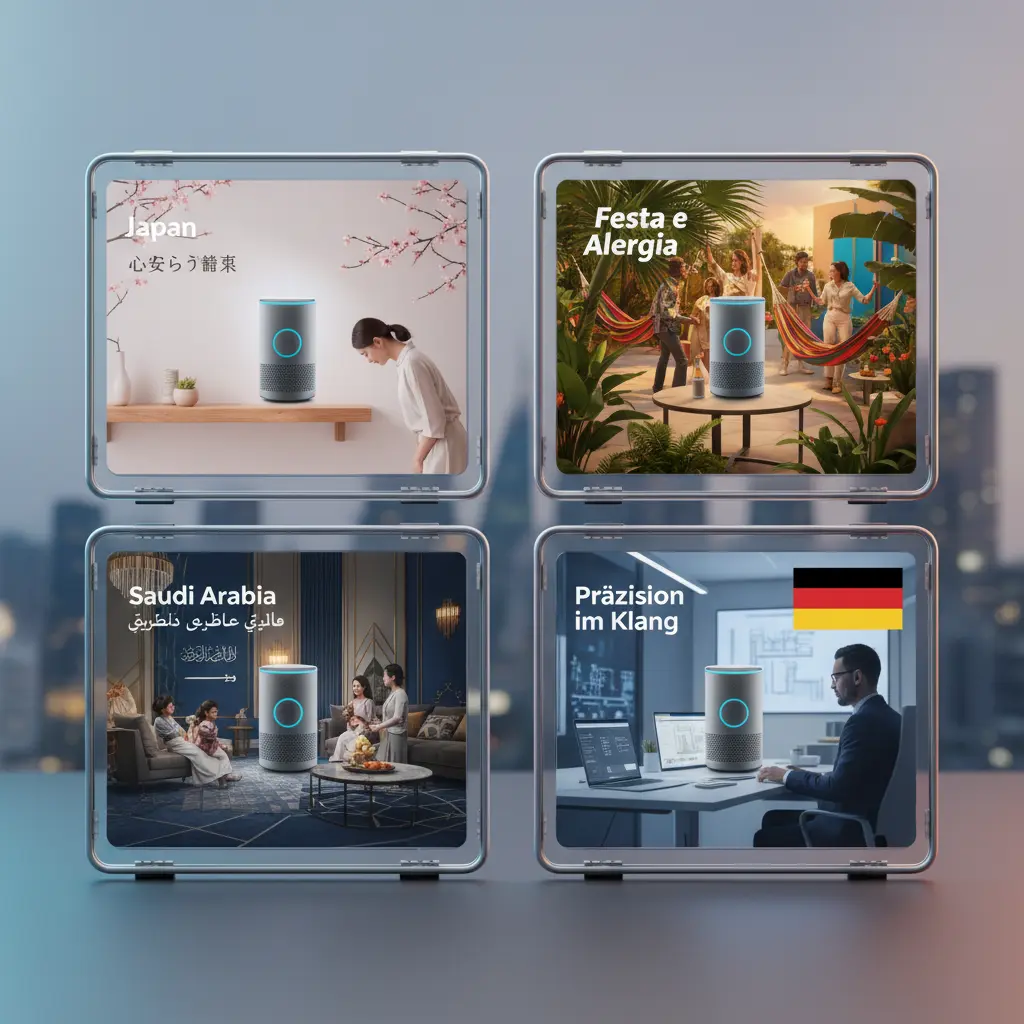
AI Revolutionize Creative Localization Workflows
AI revolutionizes creative localization workflows by automating repetitive tasks, generating culturally nuanced variations at scale, and drastically reducing time-to-market. This efficiency empowers brands to launch highly targeted campaigns faster and more cost-effectively than ever before.
Automating Visual Adaptation with AI Presets
Automating visual adaptation with AI presets allows brands to instantly transform generic product images into market-specific scenes. For instance, My UGC Studio offers localization presets to adapt visuals for specific markets in one click (North America/Europe, Asia, and more), which significantly increases trust and improves conversion in local campaigns.
Accelerating Iteration and Testing Cycles
Accelerating iteration and testing cycles is a major benefit of AI in localization, enabling rapid A/B testing of various creative adaptations. AI-powered tools can generate multiple versions of an ad, allowing marketers to quickly identify which localized elements resonate best with specific audiences. Learn more about this in our guide to AI Creative Testing for Ecommerce Ads in 2026.
Generating Culturally-Relevant Backgrounds and Models
Generating culturally-relevant backgrounds and models with AI transforms generic product shots into immersive, local experiences. While general-purpose AI tools like Midjourney or Stable Diffusion can create diverse elements, achieving ecommerce-ready quality often requires many iterations and manual fixes for product geometry and realism. Specialized platforms like My UGC Studio ensure consistent, high-quality output for your product creatives.
Streamlining Asset Management for Global Campaigns
Streamlining asset management for global campaigns is simplified with AI, which can categorize, tag, and organize localized creatives efficiently. This ensures that the correct, culturally-appropriate assets are deployed to the right markets, preventing errors and improving overall campaign coherence.
Cultural Nuances Impact Visuals in Localized Ads
Cultural nuances significantly impact visuals in localized ads by influencing perceptions of meaning, appropriateness, and appeal. What is acceptable or appealing in one culture can be offensive or irrelevant in another, making deep cultural insight indispensable.
Color Psychology and Regional Interpretations
Color psychology and regional interpretations vary dramatically, impacting how an ad's message is perceived. For example, white can symbolize purity in Western cultures but mourning in some Asian countries, requiring careful consideration in design.
Model Representation and Diversity
Model representation and diversity are crucial for ads to authentically reflect the target audience, enhancing relatability and inclusion. Featuring diverse models that resonate with the local demographic strengthens connection and avoids alienating potential customers.
Setting the Scene: Local Landmarks and Environments
Setting the scene with local landmarks and environments grounds the product in the consumer's everyday reality, making it more tangible and desirable. From specific streetscapes to architectural styles, these details evoke familiarity and local pride.
Symbolism and Gestures Across Borders
Symbolism and gestures across borders must be carefully researched as their meanings can drastically change or even reverse. A thumbs-up, for instance, is positive in many Western countries but offensive in parts of the Middle East and West Africa, necessitating visual review.
"Localization isn't just about language; it's about connecting with hearts and minds by embracing the unique cultural fabric of each market. Ignore it, and you're just making noise."
— Global Marketing Strategist
Choosing the Right Localization Strategy
Choosing the right localization strategy involves assessing market potential, resource availability, and the desired level of cultural immersion. A phased approach often works best, starting with high-impact markets and gradually expanding.
Full Localization vs. Transcreation
Full localization adapts all elements, including visuals, text, and overall messaging, while transcreation focuses on conveying the original message's intent and emotion in a new cultural context. Transcreation is often preferred for creative content where direct translation loses impact.
Prioritizing High-Potential Markets
Prioritizing high-potential markets means focusing resources on regions with the largest addressable audience and highest conversion likelihood. Data on purchasing power, internet penetration, and existing brand awareness guides these strategic decisions.
Utilizing Data for Geo-Targeting Decisions
Utilizing data for geo-targeting decisions ensures ads are shown to the most relevant local audiences. This involves analyzing demographics, interests, past purchasing behavior, and even local events to maximize ad efficiency and impact.
Leveraging User-Generated Content (UGC) for Authenticity
Leveraging User-Generated Content (UGC) for authenticity is a powerful strategy, as local consumers trust content created by their peers more than brand-produced ads. Curating and featuring local UGC can significantly enhance credibility and relatability. For scaling UGC content with AI, read our guide on Scaling Ecommerce Creatives with AI Workflows in 2026.
The Key Steps to Implement Localized Campaigns
The key steps to implement localized campaigns involve thorough market research, strategic content creation, robust distribution, and continuous performance optimization. A systematic approach is vital for success.
- Conduct Comprehensive Market Research: Identify target regions, understand local culture, demographics, consumer behavior, and competitive landscape.
- Develop a Localization Strategy: Define the depth of localization needed (translation vs. transcreation, visual adaptation levels) for each market.
- Utilize AI for Creative Adaptation: Leverage tools like My UGC Studio's presets to generate culturally relevant visuals quickly.
- Review and Validate Content: Have native speakers and cultural experts review all localized creatives for accuracy and appropriateness.
- Implement Geo-Targeted Ad Campaigns: Deploy creatives through platforms like Google Ads, Meta Ads, and TikTok, ensuring precise audience targeting.
- Monitor Performance & Optimize: Track KPIs specific to each localized campaign and use AI-driven insights to refine strategies and improve results.
Market Research and Audience Profiling
Market research and audience profiling lay the groundwork for effective localization by providing deep insights into consumer preferences and cultural sensitivities. This initial phase informs every subsequent creative and targeting decision.
Content Creation and Adaptation Workflow
The content creation and adaptation workflow must be agile and efficient, ideally integrating AI tools for rapid generation and modification of visuals. This ensures that high-quality, localized assets can be produced at the scale required for global campaigns.
Platform Integration and Distribution
Platform integration and distribution involve ensuring localized creatives are properly uploaded, formatted, and delivered across various ad networks and social media channels. This requires understanding platform-specific requirements and leveraging automation where possible.
Continuous Optimization with A/B Testing
Continuous optimization with A/B testing is essential for refining localized campaigns, identifying which creative elements perform best in specific markets. AI can assist in analyzing vast datasets from these tests, providing actionable insights for improvement.

Measuring the Impact of Localized Ads
Measuring the impact of localized ads requires tracking specific KPIs that reflect engagement, conversion, and brand sentiment within each target market. Beyond global averages, granular data is key to understanding success.
Key Performance Indicators (KPIs) for Global Campaigns
Key Performance Indicators (KPIs) for global campaigns include region-specific click-through rates (CTR), conversion rates, customer acquisition cost (CAC), and return on ad spend (ROAS). These metrics provide a clear picture of localized ad effectiveness.
Analyzing Regional Conversion Lift
Analyzing regional conversion lift directly quantifies the added value of localization by comparing performance against generic campaigns or unlocalized benchmarks. A significant lift indicates successful cultural adaptation and improved audience resonance.
Tracking Brand Sentiment and Engagement
Tracking brand sentiment and engagement across different regions provides qualitative insights into how localized ads are perceived. Monitoring comments, shares, and mentions helps gauge cultural acceptance and emotional connection.
Calculating Return on Investment (ROI)
Calculating Return on Investment (ROI) for localized campaigns demonstrates their financial viability and strategic importance. A positive ROI justifies continued investment in tailored creative strategies for global expansion.
Common Challenges and How to Overcome Them
Common challenges in localized advertising include managing vast content volumes, maintaining brand consistency, and navigating complex cultural sensitivities. Overcoming these requires robust strategy, flexible tools, and expert cultural review.
Resource Constraints and Scalability
Resource constraints and scalability issues can be overcome by leveraging AI-powered platforms that automate creative generation and adaptation. Specialized tools like My UGC Studio offer a distinct advantage over generic AI by providing industry-specific features for efficient scaling.
Maintaining Brand Consistency Globally
Maintaining brand consistency globally while localizing requires clear brand guidelines that allow for cultural adaptation within a defined framework. AI tools can help by applying core brand elements consistently across diverse localized creatives.
Navigating Cultural Sensitivities
Navigating cultural sensitivities requires continuous learning, collaboration with local experts, and rigorous pre-launch review processes. What seems innocuous in one market can be deeply offensive in another, making cultural vetting indispensable.
Overcoming Data Silos and Fragmentation
Overcoming data silos and fragmentation involves integrating marketing platforms and analytics tools to create a unified view of global campaign performance. This holistic perspective enables better decision-making and cross-market insights.
The Future of Localized Ad Creatives: Trends for 2026
The future of localized ad creatives in 2026 will be defined by hyper-personalization, real-time AI adaptation, and immersive experiences that seamlessly blend with local contexts. Brands will move towards increasingly dynamic and responsive creative strategies.
Hyper-Personalization at Scale
Hyper-personalization at scale means delivering unique, localized ad creatives to individual users based on their real-time behavior, preferences, and local context. Advanced AI will make this level of customization both feasible and highly effective, driving unprecedented engagement.
Real-time AI-Driven Adaptation
Real-time AI-driven adaptation will allow ad creatives to change dynamically based on immediate local conditions, such as weather, trending local news, or specific events. This ensures maximum relevance and impact at the moment of impression.
Immersive Experiences (AR/VR) for Local Contexts
Immersive experiences using Augmented Reality (AR) and Virtual Reality (VR) will allow consumers to interact with products in localized virtual environments. Imagine trying on virtual clothes in a digital representation of your local street, blending digital with the familiar physical world.
Ethical Considerations in AI Localization
Ethical considerations in AI localization will become increasingly important, focusing on bias detection, data privacy, and ensuring AI-generated content respects cultural authenticity without perpetuating stereotypes. Responsible AI deployment will be key to long-term trust.

| Metric | Generic Creative | Localized Creative | Improvement |
|---|---|---|---|
| Click-Through Rate (CTR) | 1.2% | 2.8% | +133% |
| Conversion Rate (CR) | 0.8% | 1.9% | +137.5% |
| Customer Acquisition Cost (CAC) | $15 | $8 | -46.7% |
| Return on Ad Spend (ROAS) | 2.5x | 4.8x | +92% |