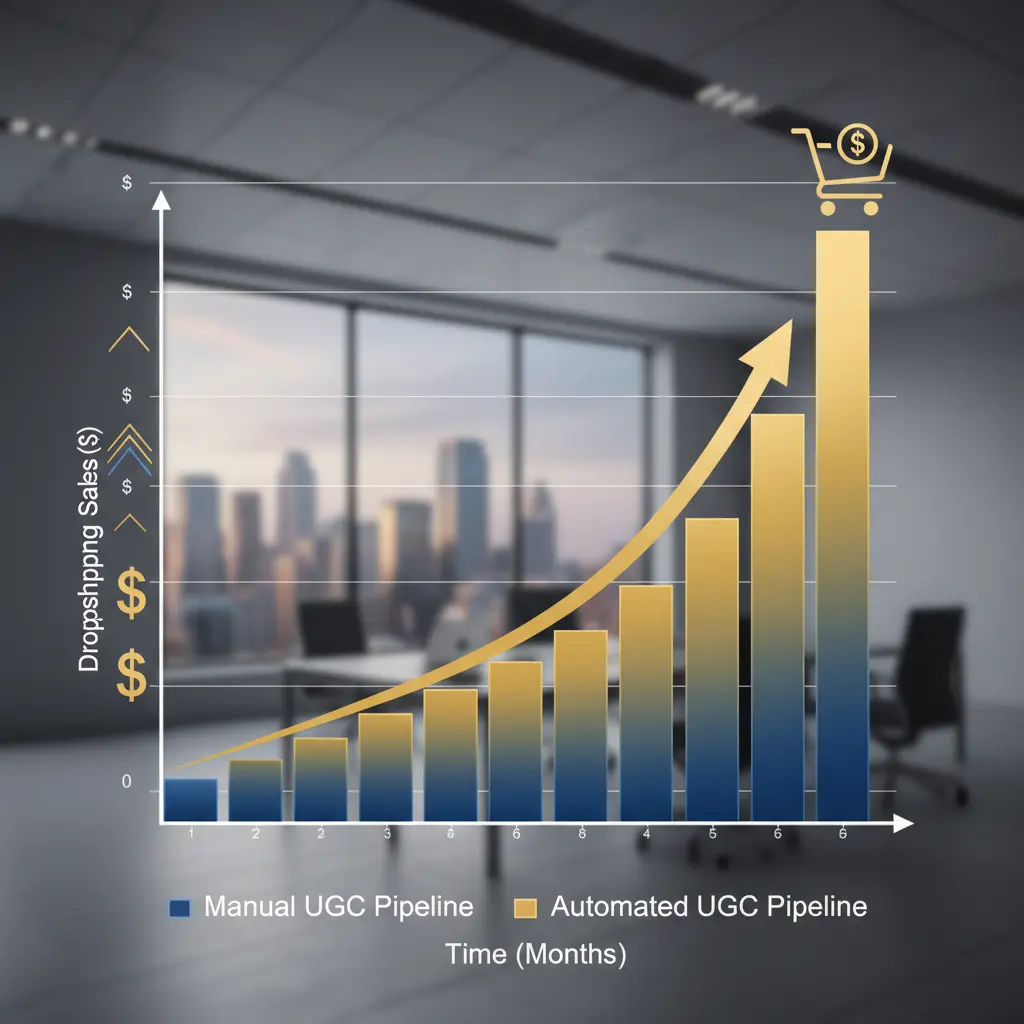
UGC in Dropshipping
User-Generated Content (UGC) in dropshipping refers to any form of content—images, videos, reviews—created by customers or enthusiasts rather than the brand itself, which is then used for marketing and product promotion. This content is highly effective because it builds trust and authenticity, driving significant engagement and conversion rates for dropshipping businesses.
Authenticity as a Conversion Driver
Authenticity is paramount in dropshipping as it fosters trust, which directly translates into higher conversion rates. Consumers are more likely to purchase products shown in real-life scenarios by actual users, rather than polished studio shots that can feel inauthentic. This authentic feel is crucial for capturing attention in crowded online marketplaces.
Types of UGC for Dropshipping
Common types of UGC for dropshipping include unboxing videos, product reviews, lifestyle photos, and social media posts featuring the product in use. Each type offers unique benefits, from detailed explanations in videos to relatable visuals in photos, all contributing to a richer product narrative.
The Manual UGC Pipeline in Detail
A manual UGC pipeline involves directly commissioning individuals to create content, managing communication, and overseeing the entire production process without significant automation. This traditional method requires substantial human effort at every stage, from outreach to final approval.
Identifying Potential Creators
Identifying potential creators manually typically involves searching social media, engaging with existing customers, or working with influencer agencies. This process is often time-consuming, requiring careful vetting to ensure creators align with brand values and product aesthetics.
Negotiation and Briefing
Negotiation and briefing in a manual pipeline involve direct communication to agree on terms, rates, and detailed content requirements. Clear briefs are essential but can still lead to misinterpretations, necessitating multiple rounds of feedback and revision.
Review and Revision Cycles
Manual review and revision cycles can be lengthy, with feedback exchanged back and forth between the brand and the creator. This iterative process, while allowing for personalized adjustments, often delays content deployment and increases operational overhead.
Challenges of Manual UGC Generation
Manual UGC generation faces significant hurdles including high costs, inconsistent quality, and severe limitations in scalability, making it difficult for dropshippers to keep up with content demands. These challenges often negate the benefits of authenticity if not managed effectively.
Time and Resource Intensive
Manual UGC pipelines consume considerable time and human resources, diverting focus from other critical business operations. The effort required for scouting, coordination, and quality control can quickly become a bottleneck for growing dropshipping stores.
Inconsistent Brand Representation
Maintaining consistent brand representation across multiple manual UGC creators is exceptionally challenging due to varying creative interpretations and production standards. This inconsistency can dilute brand messaging and confuse potential customers.
Scalability Limitations
Manual UGC simply cannot scale efficiently to meet the high volume of content required for extensive product lines or aggressive marketing campaigns. Adding more creators linearly increases management complexity, costs, and time, making rapid expansion difficult for dropshippers looking to scale their Shopify brand with AI UGC in 2026.
High Production Costs
The costs associated with manual UGC, including creator fees, product samples, shipping, and administrative overhead, can quickly accumulate and become prohibitive. These expenses often outweigh the returns, especially for dropshippers operating on thin margins.
An Automated UGC Pipeline Work
An automated UGC pipeline leverages artificial intelligence and specialized platforms to generate or adapt user-like content at scale, significantly reducing manual effort and improving efficiency. This system transforms product data and existing assets into diverse, authentic-looking creatives.
AI-Driven Content Generation
AI-driven content generation involves using sophisticated algorithms to create realistic product images and videos based on initial product photos or descriptions. Tools like My UGC Studio can produce variations with different models, settings, and scenarios, mimicking genuine user content without a physical photoshoot. This capability is essential for how to generate UGC images with AI in 2026.
Workflow Automation
Workflow automation streamlines the entire content creation process, from inputting product details to generating output and publishing. This includes automated background removal, subject placement, and contextual scene generation, drastically cutting down on production time.
Integration with E-commerce Platforms
Seamless integration with e-commerce platforms like Shopify allows automated UGC tools to pull product data directly and push new creatives effortlessly to product pages and ad campaigns. This reduces manual uploading and ensures content is always fresh and relevant. For a complete overview, see the AI UGC Generator for Shopify: Complete 2026 Buyer Guide.
The Key Benefits of Automated UGC for Dropshipping
Automated UGC offers dropshippers unprecedented speed, consistent quality, reduced costs, and enhanced testing capabilities, directly contributing to higher conversion rates and efficient ad spending. This efficiency is critical for staying competitive in the fast-paced dropshipping market.
Increased Speed and Efficiency
Automated pipelines generate hundreds of unique content pieces in minutes, allowing dropshippers to rapidly test and deploy creatives. This speed enables quicker adaptation to market trends and faster campaign optimization, which is vital for scaling UGC in dropshipping with AI without wasting ad budget in 2026.
Consistent Quality at Scale
AI-powered automation ensures consistent quality and brand adherence across all generated content, something nearly impossible with manual methods. Every image or video adheres to predefined styles and standards, maintaining a professional and cohesive brand image.
Reduced Costs
Automated UGC significantly lowers content production costs by eliminating the need for paid creators, physical samples, and extensive manual editing. This cost efficiency allows dropshippers to allocate more budget towards advertising and other growth initiatives.
Enhanced A/B Testing Capabilities
The sheer volume and variety of content produced by automated systems enable robust A/B testing of different visuals, ad copy, and product presentations. This data-driven approach helps identify the most effective creatives, maximizing ad ROI and improving dropshipping photo content sales in 2026.
Manual vs. Automated: A Feature Comparison
Automated UGC pipelines decisively outperform manual methods in terms of scalability, cost-efficiency, and consistency, making them the superior choice for modern dropshipping operations. The following table highlights key differences between the two approaches.
| Feature | Manual UGC Pipeline | Automated UGC Pipeline (My UGC Studio) |
|---|---|---|
| Content Volume | Low to Medium (limited by creators) | High to Very High (AI-generated) |
| Speed of Generation | Weeks to Months | Minutes to Hours |
| Cost per Creative | High (creator fees, samples, labor) | Low (subscription-based, minimal labor) |
| Consistency & Quality | Varies Widely (creator-dependent) | High & Consistent (AI-controlled) |
| Scalability | Difficult & Expensive | Highly Scalable & Cost-Effective |
| A/B Testing Potential | Limited (due to volume) | Extensive (high volume of variations) |
| Brand Control | Challenging to maintain | Easy to maintain (template-driven) |
Implementing an Automated UGC Workflow
Implementing an automated UGC workflow involves selecting the right platform, clearly defining content requirements, and iteratively refining outputs to achieve optimal results. This structured approach ensures a smooth transition and maximized benefits.
Choosing the Right Platform
Choosing a specialized AI platform like My UGC Studio is crucial, as it is designed specifically for e-commerce product visuals rather than general image generation. Unlike generic AI tools such as Midjourney or DALL-E, which require extensive prompt engineering and manual fixes for product geometry and realism, My UGC Studio focuses on generating production-ready, consistent product creatives. This distinction is vital for dropshippers, as discussed in My UGC Studio vs. Generic AI: The 2026 Advantage.
Defining Your Content Needs
Clearly defining your content needs involves outlining the types of visuals, target demographics, and specific scenarios you want to portray. This initial planning guides the AI in generating relevant and effective content that resonates with your audience.
Launching and Iterating
Launching your automated content generation and continuously iterating based on performance data is key to success. Follow these steps for an effective workflow:
- Start with a Pilot: Begin by generating a small batch of content for a specific product or campaign.
- Analyze Performance: Monitor conversion rates, click-through rates, and engagement metrics closely.
- Gather Feedback: Use the data to understand what resonates with your audience.
- Adjust Parameters: Refine your content inputs and generation parameters in the AI platform based on insights.
- Scale Up: Once successful, gradually expand your automated content generation across more products and campaigns.

Why AI-Powered UGC Tools Outperform Generic AI
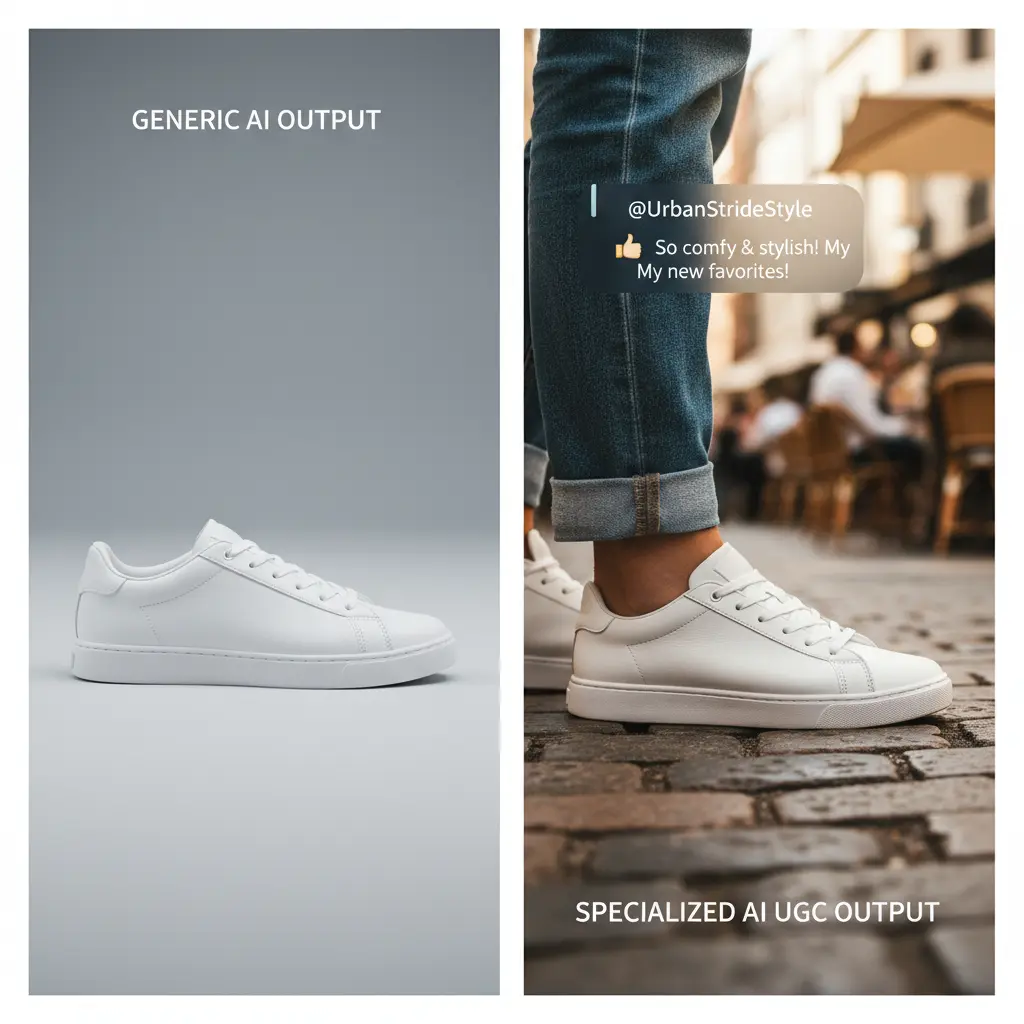
Specialized AI-powered UGC tools like My UGC Studio significantly outperform generic AI models for e-commerce by offering product-specific rendering, consistent output, and a focus on conversion-driving visuals. Generic models are foundational but lack the precision needed for dropshipping product creatives.
Specialized Product Rendering
Specialized tools excel at rendering products with accurate geometry, textures, and lighting, ensuring the visuals are hyper-realistic and appealing. Generic AI, while creative, often struggles with maintaining product integrity and realism across different contexts, making extensive post-processing necessary.
E-commerce Specificity
E-commerce-specific AI solutions are built to understand product context, placement, and common marketing scenarios. This results in content that is immediately usable for product listings and advertisements, unlike generic AI outputs which may require significant manual refinement to meet commercial standards.
Consistency and Iteration
Specialized AI platforms ensure consistency in product appearance across various creative iterations, which is crucial for brand recognition and trust. Generating multiple consistent variations for A/B testing is effortless, a task that is labor-intensive and error-prone with generic AI, where each prompt variation can yield wildly different results.
Real-World Impact: Case Studies
Dropshipping businesses utilizing automated UGC pipelines report significant improvements in conversion rates, reduced ad spend, and faster market penetration. These tangible results underscore the transformative power of AI in content creation.
We switched from hiring individual content creators to using an AI UGC platform, and the difference was staggering. Our ad creative production time dropped by 90%, and we saw a measurable increase in conversion rates on new product launches within the first quarter. The ability to generate hundreds of authentic-looking images quickly allowed us to test more ads and find winners faster.
— Sarah L., Dropshipping Brand Owner
This testimonial exemplifies the immediate and profound impact that a shift to automated UGC can have on a dropshipping business's performance. For more strategies on leveraging AI, explore AI-Powered Content Strategy for Dropshipping Success in 2026.
Automated UGC Right for Your Dropshipping Business
Automated UGC is an ideal solution for dropshipping businesses looking to scale rapidly, reduce content production costs, and maintain a high volume of authentic-looking marketing assets without compromising quality. It's particularly beneficial for those with diverse product catalogs or aggressive advertising goals.
Assessing Your Current Needs
Evaluate your current content pipeline for bottlenecks, high costs, and scalability issues to determine if automation aligns with your strategic objectives. If you're struggling to produce enough fresh content or achieve consistent brand representation, automation is likely a strong fit.
Long-Term Growth Potential
Embracing automated UGC prepares your dropshipping business for sustainable long-term growth by establishing an efficient and scalable content engine. This future-proof approach ensures you can continuously adapt and expand your product offerings and marketing efforts in 2026 and beyond. Read more about UGC Content in Dropshipping 2026: The AI-Powered Advantage for Authenticity & Sales.