Wasting Ad Budget on Dropshipping Content a Problem in 2026
Wasting ad budget in 2026 is a significant problem because competitive dropshipping markets demand exceptional content to capture attention and convert, making inefficient spending a critical drain on profitability. Generic or poorly performing content directly leads to higher customer acquisition costs (CAC) and diminished returns.
The Cost of Irrelevant Content
Irrelevant content fails to resonate with target audiences, resulting in low engagement rates, high bounce rates, and wasted impressions that directly inflate ad spending without generating sales. In 2026, consumers expect personalized and contextually appropriate visuals that speak directly to their needs and desires. For more on this, explore the pivotal role of content in dropshipping sales success.
Inefficient Manual Content Creation
Manual content creation processes are not only time-consuming and expensive but also struggle to keep up with the volume and diversity of content required for effective dropshipping ad campaigns in 2026. This bottleneck often forces dropshippers to reuse limited assets, leading to ad fatigue and decreased performance.
Low Conversion Rates from Generic Visuals
Generic or stock visuals significantly underperform compared to authentic User-Generated Content (UGC) because they lack the trust and relatability that drive consumer purchasing decisions. In an oversaturated market, unique and compelling visuals are non-negotiable for achieving high conversion rates.
AI Revolutionize UGC Creation for Dropshippers
AI revolutionizes UGC creation for dropshippers by enabling the rapid, cost-effective generation of diverse, high-quality, and hyper-personalized visual content that mimics authentic user experiences. This capability allows for unprecedented scaling and optimization of marketing efforts.

Automating Visual Content Production
AI automates visual content production by synthesizing existing product images with AI-generated models, backgrounds, and scenarios, creating countless unique UGC-style visuals without traditional photoshoots. This drastically cuts down on the time and cost associated with acquiring diverse marketing assets. Learn more about how to generate UGC images with AI in 2026.
Hyper-Personalization at Scale
AI allows for hyper-personalization at scale by generating content tailored to specific audience segments, demographics, or even individual user preferences based on data analysis. This level of customization ensures that ads are highly relevant and engaging, increasing the likelihood of conversion.
Enhancing Authenticity and Realism
Advanced AI models in 2026 are capable of producing visuals that are virtually indistinguishable from real photos, effectively enhancing the perceived authenticity and realism of UGC. This high fidelity builds consumer trust, a critical factor for success in dropshipping.
The Key AI Tools for Scaling UGC in Dropshipping
The key AI tools for scaling UGC in dropshipping are specialized platforms like My UGC Studio, which are purpose-built for e-commerce visual content generation, offering superior results compared to general-purpose AI models. These platforms integrate seamlessly into existing workflows, delivering production-ready assets.
Specialized UGC AI Platforms vs. Generic AI
Specialized UGC AI platforms, such as My UGC Studio, offer critical advantages over generic AI models like Midjourney, Stable Diffusion, or DALL-E by providing greater control over product geometry, realistic placement, and consistent branding. While general AI tools can generate impressive images, they often require extensive prompt engineering, numerous iterations, and manual post-processing to meet e-commerce standards for product accuracy and consistency. My UGC Studio, however, is designed to produce ready-to-use product visuals with minimal effort, significantly saving time and cost. For a detailed comparison, see My UGC Studio vs. ChatGPT & Nano Banana: The 2026 Advantage.
| Feature | My UGC Studio (Specialized AI) | Generic AI (e.g., Midjourney, DALL-E) |
|---|---|---|
| Product Geometry Accuracy | Excellent (Purpose-built for e-commerce) | Variable (Often requires manual correction) |
| Realistic Product Placement | High (Integrated background/model blending) | Moderate (Can be challenging to achieve naturally) |
| Brand Consistency | Automated through templates & guidelines | Manual effort, difficult to maintain across outputs |
| Time to Production-Ready Asset | Minutes to hours | Hours to days (due to iteration & post-processing) |
| Cost Efficiency | Very High (Reduced labor, faster output) | Lower if expertise is high, but higher for iterations/fixes |
AI for Image and Video Generation
AI tools specifically designed for image and short video generation can transform basic product photos into dynamic, engaging UGC-style creatives featuring diverse models, settings, and scenarios. These tools are essential for creating scroll-stopping ads for platforms like TikTok and Instagram.
AI for Content Curation and Optimization
AI can analyze content performance data to identify trends, predict what visuals will resonate with specific audiences, and suggest optimal content mixes, significantly streamlining curation and optimization efforts. This data-driven approach ensures that dropshippers are always using their most effective creatives.
An Effective AI-Powered UGC Workflow for Dropshipping Success
An effective AI-powered UGC workflow for dropshipping success involves a structured process from sourcing product data to continuous A/B testing and content distribution, ensuring efficiency and maximizing creative output. This systematic approach enables scalable, high-performing content generation. For a practical guide, see UGC Content for Shopify Dropshippers: A Practical 2026 Workflow Guide.
- Source High-Quality Product Data: Start with clear, well-lit product photos and detailed descriptions. This foundational data is crucial for AI to generate accurate and appealing visuals.
- Define Target Audiences & Scenarios: Use market research to understand your ideal customer segments and the types of UGC scenarios that would appeal to them (e.g., product in use, lifestyle shots, unboxing).
- Generate Diverse UGC Assets with AI: Utilize a specialized platform like My UGC Studio to input your product data and desired scenarios. Generate multiple variations of images and videos, experimenting with different models, backgrounds, and emotional tones.
- Conduct Rigorous A/B Testing: Deploy various AI-generated UGC assets across different ad campaigns and platforms. Track key metrics such as click-through rates (CTR), conversion rates, and ROAS to identify top performers.
- Analyze & Iterate: Use AI-driven analytics to understand why certain creatives perform better. Continuously refine your prompts and generation parameters based on performance data to improve future content.
- Distribute & Manage Content: Integrate your AI-generated UGC into your marketing channels and content management systems. Ensure consistent branding and easy access for campaign deployment.
Sourcing Product Data
High-quality product data, including detailed images and specifications, is the essential raw material for AI to generate realistic and accurate UGC. Without good inputs, even the most advanced AI will struggle to produce compelling outputs.
Generating Diverse UGC Scenarios
AI platforms allow dropshippers to generate a vast array of UGC scenarios, placing products in various lifestyle contexts, with different models, and in diverse geographic locations, overcoming the limitations of traditional photography. This diversity is key to appealing to broad audiences and preventing ad fatigue. You can learn more about AI-powered content strategy for dropshipping success.
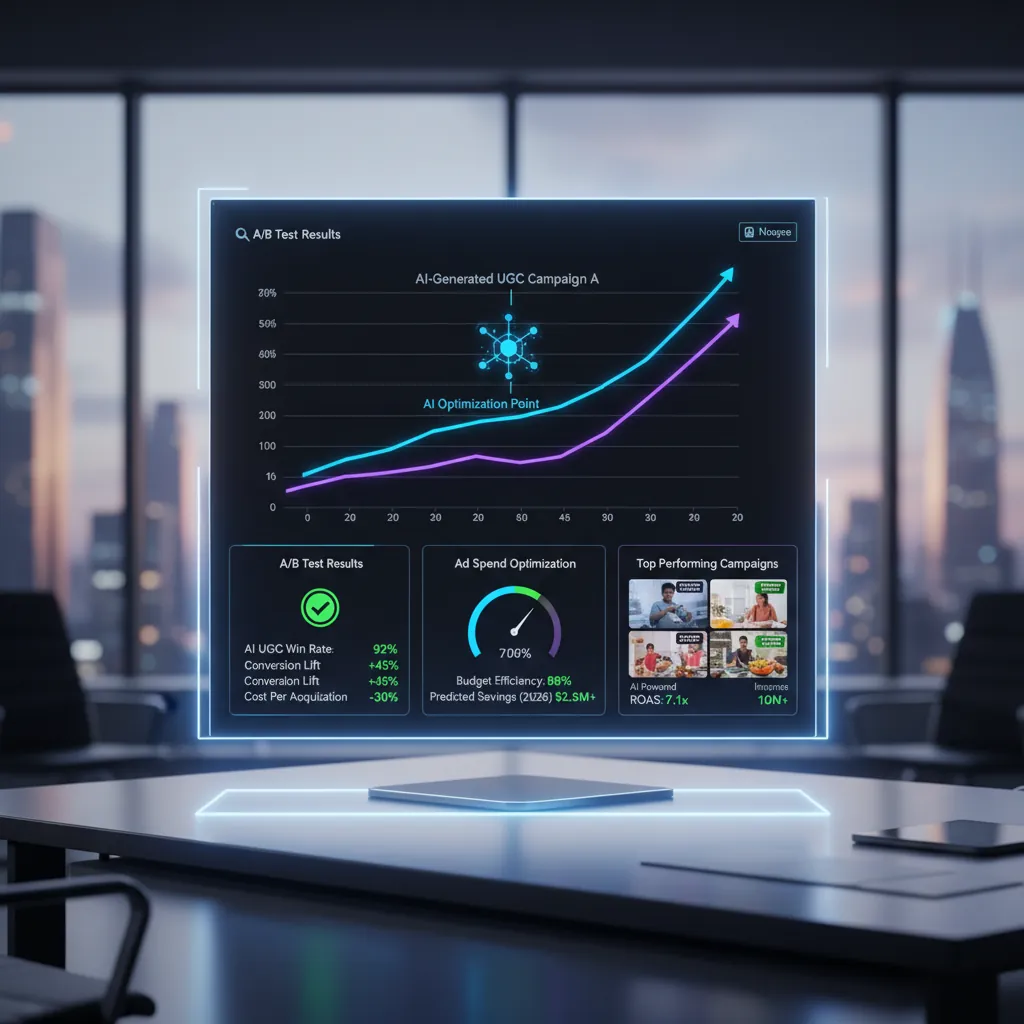
A/B Testing and Iteration
Continuous A/B testing of AI-generated UGC assets is fundamental to identifying which visuals resonate most with specific audiences and optimizing ad spend effectively. AI can even assist in predicting winning creatives by analyzing historical performance data.
Content Distribution and Management
Efficient content distribution and management systems are necessary to deploy AI-generated UGC rapidly across multiple ad platforms and maintain a consistent brand presence. Automation in this phase ensures that fresh, engaging content is always available.
To Maximize ROI and Minimize Ad Spend with AI-Driven UGC
Maximizing ROI and minimizing ad spend with AI-driven UGC is achieved through precision targeting, dynamic creative optimization, and leveraging AI for efficient influencer collaborations. These strategies ensure every ad dollar works harder.
Precision Targeting with AI Analytics
AI analytics enable precision targeting by identifying specific audience segments most likely to convert, allowing dropshippers to serve highly relevant AI-generated UGC to the right people at the right time. This minimizes wasted impressions and improves campaign efficiency.
Dynamic Creative Optimization
Dynamic Creative Optimization (DCO) uses AI to automatically select and display the best-performing UGC variations to different users in real-time, based on their individual preferences and past behavior. This ensures maximum relevance and engagement for every ad view.
Leveraging Micro-Influencers with AI Assistance
AI can identify ideal micro-influencers whose audiences align perfectly with dropshipping products, and then generate tailored UGC for these collaborations, amplifying reach without excessive traditional influencer costs. This approach combines authentic reach with scalable content creation.
The Risks of Not Adopting AI for UGC in Dropshipping
Not adopting AI for UGC in dropshipping in 2026 carries significant risks, including falling behind competitors, experiencing increased ad spend for diminishing returns, and an inability to scale content effectively. These factors can severely hinder growth and profitability.
"In the rapidly evolving e-commerce landscape of 2026, neglecting AI-powered UGC is akin to bringing a knife to a gunfight. Competitors leveraging these tools will simply outpace and outmaneuver those relying on outdated content strategies, making scalable, authentic content a non-negotiable for survival and growth."
Falling Behind Competitors
Competitors who embrace AI-driven UGC will gain a substantial advantage in content quality, volume, and personalization, making it increasingly difficult for dropshippers without AI to compete effectively for customer attention and market share. This is especially true when considering how other brands are already scaling their Shopify brand with AI UGC.
Increased Ad Spend for Diminishing Returns
Without the efficiency and optimization capabilities of AI, dropshippers will likely face escalating ad costs with stagnant or declining conversion rates, leading to a poorer return on investment. Manual processes cannot keep pace with the demand for fresh, high-performing creatives.
Inability to Scale Content Needs
The manual creation of diverse, high-quality UGC simply cannot scale to meet the demands of growing dropshipping operations or the constant need for new ad creatives. AI provides the necessary infrastructure to scale content infinitely and affordably.
The Best Practices for AI-Generated UGC in 2026
Best practices for AI-generated UGC in 2026 include ensuring brand consistency, practicing ethical AI usage and transparent disclosure, and fostering a culture of continuous learning and adaptation. Adhering to these principles maximizes effectiveness and builds trust.
Ensuring Brand Consistency
Maintaining consistent brand messaging, visual style, and product representation across all AI-generated UGC is crucial for building brand recognition and trust. Specialized AI platforms often offer features to define and enforce brand guidelines.
Ethical AI Usage and Disclosure
Ethical AI usage involves transparency with consumers about the use of AI in content creation where appropriate, ensuring fairness in AI model training, and avoiding deceptive practices. Building consumer trust through honesty is paramount.
Continuous Learning and Adaptation
The AI landscape evolves rapidly, so dropshippers must commit to continuous learning, updating their AI tools and strategies, and adapting to new technologies and consumer behaviors to stay ahead. Regular review of AI-generated content performance is essential.
A Successful AI-Powered UGC Case Study Look Like
A dropshipping brand can achieve remarkable success by transitioning from traditional content methods to an AI-powered UGC strategy, demonstrating significant improvements in ad performance and cost efficiency. This transformation highlights the power of modern AI tools.
Before AI: Stagnant Performance
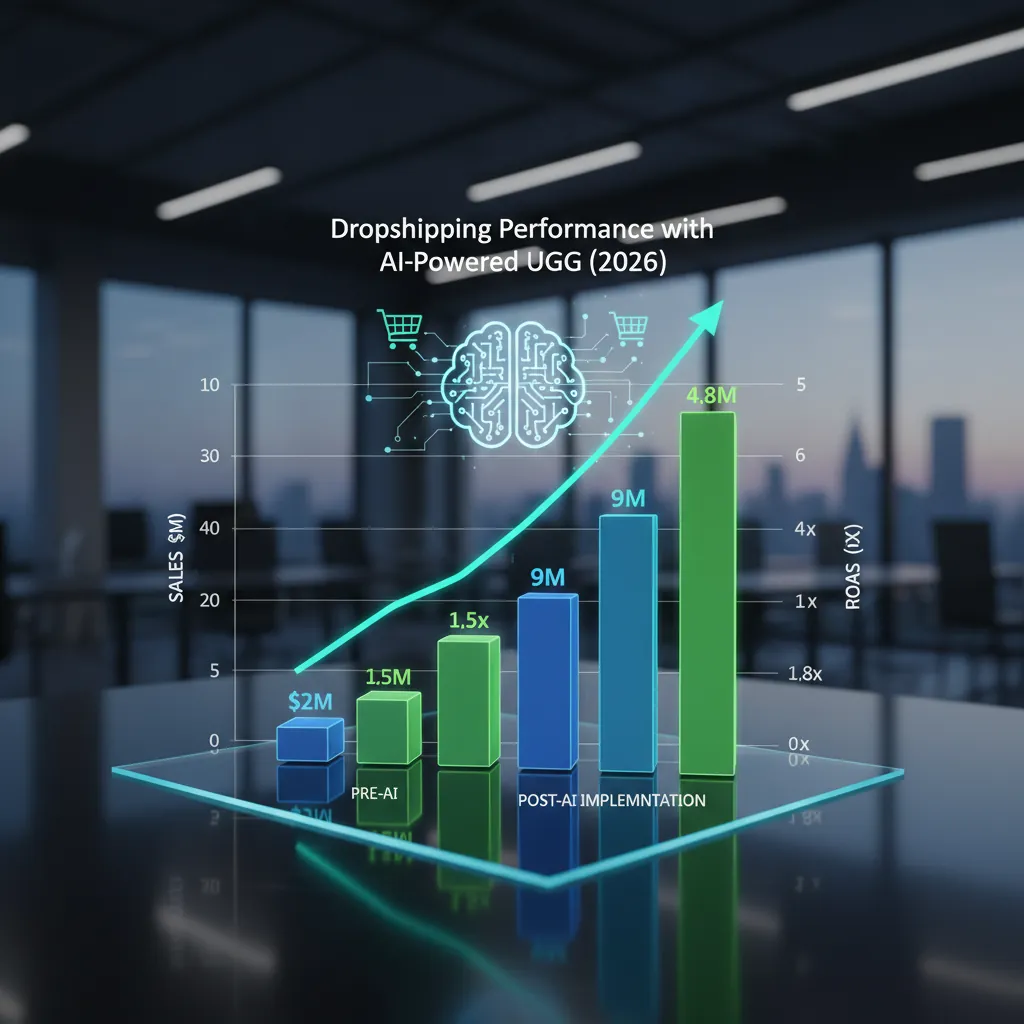
Before integrating AI, many dropshipping brands struggle with stagnant ad performance due to limited content diversity, high production costs, and ad fatigue among their audience. Their ROAS often hovers at break-even or slightly above, leaving little room for growth.
After AI: Exponential Growth and Reduced Costs
After adopting AI platforms like My UGC Studio, brands experience exponential growth, often seeing ROAS increase by 2-materially, while simultaneously reducing content creation costs by up to 90%. The ability to generate thousands of unique, high-performing creatives quickly allows for aggressive scaling and precise targeting.
Key Takeaways
The key takeaways from successful AI-powered UGC implementations are the unparalleled ability to scale content, achieve hyper-personalization, and drastically optimize ad spend through data-driven creative iteration. This paradigm shift is redefining dropshipping marketing.