Why Short-Form Demos Drive Ecommerce Conversion
Short-form video platforms thrive on immediate engagement and authenticity. Short-form video platforms thrive on immediate engagement and authenticity. Traditional polished advertisements often fail here because they feel unnatural within a feed designed for user-generated content. Product demonstrations in this context succeed when they offer visual proof of utility or benefit, quickly answering the unspoken question: "What does this product do for me?" This approach cuts through skepticism, building trust faster than text or static images alone. A compelling visual demonstration can condense complex product features into a digestible, relatable moment, directly influencing conversion rates on channels like TikTok, Instagram Reels, and YouTube Shorts. For ecommerce brands, this means moving away from abstract claims and towards concrete visual evidence of a product's value. Consider integrating AI-generated UGC to create content that resonates natively with social feeds, often converting significantly better than studio-produced ads. Discover how to leverage these platforms effectively by exploring our guide on How to Publish AI Product Videos to YouTube Shorts for Ecommerce.
Direct Application: The "How It Works" Principle
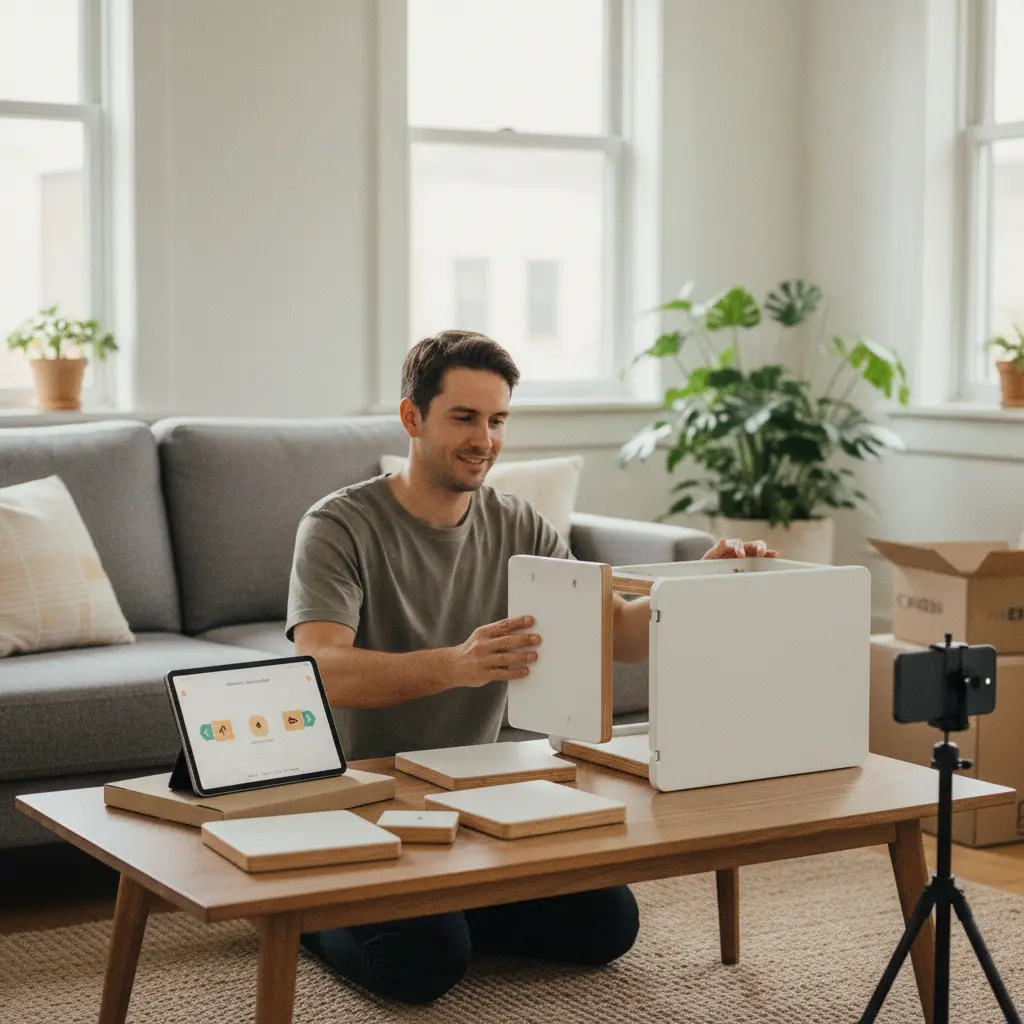
One of the most effective demonstration formats involves showing the product in direct application. One of the most effective demonstration formats involves showing the product in direct application. This means filming the item being used precisely as intended, highlighting its primary function without unnecessary embellishment. For a kitchen gadget, this might mean a rapid sequence of chopping vegetables or blending ingredients. For a beauty product, it could be a quick swipe or dab, revealing instant texture or coverage. The goal is clarity and speed, demonstrating the core benefit within the first few seconds of the video. This format works especially well for functional products where the "how-it-works" aspect is a key selling point. It helps customers visualize themselves using the product, reducing purchase friction and accelerating the path to conversion.
Scenario: Shopify Product Page Refresh
A brand selling a portable espresso maker needs to refresh its Shopify product page with engaging visuals. A brand selling a portable espresso maker needs to refresh its Shopify product page with engaging visuals. The recommended creative approach involves a short video showcasing the product's direct application: quickly brewing a shot of espresso in under 15 seconds. This highlights ease of use and speed. An alternative is to show someone merely enjoying the coffee, which is less direct. What to avoid: a lengthy setup or explaining every button. The focus is on the instant gratification of a fresh brew. See how AI helps in creating high-converting Shopify visuals.
Problem-Solution Demos: Addressing Specific Pain Points
Many products exist to solve a specific problem. Many products exist to solve a specific problem. A demonstration that clearly illustrates a common pain point and then immediately presents the product as the solution is highly effective. This format builds a narrative that resonates with viewers who may be experiencing the same issue. For example, a stain remover ad might start with a visible spill, followed by the product effortlessly eliminating it. Or, a posture corrector might show someone hunched over, then demonstrate how the device immediately improves their stance. The key is to make the problem recognizable and the solution swift and convincing. This format appeals directly to a viewer's need for efficiency and relief, making the product's value proposition undeniable within the limited timeframe of a short-form ad.
Scenario: Amazon Listing Visual Update
An ergonomic pillow brand aims to improve its Amazon listing visuals. An ergonomic pillow brand aims to improve its Amazon listing visuals. The recommended approach is a problem-solution video showing someone struggling to sleep, tossing and turning, then cutting to them sleeping peacefully on the ergonomic pillow. A quick highlight of the pillow's unique shape supporting the neck follows. An alternative is merely showing lifestyle shots of someone asleep. What to avoid: generic stock footage of sleep or an overly dramatic portrayal of the problem that seems insincere. For more on improving visuals, read Elevating Amazon Listing Visuals with AI, No Studio Required.
Before-and-After: Visualizing Product Transformation
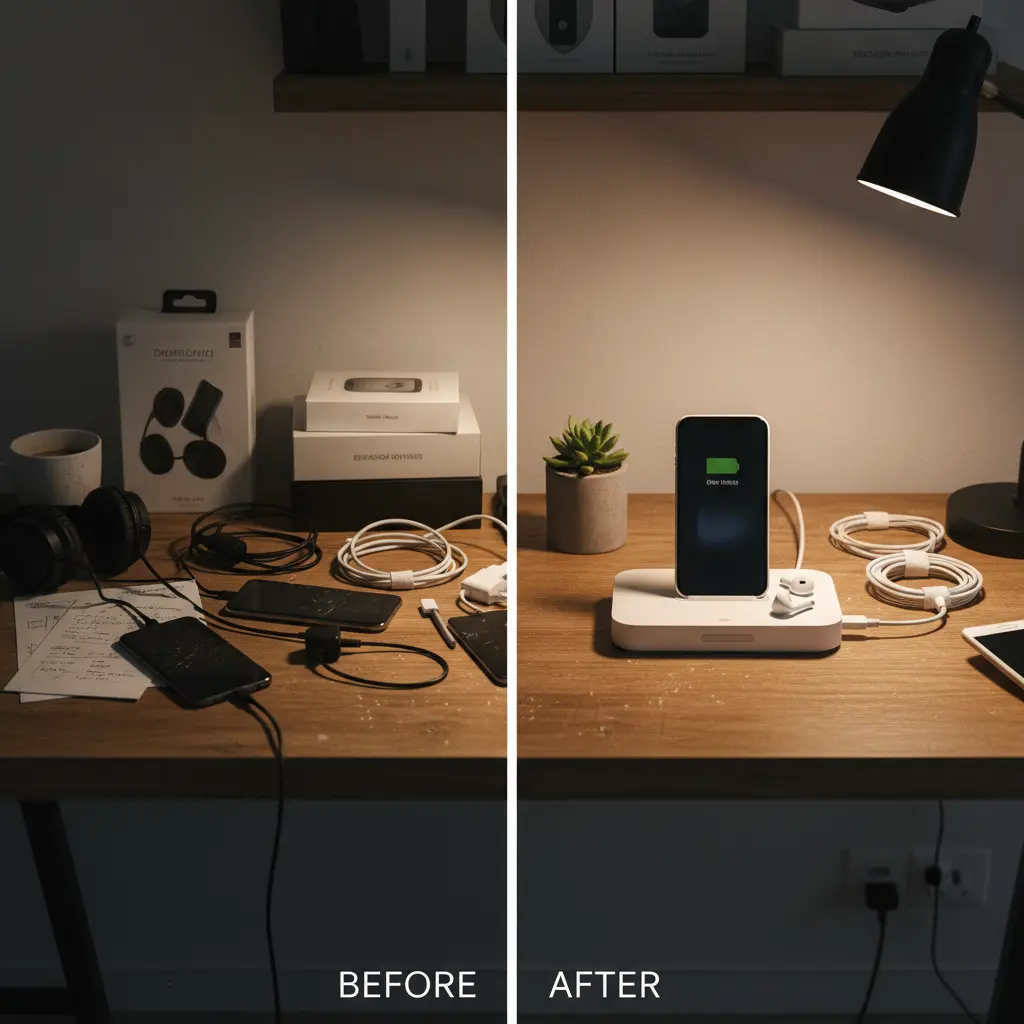
The before-and-after demonstration powerfully illustrates a product's transformative impact. The before-and-after demonstration powerfully illustrates a product's transformative impact. This format is particularly effective for beauty, home improvement, cleaning, and fitness products. It begins by showing a "before" state-a cluttered room, dull skin, or a dirty surface-followed by the application of the product, and then a dramatic "after" shot revealing the improved outcome. The contrast is the crucial element, making the product's effectiveness undeniable and often surprising. For maximum impact in short-form, the transition between "before" and "after" should be quick and visually arresting, often using jump cuts or clever editing to maintain momentum and immediately convey value to the viewer.
Scenario: eBay Listing Revamp Without a Photoshoot
A dropshipper selling a car scratch repair kit wants to refresh eBay listings. A dropshipper selling a car scratch repair kit wants to refresh eBay listings. With no budget for a photoshoot, they leverage AI to generate short video clips. The recommended approach is an AI-generated "before-and-after" demo: a close-up of a noticeable scratch on a car door, then an AI-rendered sequence of the product being applied, followed by a shot of the now-smooth, restored surface. An alternative is using static images of before/after which are less dynamic. What to avoid: AI visuals that look overly fake or do not accurately represent the product's results. Transforming Supplier Photos for High-Impact Dropshipping Launches offers more insights.
Comparison and "Hack" Demos for Engagement
Beyond direct application, two other demonstration formats effectively capture attention and convey value: comparison demos and "hack" or creative use demos. Beyond direct application, two other demonstration formats effectively capture attention and convey value: comparison demos and "hack" or creative use demos. Comparison demonstrations position your product against an older method, a common alternative, or even a competitor to highlight its superior efficiency, results, or ease of use. This directly addresses consumer skepticism by providing clear differentiation. "Hack" demos, conversely, showcase an unexpected, clever, or non-obvious way to use the product, increasing its perceived versatility and encouraging discovery. Both approaches aim to generate a "wow" factor or a moment of realization that drives deeper engagement and shares.
Scenario: TikTok Short-Form Ad Test
A brand launches a new multi-purpose cleaning gel and wants to test creative approaches on TikTok. A brand launches a new multi-purpose cleaning gel and wants to test creative approaches on TikTok. The recommended creative strategy is a "hack" demo video showing an unexpected use case: cleaning stubborn grime from sneaker soles in under 10 seconds. This unexpected application creates immediate curiosity. An alternative would be a standard kitchen counter cleaning demo, which is less engaging. What to avoid: showing too many uses at once, which dilutes the impact of a single, powerful "hack." Learn how to Transform Product Photos into High-Converting TikTok Video Ads.
Unboxing and First Impression: Building Anticipation
The unboxing and first impression format capitalizes on natural curiosity and the desire for a new experience. The unboxing and first impression format capitalizes on natural curiosity and the desire for a new experience. These demos begin with the product in its packaging and follow the user through the process of opening it, revealing the contents, and experiencing the product for the first time. This approach allows brands to showcase premium packaging, highlight included accessories, and demonstrate the initial setup or ease of getting started. For short-form ads, this needs to be highly condensed, focusing on key reveal moments and tactile sensations. It effectively builds anticipation and visually communicates product quality before the item is even fully in use, making it ideal for new product launches or premium goods.
Scenario: Pinterest Creative Batch for a New Gadget
A tech company is preparing for a new smartwatch launch and needs engaging content for Pinterest to build hype. A tech company is preparing for a new smartwatch launch and needs engaging content for Pinterest to build hype. The recommended creative approach is an unboxing demo, broken into short, visually appealing clips. Each clip shows a key reveal: the sleek box, the watch face appearing, and the watch being put on for the first time. This creates a narrative of discovery. An alternative is simply showcasing the watch's features in a static image. What to avoid: a slow, drawn-out unboxing that loses viewer interest. For more creative ideas, see our Pinterest Product Creative Workflow with AI.
Localizing Demos for Global Reach
As ecommerce brands expand internationally, localizing product demonstrations becomes crucial for relevance and conversion. As ecommerce brands expand internationally, localizing product demonstrations becomes crucial for relevance and conversion. A demo that works well in one market may not resonate in another due to cultural nuances, differing usage habits, or language barriers. Effective localization involves tailoring the demo's context, models, text overlays, and voiceovers to specific regions. For example, a cleaning product demo in a European market might feature a different home interior style than one for an Asian market. AI tools can significantly streamline this process by generating diverse backgrounds, virtual models, and multilingual voiceovers, ensuring your demos feel native to each target audience. This strategic approach minimizes friction and builds trust with diverse consumer bases worldwide.
Scenario: Localization Rollout for EU Market
A skincare brand is launching a new serum across various EU markets. A skincare brand is launching a new serum across various EU markets. The recommended creative approach for localized short-form ads is to create country-specific demos. For example, a French ad might feature a model with a subtle, natural look and French text overlays, while a German ad might focus more on scientific benefits with precise German descriptions. An alternative is using a single, generic English demo for all markets, which limits engagement. What to avoid: simply translating text without adapting visual context or cultural cues. Explore how to Localize Ecommerce Product Creatives for Global Markets with AI.
Scaling Demo Production with AI Workflows
Creating numerous high-quality product demonstration videos traditionally requires significant time and resources for photoshoots, models, and editing. Creating numerous high-quality product demonstration videos traditionally requires significant time and resources for photoshoots, models, and editing. AI-powered workflows offer a scalable alternative, allowing ecommerce teams to generate diverse, compelling demos from existing product images. These tools can transform static photos into dynamic video clips, place products in varied virtual environments, add realistic motion effects, and even generate localized content. This approach drastically reduces production costs and turnaround times, enabling rapid iteration and A/B testing of different demo formats to identify what resonates best with specific audiences on platforms like TikTok and Reels. For a detailed guide on this, review our Converting Product Images to Video: An Ecommerce Workflow Guide.
| Demo Format | Primary Benefit | Best For | Platform Fit |
|---|---|---|---|
| Direct Application | Shows immediate utility | Functional gadgets, tools | TikTok, Reels, YouTube Shorts, Shopify PDP |
| Problem-Solution | Highlights product as a remedy | Pain-point focused products (e.g., cleaning, health) | TikTok, Reels, Amazon A+ Content |
| Before-and-After | Visualizes transformation | Beauty, home improvement, fitness, cleaning | Reels, TikTok, Pinterest, Shopify PDP |
| Comparison | Establishes superiority/efficiency | Upgrades, innovative versions, competitive products | YouTube Shorts, TikTok, blog embeds |
| "Hack" / Creative Use | Increases perceived value and discovery | Versatile products, DIY, everyday items | TikTok, Pinterest, Instagram Stories |
| Unboxing / First Impression | Builds anticipation, showcases quality | New product launches, premium items, subscription boxes | YouTube Shorts, Reels, Shopify PDP |
Steps to Create AI-Powered Product Demos:
Steps to Create AI-Powered Product Demos:.
- Select Core Product Images: Start with high-quality, clear photos of your product from various angles.
- Define the Demonstration Goal: Determine if you need to show direct use, problem-solution, or a transformation.
- Generate AI Backgrounds and Scenarios: Use AI tools to place your product in relevant, diverse environments that support the demo's narrative (e.g., a messy kitchen for a cleaning product, a serene bedroom for a sleep aid).
- Animate Key Product Features: Leverage AI-driven image-to-video tools to add subtle movements, transitions, or highlight effects to showcase features without traditional filming.
- Add Text Overlays and Sound: Incorporate concise text overlays for key messages and trending audio or clear voiceovers to enhance engagement and explain benefits.
- Test and Iterate: Publish multiple demo variations across platforms, analyze performance metrics, and refine your creatives based on audience response.
