Understanding Amazon's Core Image Guidelines
Amazon enforces strict guidelines for product images, particularly for the main image, to ensure a consistent shopping experience across its vast marketplace. Amazon enforces strict guidelines for product images, particularly for the main image, to ensure a consistent shopping experience across its vast marketplace. These rules dictate everything from the pure white background to specific image dimensions, and that the product occupies at least 85% of the frame. Adhering to these requirements is not just about compliance; it directly influences how buyers perceive your product in search results and on product detail pages. A clear, high-resolution main image on a pristine white background builds immediate trust and makes your product identifiable at a glance, increasing the likelihood of a click. Ignoring these standards can lead to suppressed listings, reduced visibility, and ultimately, lost sales opportunities. Beyond the main image, Amazon's allowance for secondary images provides a powerful canvas to convey additional product benefits and details, inviting potential buyers to explore further. Effective sellers leverage this space to educate, persuade, and differentiate their offerings from competitors, often combining diverse visual types to tell a complete story. For a deeper dive into these specifics, see our guide on Amazon Listing Images with AI.

The Imperative of Product-Only Images
Product-only images, often termed "cut-out" or "studio" shots, are foundational for any Amazon listing. Product-only images, often termed "cut-out" or "studio" shots, are foundational for any Amazon listing. These visuals isolate your product on a pure white background, free from distractions, showcasing its physical attributes with utmost clarity. This straightforward presentation serves several critical purposes. Firstly, it satisfies Amazon's stringent main image requirements, ensuring your listing remains active and visible. Secondly, it allows shoppers to quickly identify exactly what they are buying without any ambiguity. For technical products, clothing, or items where precise details matter, multiple angles of a product-only shot can highlight features like textures, materials, and specific design elements. These images are functional and inform the buyer, making them indispensable for initial product comprehension and comparison. They establish credibility and professionalism, preventing questions about the product's true appearance or condition. When optimizing a new listing, prioritizing these foundational images ensures you meet platform standards and provide essential visual information upfront. Consider how these basic visuals form the bedrock before layering on more experiential content.
The Power of Lifestyle Images in Context
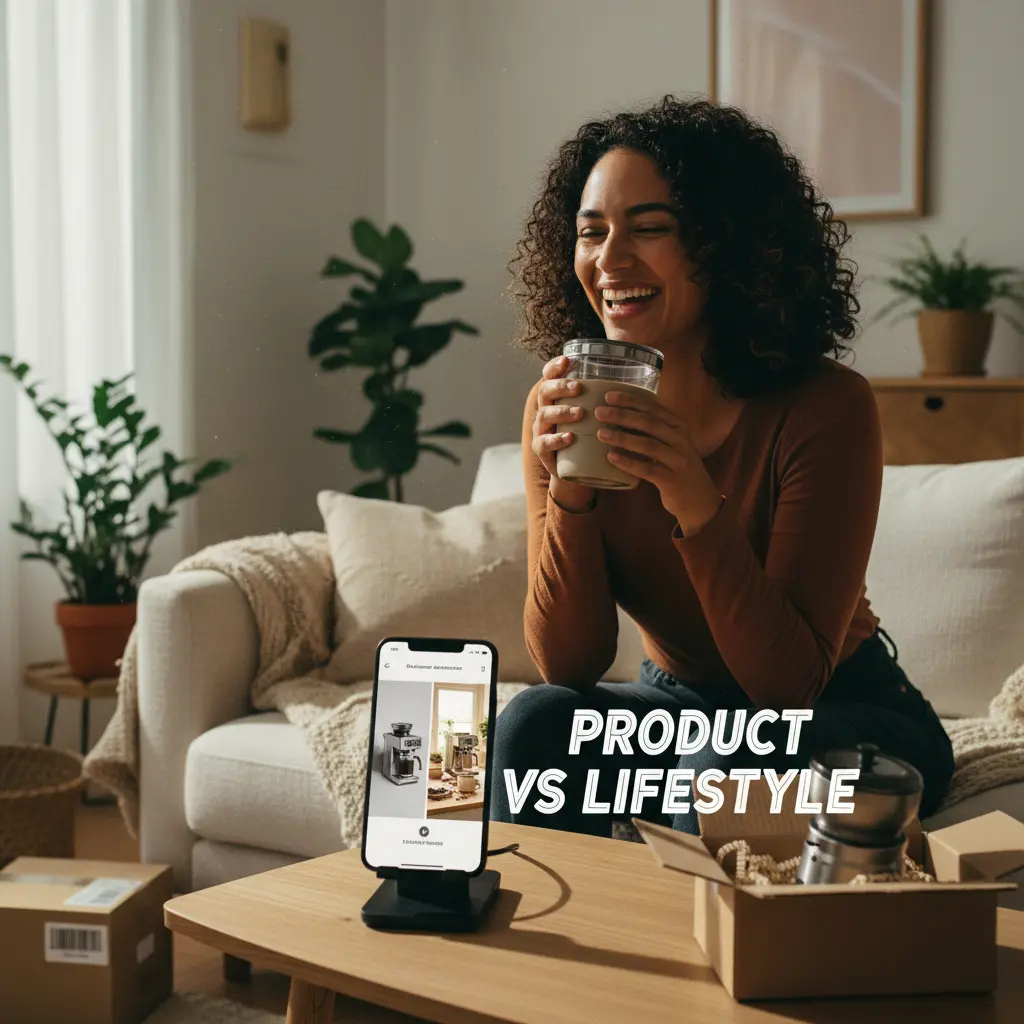
While product-only images inform, lifestyle images persuade. While product-only images inform, lifestyle images persuade. These visuals place your product in a relevant real-world setting, demonstrating its utility, benefits, and how it integrates into a customer's life. For a brand selling outdoor gear, showing a backpack on a hiker scaling a mountain provides far more context than just a shot of the backpack alone. Lifestyle images evoke emotion, tell a story, and help potential buyers visualize themselves using the product. This emotional connection is a powerful driver of conversion, often increasing conversion rates by 25-40% and justifying higher price points. They are particularly effective in secondary image slots and within A+ Content, where you have more creative freedom. For example, a home decor item pictured in a tastefully arranged living room helps customers envision its aesthetic contribution to their own space. These images are critical for products where experience and aspiration are key selling points, such as fashion, beauty, electronics, or fitness equipment. Integrating lifestyle visuals can transform a mere product listing into an engaging narrative that resonates deeply with the target audience. Learn more about creating such visuals without traditional photoshoots in our guide on Lifestyle Product Photos Without Photoshoot.
Crafting Your Amazon Image Strategy
Developing an effective Amazon image strategy involves a thoughtful blend of product-only and lifestyle visuals, optimized for specific placements and buyer psychology. Developing an effective Amazon image strategy involves a thoughtful blend of product-only and lifestyle visuals, optimized for specific placements and buyer psychology. The main image must be product-only, but the subsequent 8 image slots offer significant flexibility. A balanced approach typically starts with a crystal-clear main image, followed by a mix of functional product shots, compelling lifestyle scenes, and informative graphics. This sequence guides the customer from initial identification to understanding benefits and visualizing ownership. Consider the buyer's journey: what information do they need at each step to move closer to purchase? For instance, after seeing the core product, they might want to see it in action, understand its dimensions via an infographic, or view specific features up close. This strategic curation maximizes the impact of each visual, addressing both logical and emotional buying triggers. Brands should regularly audit their image sets, testing different combinations and tracking performance metrics to refine their approach. The goal is to build a visual narrative that comprehensively answers buyer questions and instills confidence. Optimizing your Amazon listing with AI placements can provide a competitive edge.
| Use Case | Best Creative Approach | What To Avoid |
|---|---|---|
| Amazon Main Image (Product ID) | Product-only, pure white background, 85%+ frame fill, high-res. | Lifestyle scenes, text overlays, distracting props, models. |
| Secondary Images (Features & Benefits) | Mix of product-only (angles, close-ups), lifestyle (in use), infographics. | Repetitive shots, low resolution, crowded visuals, only showing product. |
| A+ Content (Brand Story & Experience) | Rich lifestyle imagery, comparative charts, brand elements, enhanced product details. | Generic stock photos, inconsistent branding, unoptimized images for mobile. |
| Clothing/Fashion | Lifestyle shots on diverse models in aspirational settings; detailed texture shots. | Mannequin-only shots, poor lighting, unstyled presentation. |
| Electronics/Gadgets | Product-only (features), lifestyle (in-hand use), UI/screen shots, technical infographics. | Outdated tech imagery, complex backgrounds that obscure the device. |
| Home Goods/Decor | Lifestyle images in tastefully decorated rooms; close-ups of texture/material; scale shots. | Product floating in empty space, lack of context. |
| Food/Supplements | Lifestyle shots (consumption, preparation), ingredient close-ups, packaging clarity. | Unappetizing visuals, misleading serving suggestions, unclear nutritional info. |
| International Markets | Localized lifestyle images with relevant cultural cues and models. | One-size-fits-all visuals, ignoring regional preferences. |
Leveraging AI for Scalable Product Visuals
Traditional photoshoots for both product-only and lifestyle images can be costly and time-consuming, a significant barrier for many ecommerce businesses, especially those in dropshipping or with extensive catalogs. Traditional photoshoots for both product-only and lifestyle images can be costly and time-consuming, a significant barrier for many ecommerce businesses, especially those in dropshipping or with extensive catalogs. This is where AI-powered platforms like My UGC Studio become invaluable. AI enables brands to generate photorealistic product visuals and diverse lifestyle scenarios without needing physical products, studios, or models. For instance, you can upload a simple cut-out image of a mug and use AI to place it in a cozy cafe, a bustling office, or a rustic kitchen, complete with appropriate lighting and shadows. This capability drastically reduces time-to-market for new products and allows for rapid A/B testing of various visual concepts. It also facilitates localization, as AI can generate images tailored to specific cultural contexts, models, and environments for international markets, a critical advantage discussed in Multilingual Ecommerce Visuals with AI. The workflow is streamlined, enabling quick iterations and scaling content creation across multiple product lines and sales channels. This shift allows marketing teams to focus on strategy rather than logistical hurdles.
Here is a simplified workflow for generating AI-powered Amazon visuals:
- Upload Product Photo: Begin with a clear, high-resolution image of your product, preferably on a neutral background. This forms the foundation for AI manipulation.
- Define Core Needs: Determine if you need pure product shots for compliance or lifestyle images for engagement. Identify the specific context, setting, or model interaction required.
- Craft AI Prompts: Use descriptive AI prompts to guide the image generation. Specify desired backgrounds (e.g., "modern kitchen," "mountain trail"), models (e.g., "young woman with tablet"), lighting, and overall mood.
- Generate and Refine: Let the AI create multiple variations. Select the best candidates and use refinement tools to adjust details, lighting, or composition to match your brand's aesthetic.
- Optimize for Amazon: Ensure all generated images comply with Amazon's technical specifications for size, resolution, and format. For main images, ensure the white background and product-to-frame ratio are met.
- Integrate into Listing: Upload your optimized product and lifestyle images to your Amazon listing, strategically placing them in secondary slots and A+ content sections.
Practical Scenarios for Image Deployment
Strategic image deployment depends on the product, target audience, and listing objective. Strategic image deployment depends on the product, target audience, and listing objective. Here are several practical scenarios:
- Scenario: New Fitness Tracker Launch on Amazon
- Situation: Introducing a high-tech fitness tracker.
- Recommended Creative: Start with a compliant product-only main image. Secondary images should include lifestyle shots of users wearing the tracker during various activities (running, swimming, gym), close-ups of the screen interface, and an infographic detailing features like heart rate monitoring and GPS.
- Alternative Option: Short videos showing the tracker's UI in action could replace some lifestyle images.
- What to Avoid: Overly complex backgrounds that distract from the device, or generic stock photos that don't specifically feature the product.
- Explanation: The target audience needs to see the product's functionality in active use and understand its technical capabilities.
- Scenario: Revamping an Amazon Listing for a Home Decor Item
- Situation: An existing listing for a decorative vase has low conversion, despite good traffic.
- Recommended Creative: Keep the clean main image. Add AI-generated lifestyle images showing the vase in different home settings (modern living room, minimalist bedroom, dining table centerpiece). Include a dimension infographic.
- Alternative Option: Experiment with UGC-style photos that mimic real customer homes.
- What to Avoid: Using only product-only shots that fail to convey aesthetic appeal or versatility.
- Explanation: Home decor buyers need visual inspiration and to see how the item complements various interior styles.
- Scenario: Shopify Product Page Refresh for Gourmet Coffee Beans
- Situation: A Shopify store selling artisan coffee wants to increase perceived value.
- Recommended Creative: High-quality product shots of the bean packaging. Integrate lifestyle images showing the coffee being brewed, enjoyed in a cozy setting, or depicting fresh coffee beans in a bowl. Include images of the coffee's origin.
- Alternative Option: Short video clips showing the brewing process or tasting notes.
- What to Avoid: Generic coffee stock photos that don't highlight the unique packaging or brand story.
- Explanation: Coffee is an experiential product; visuals must convey aroma, taste, and the feeling of enjoyment. Check our guide on Shopify Product Page Images with AI for more.
- Scenario: Scaling Creatives for a Dropshipping Apparel Brand on TikTok Shop
- Situation: A dropshipper needs a high volume of diverse visuals for trendy clothing items.
- Recommended Creative: Use AI to generate lifestyle images of models wearing the apparel in various fashionable urban or natural settings. Prioritize dynamic poses and diverse body types. Create short image-to-video clips for TikTok.
- Alternative Option: Source user-generated content (UGC) if feasible, but AI offers faster scalability.
- What to Avoid: Stiff, mannequin-like product shots that lack personality for a social platform.
- Explanation: Dropshipping thrives on rapid testing and visually engaging content that resonates with social media trends. Read about TikTok Shop UGC Ads for apparel.
- Scenario: Localizing Listing Images for an EU Market Launch
- Situation: Expanding a beauty product line from the US to Germany and France.
- Recommended Creative: Use AI to generate lifestyle images featuring models with European features, in settings reflecting German or French aesthetics. Translate any text overlays on infographics to local languages.
- Alternative Option: Commission local photoshoots, but AI is far more efficient for rapid localization.
- What to Avoid: Using US-centric models or environments that alienate European consumers.
- Explanation: Cultural relevance in visuals builds trust and connection, which is vital for international expansion. More on this in Global Ecommerce Visuals: AI Localization.
- Scenario: Updating eBay Listing for Refurbished Electronics
- Situation: Selling refurbished laptops and needing to convey quality and trustworthiness without a photoshoot.
- Recommended Creative: Focus on clear, well-lit product-only images from multiple angles, highlighting ports and specific conditions. Use AI to create clean, uniform backgrounds. For secondary, generate a "setup" lifestyle image showing the laptop in a home office, subtly hinting at functionality.
- Alternative Option: Relying solely on real photos with inconsistent backgrounds, which looks unprofessional.
- What to Avoid: Blurry images, dark backgrounds, or failing to show actual product condition.
- Explanation: For refurbished items, buyers need absolute clarity on the item's condition and presentation. See eBay Listing Images with AI for more ideas.
Measuring Visual Performance on Amazon
Once your images are live, measuring their performance is critical for continuous optimization. Once your images are live, measuring their performance is critical for continuous optimization. Amazon's Seller Central provides valuable data, but external tools can offer deeper insights. Key metrics to monitor include:
- Click-Through Rate (CTR): This indicates how effectively your main image captures attention in search results. A low CTR suggests your main image might not be compelling enough or clearly representative.
- Conversion Rate: This measures how many viewers of your product detail page actually make a purchase. If CTR is high but conversion is low, your secondary images, lifestyle shots, or A+ Content might not be effectively conveying value or answering buyer questions.
- Bounce Rate: For pages where users quickly leave, your visual storytelling might not be engaging or relevant.
- Customer Feedback and Reviews: Pay attention to comments related to product appearance, discrepancies between images and reality, or unmet expectations. This qualitative data is gold for identifying visual improvements.
A/B testing different main images or sets of secondary images can provide empirical data on what resonates most with your audience. Tools capable of AI-driven visual analytics can help identify which elements in your images contribute most to engagement and sales. Iterative testing, even small changes, can lead to significant gains over time.
Future-Proofing Your Amazon Visuals
The ecommerce landscape evolves rapidly, and staying ahead requires a proactive approach to visual content. The ecommerce landscape evolves rapidly, and staying ahead requires a proactive approach to visual content. Future-proofing your Amazon visuals involves embracing new technologies and adapting to changing consumer behaviors. This includes a strong focus on localization for expanding into global markets, ensuring that your lifestyle images resonate with diverse cultural preferences and demographics. Furthermore, the increasing demand for dynamic content means integrating video into your Amazon listings is becoming less of an option and more of a necessity. AI tools can convert existing still images into compelling product videos, offering a scalable solution for brands without dedicated video production teams. This continuous evolution ensures your product listings remain competitive, engaging, and highly converting in a crowded marketplace. Regularly reviewing trends in visual content and leveraging AI for rapid asset generation positions your brand for sustained growth on Amazon and beyond. Explore how to Turn Product Images into TikTok, Reels, and PDP Videos with AI.