Why Cultural Context Matters in Ecommerce Visuals
Expanding into international markets involves more than translating website copy. Visual elements like domestic settings, regional props, and lifestyle context heavily influence how shoppers perceive quality and trust a brand. An asset structured for North American buyers might feel out of place in Japan or Latin America if the background design or presentation style clashes with local expectations. When shoppers see products in familiar settings, purchase friction drops. While generic prompt-based generators often alter the core item, My UGC Studio guarantees product accuracy: logos, text, and packaging geometry match the physical product exactly, preventing return spikes.
Adapting Product Imagery for Key Global Markets
Different regions prefer specific aesthetic styles and staging contexts. Adjusting background prompts and environment settings helps tailor visuals to local preferences while keeping the core product intact.
North America and Europe: Natural Lifestyle Contexts
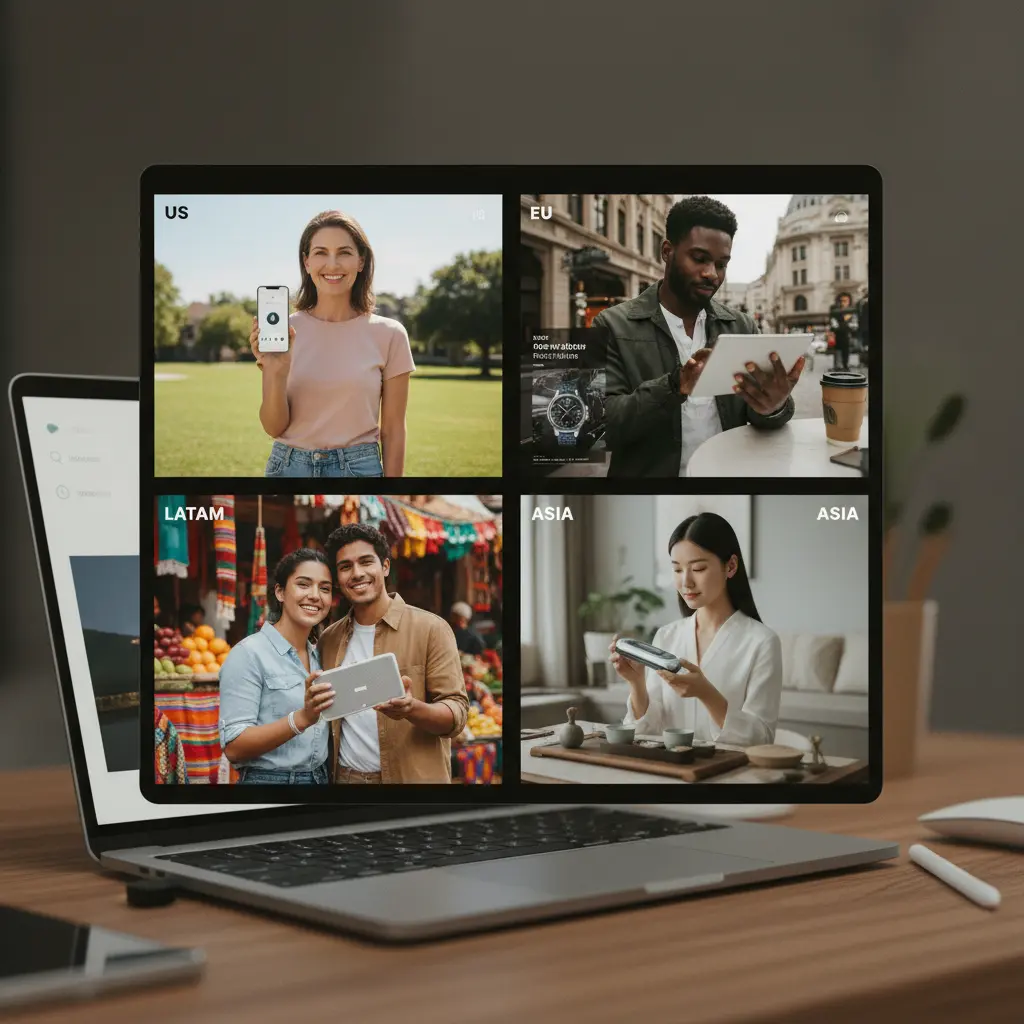
Shoppers in North American and European markets typically prefer clean, natural lifestyle settings that highlight product functionality in everyday environments. Modern interior backgrounds or realistic outdoor scenes help establish practical utility. Visual simplicity and clear product visibility remain key priority factors.
Latin America: Warm Settings and Community Context
Visuals targeting Latin American markets often benefit from warmer lighting, vibrant color tones, and energetic backdrop environments. Showing products in social, outdoor, or family-oriented settings helps convey brand personality and regional connection.
Asia-Pacific: High Detail and Clean Staging
In markets like Japan, South Korea, and urban China, buyers value crisp presentation, fine structural detail, and polished aesthetics. Backgrounds should be uncluttered, showcasing product craftsmanship and exact package labels without distracting elements.
How AI Streamlines Visual Localization
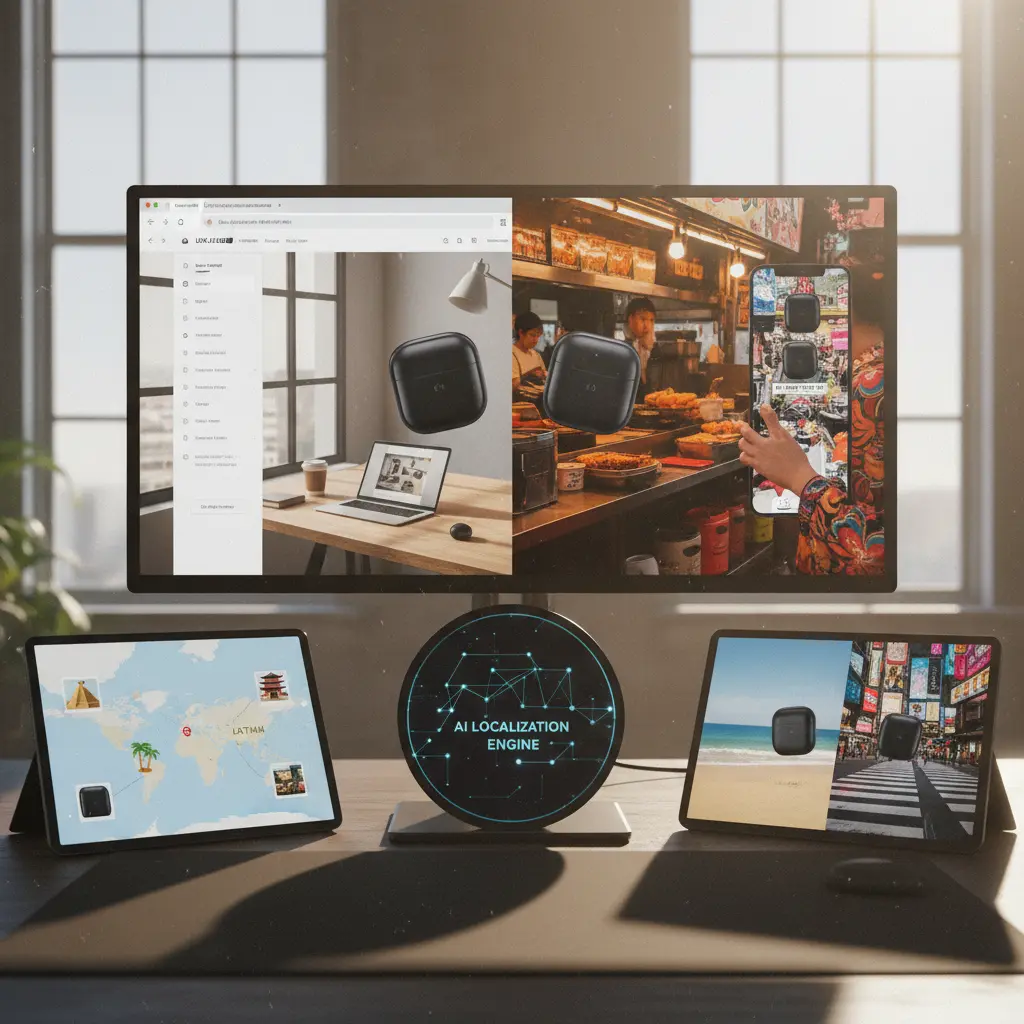
Traditional global shoots require shipping inventory internationally and hiring regional crews, which quickly becomes cost-prohibitive. With AI generation, ecommerce teams upload a single clean product photo, select appropriate target scenes or styles, and generate localized background variations. This approach reduces studio expenses and accelerates catalog updates across international storefronts. Learn more about workflow options in our guide on AI for Ecommerce Visuals.
Practical AI Techniques for Customizing Images
Adapting product imagery across regions requires controlled adjustments to backgrounds, styling props, and environmental lighting. Unlike generic generators that distort inventory, My UGC Studio keeps the real product exact.
Contextual Model and Lifestyle Selection
When generating visuals with people or hands, selecting regional demographics helps align the image with target buyer expectations. Note that AI-generated avatars represent synthetic models rather than actual customers, so they should not be framed as authentic product reviewers. For options, see how to build UGC creatives for ad campaigns.
Contextual Backgrounds and Regional Settings
Placing a product inside a regionally relevant environment increases buyer familiarity. A kitchen gadget can be rendered inside a European architectural layout or a vibrant Latin American home setting. For storefront strategy, review our guide on Shopify image optimization.
Culturally Relevant Props and Textures
Subtle background accents like regional cookware, local botanical props, or traditional textiles help establish place and style. Always verify that generated props do not obscure the product package or alter brand logos. For marketplace guidelines, consult our Amazon listing optimization guide.
Integrating Localized Visuals Across Sales Channels
Exported images can be uploaded directly to localized Shopify storefronts, included in marketplace listings, or used in ad campaigns. While My UGC Studio supports direct Shopify catalog import and export, marketplace channels like Amazon or Etsy require manual asset uploads after downloading finished files. For short product videos, generated motion clips (using 10 credits for 5 seconds or 20 credits for 10 seconds) require manual addition of audio, captions, and script overlays before launch. Learn more in our image-to-video workflows guide.
Illustrative Scenarios for Global Visual Localization
The following hypothetical scenarios demonstrate how brands adapt visual settings for specific international storefronts:
-
Shopify Product Page Refresh for US Market (Apparel Brand)
- Situation: An apparel brand wants to update its product pages for a new dress collection on its US Shopify store, seeking fresh, aspirational content.
- Creative Approach: Generate casual outdoor urban backgrounds and daylight settings around the uploaded dress photo to match US lifestyle expectations.
- Alternative Option: Place the apparel on flat-lay or hanger backgrounds with neutral daylight tones.
- What to Avoid: Heavy filters or background elements that distort the true fabric color or seam structure.
- Explanation: Clear lifestyle settings help US buyers evaluate fit and style without misleading them on garment details.
-
Amazon Listing Image Update for EU Market (Consumer Electronics)
- Situation: A gadget manufacturer needs to enhance its Amazon listing images for a new smart home device targeting Germany, France, and Italy.
- Creative Approach: Generate clean, minimalist European interior backgrounds with neutral lighting and modern desk surfaces.
- Alternative Option: Render the electronic device on a plain studio surface with soft realistic shadows.
- What to Avoid: Cluttered room backgrounds or distorted button icons on the product body.
- Explanation: European electronics shoppers prioritize uncluttered presentation and clear functional visibility.
-
eBay Listing Revamp for LATAM Market (Handcrafted Jewelry)
- Situation: A small business selling handcrafted jewelry on eBay wants to expand sales in Mexico and Brazil.
- Creative Approach: Render jewelry pieces against warm wood surfaces and vibrant, natural stone backgrounds with bright lighting.
- Alternative Option: Use soft linen textures with warm, ambient lighting accents.
- What to Avoid: Backgrounds that create reflections obscuring metal finish or stone color.
- Explanation: Warm color palettes appeal to regional aesthetic expectations while keeping focus on material quality.
-
TikTok Short-Form Ad Test for Japan (Beauty Product)
- Situation: A new beauty serum is launching on TikTok in Japan, requiring engaging, short-form video creatives.
- Creative Approach: Convert a clean bottle photo into a 5-second video asset (costing 10 credits) showing liquid motion in a pristine bathroom environment.
- Alternative Option: Generate a static lifestyle scene featuring a minimalist marble countertop.
- What to Avoid: Overly aggressive text overlays or altered label typography.
- Explanation: Japanese skincare buyers value clean visual cues and precise product accuracy.
-
Pinterest Creative Batch for France (Home Decor)
- Situation: A home decor brand needs a batch of appealing Pinterest visuals for its French audience.
- Creative Approach: Place ceramic vases and decor items in elegant interior settings with natural window light and subtle architectural trim.
- Alternative Option: Use neutral stone pedestals with minimal surrounding props.
- What to Avoid: Overly saturated colors or synthetic artificial lighting.
- Explanation: French home decor audiences respond best to subtle, understated interior styling.
-
Localization Rollout for India (Packaged Food Item)
- Situation: A packaged snack food brand is entering the Indian market, requiring culturally appropriate packaging and marketing visuals.
- Creative Approach: Show sealed snack packages on dining or kitchen surfaces set with warm ambient lighting and subtle culinary props.
- Alternative Option: Generate bright countertop backgrounds highlighting ingredient freshness.
- What to Avoid: Modifying package nutritional text, claims, or certification logos during background generation.
- Explanation: Preserving complete package text accuracy is mandatory for regulatory compliance and buyer trust.
Measuring Impact and Refining Global Visual Strategy
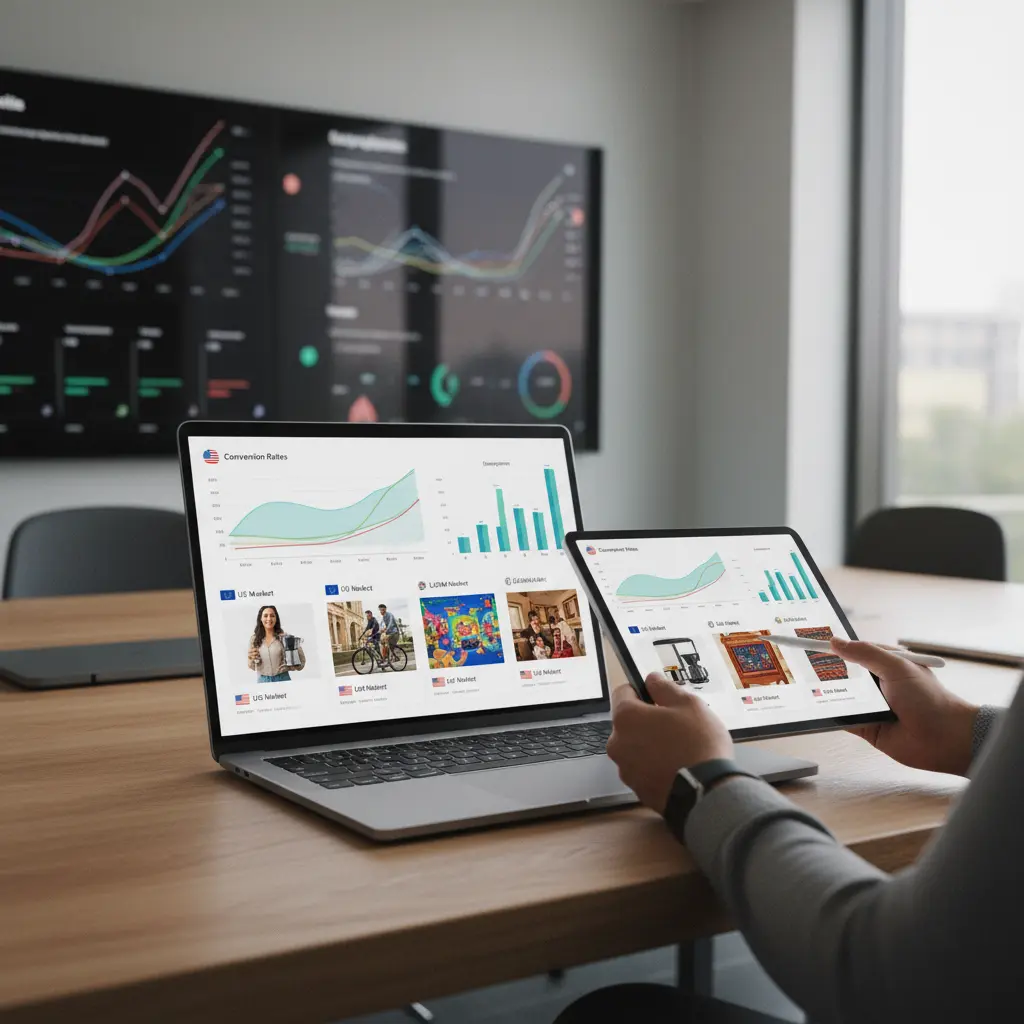
Track campaign performance by monitoring click-through rates (CTR), conversion rates, and return rates across regional storefronts. Perform final composition reviews at 100% zoom before publishing to confirm lighting, scene layout, and channel suitability. While generic AI generators require constant retries due to distorted logos, My UGC Studio guarantees product accuracy from the start. Always treat metrics as directional indicators and test localized assets against control images before full rollout.
Strategic Steps for Expanding Visuals Globally
Scaling visual localization requires a structured testing and validation workflow. Follow these operational steps:
- 1. Conduct Market Research: Review target market aesthetics, competitor staging, and marketplace packaging rules before creating prompt guides.
- 2. Select AI Tools and Plans: Choose an AI platform with reliable background generation. Review our pricing plans to budget image credits (1 credit per image) or video credits (10 credits per 5s video) appropriately.
- 3. Define Regional Presets: Document approved lighting, surface material, and color specifications for each destination market.
- 4. Batch Generate and Inspect: Run generation batches and review outputs for composition, lighting harmony, and regional appeal while trusting My UGC Studio's guaranteed product accuracy.
- 5. Publish Across Channels: Deploy approved imagery directly to Shopify or download assets for manual marketplace listing updates.
- 6. Test and Iterate: Measure CTR and return rates. Refine source inputs or lighting settings based on performance data. Explore more tactics on our blog.
Market-Specific Visual Guide
This practical summary outlines staging strategies and quality constraints for key global markets:
| Market Region | Visual Adaptation (AI-Generated) | What to Avoid |
|---|---|---|
| North America (US/Canada) | Clean lifestyle environments, natural daylight, practical product usage settings. | Heavy filters, dark studio shadows, or altered packaging text. |
| Western Europe (UK, Germany, France) | Minimalist interior backgrounds, neutral tones, focused product presentation. | Cluttered backdrops, garish colors, or distorted product proportions. |
| Southern Europe (Italy, Spain) | Warm lighting, natural stone or wooden surfaces, inviting lifestyle settings. | Cold clinical lighting or sterile, industrial backdrops. |
| Latin America (Mexico, Brazil) | Vibrant color accents, warm daylight, energetic outdoor or home settings. | Dull, low-contrast scenes or isolated white background defaults. |
| East Asia (Japan, South Korea) | Pristine, high-detail staging, minimalist countertops, clean soft lighting. | Distracting background clutter or altered brand logos. |
| Southeast Asia (Indonesia, Thailand) | Bright, modern indoor/outdoor settings formatted for mobile-first channels. | Low-resolution source photos or mismatched lighting angles. |
| Middle East | High-end interior backgrounds, polished marble or elegant surfaces, warm lighting. | Inappropriate cultural props or unverified regulatory claims. |
| Oceania (Australia, New Zealand) | Outdoor natural light, coastal or garden environments, active lifestyle contexts. | Overly formal indoor staging or dark, dramatic studio lighting. |