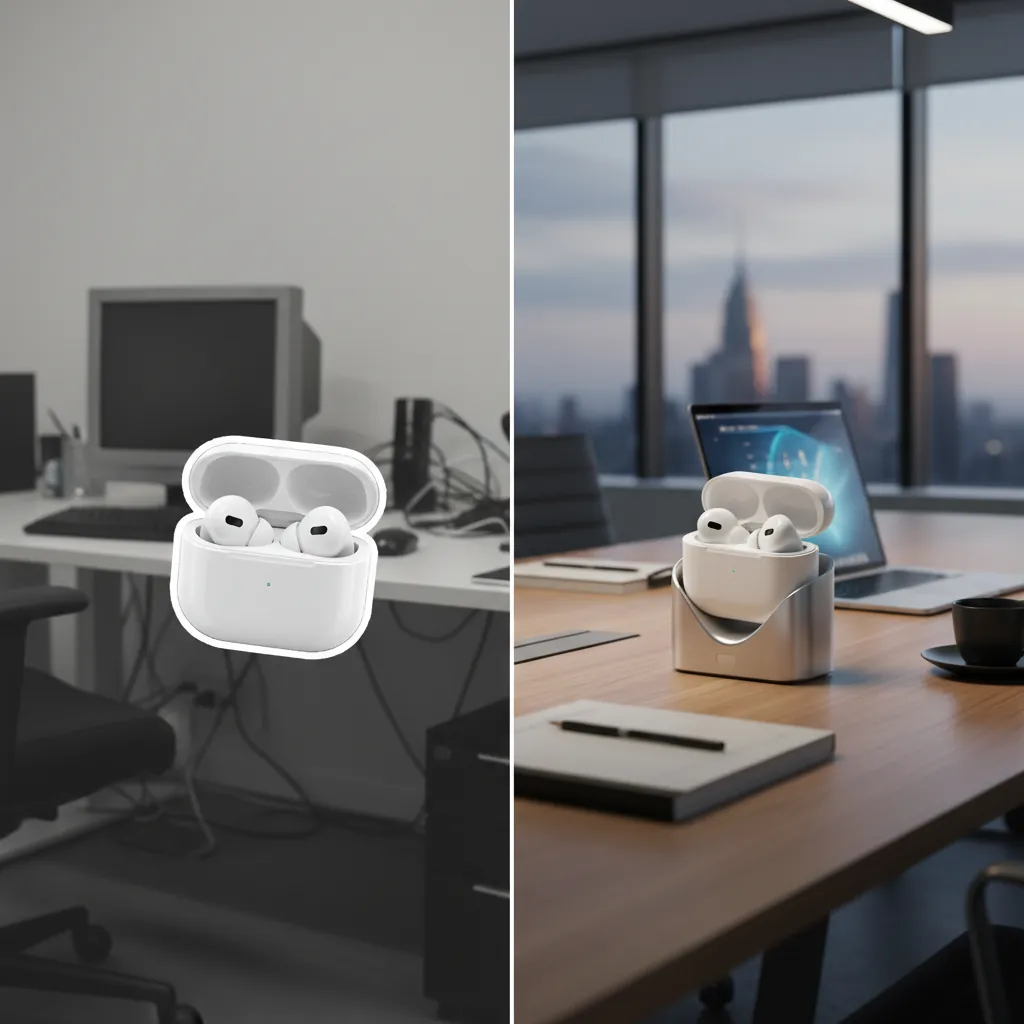
The 'Floating Product' Problem in Amazon Listings
The 'Floating Product' Problem refers to outdated Amazon listings that feature products poorly photoshopped onto generic backgrounds, lacking contextual reality and visual trust. Many sellers are still stuck with 2018 standards, displaying products floating in mid-air or crudely composited onto stock images, which customers easily identify and distrust.
The Problem with Basic Studio Photography
Basic studio photography, while meeting Amazon's main image requirements, fails to create the crucial lifestyle context that drives modern conversions. Customers are savvy; they spot a bad photoshop job instantly, which immediately erodes trust and signals that a brand might be cutting corners on quality.
The Cost of Poor Visuals
Poor visuals directly translate to lower perceived value, reduced click-through rates (CTR), and ultimately, lost sales. In a saturated niche, a listing with unconvincing imagery struggles to compete, often leading to customers choosing competitors who invested in more compelling visuals, even for similar products.
AI Placements Revolutionize FBA Listings
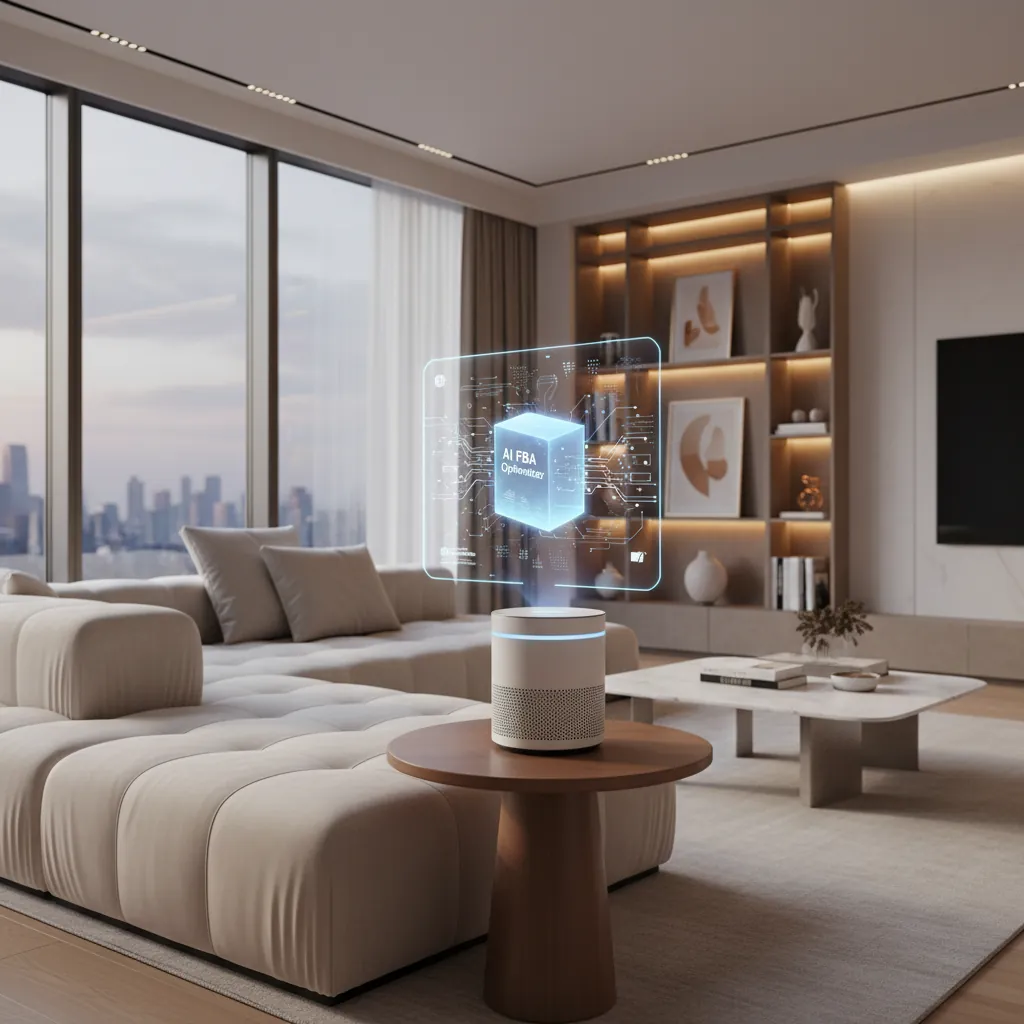
AI Placements revolutionize FBA listings by seamlessly integrating high-resolution product shots into "Contextual Reality," creating hyper-realistic, premium lifestyle imagery at scale. Instead of simple photo manipulation, AI calculates intricate details like shadows, reflections, and depth of field to make the product appear organically part of the scene.
Beyond Simple Image Pasting
AI doesn't just "paste" an image; it intelligently calculates shadows, reflections, and depth of field, ensuring 100% believable placement within a scene. This advanced computational process distinguishes AI placements from traditional, often amateurish, compositing, building authentic visual trust.
Creating Contextual Reality
AI creates compelling contextual reality by placing your product in environments that resonate with your target audience, such as a chef's knife on a reclaimed wood cutting board in an industrial loft. This transforms a generic item into a desirable object within an aspirational setting, significantly boosting its appeal.
Examples of AI-Enhanced Environments
AI can generate diverse, high-end environments such as a sleek quartz counter in a high-end recovery lounge for a supplement bottle, or an outdoor garden sanctuary for a yoga mat. These tailored scenes help visualize the product in an ideal use-case, connecting emotionally with potential buyers.
Visual Trust Paramount for Amazon FBA in 2026
Visual trust is paramount for Amazon FBA in 2026 because customers make purchasing decisions based on perceived quality and authenticity, especially when choosing between similar products. High-quality, context-rich imagery instills confidence, reducing hesitation and encouraging purchases.
"The difference between a $1k/month listing and a $100k/month listing is often just the quality of the lifestyle imagery. AI has democratized that quality."
Building Instant Credibility
High-quality lifestyle imagery instantly builds credibility for your brand, signaling professionalism and attention to detail. When a product looks like it belongs in a premium setting, customers subconsciously associate that premium quality with the brand itself.
The Shift from Features to Feelings
Modern Amazon shoppers often prioritize emotional connection and aspirational lifestyle over a mere list of product features. AI placements help bridge this gap by showcasing how a product fits into a desired lifestyle, evoking feelings rather than just conveying specifications.
AI Optimize for the Amazon Algorithm
AI optimizes for the Amazon algorithm by generating visuals that increase engagement metrics like Click-Through Rate (CTR) and session duration, which Amazon's A9 algorithm rewards. Better images lead to more clicks and longer time spent on a listing, signaling relevance and quality to Amazon.
Improving Click-Through Rates (CTR)
Superior secondary images generated by AI act as a powerful hook, enticing more users to click on your listing over competitors. This increased CTR is a critical signal to Amazon's algorithm that your listing is highly relevant and attractive, potentially boosting your search rankings. Learn more about how AI can boost your content strategy by visiting our article on AI-Powered Content Strategy for Dropshipping Success in 2026.
Boosting Session Duration
Engaging AI-generated lifestyle shots keep users scrolling and exploring your listing, thereby increasing session duration. Amazon's algorithm rewards listings that hold user attention, as this indicates a positive user experience, ultimately improving your listing's visibility.
Leveraging Demographic Targeting
AI allows for precise demographic targeting by generating lifestyle scenes that appeal to specific customer segments. For example, a yoga mat can be shown in a "Minimalist City Apartment" for young professionals and an "Outdoor Garden Sanctuary" for health enthusiasts, maximizing relevance. Explore how to achieve this with The Localization Hack: Capture Global Markets with AI Presets.
AI Placements Truly Cut Photography Costs by 90%
Yes, AI placements can significantly reduce traditional photography costs, often by 90% or more, by eliminating the need for expensive studio rentals, models, props, and extensive post-production. What once cost thousands per SKU can now be achieved for a fraction of the price, allowing for rapid scaling and iteration.
| Aspect | Traditional Photography | AI Placements (My UGC Studio) |
|---|---|---|
| Cost per SKU | $5,000+ | Minimal (subscription/credit model) |
| Turnaround Time | Weeks to Months | Minutes to Hours |
| Number of Scenes | Limited by budget | Virtually unlimited |
| Iteration & Testing | Expensive rework | Instant edits & variations |
| Scaling Portfolio | Prohibitively expensive | Effortless & rapid |
Traditional Photography Costs vs. AI
Traditional lifestyle photography typically costs upwards of $5,000 per SKU, involving significant expenses for photographers, stylists, locations, and post-production. AI bypasses these prohibitive costs, making high-end visuals accessible to all FBA sellers, a method that can help you Cut Shopify Content Costs by 90% with AI.
Rapid Iteration and Testing
AI enables rapid iteration and A/B testing of various visual styles and environments without additional cost or time delays. This agility allows sellers to quickly identify which visual strategies perform best, optimizing their listings with data-driven decisions.
Visual Arbitrage and How Can You Use It
Visual Arbitrage is the strategy of pricing a product higher than competitors by leveraging AI-generated luxury environments that elevate its perceived value, even if the base product is budget-friendly. This allows sellers to capture increased profit margins based on the aspirational visual presentation.
Pricing Products for Higher Margins
By placing a budget-friendly product within a high-end AI environment, you can often justify pricing it 15-measurable higher than competitors using basic studio shots. This premium positioning attracts customers who associate quality with sophisticated presentation.
The Psychology of Perceived Value
High-quality visuals directly influence the psychology of perceived value, convincing customers that a product is more premium and desirable than its actual cost. This perception allows brands to command higher prices and build a stronger market position.
To Scale Your Amazon Portfolio with AI
AI allows you to scale your Amazon portfolio by rapidly refreshing visual assets across numerous SKUs, updating backgrounds for seasonal trends, and maintaining a competitive "Freshness Score" without incurring prohibitive costs. This capability transforms what was once a bottleneck into a seamless, automated process.

Refreshing Your Entire Catalog
If you manage a portfolio of 10 or 20 SKUs, AI enables you to refresh your entire catalog's visual assets in a single weekend, a task that would be prohibitively expensive with traditional photography. This capability is crucial for How to Scale Your Shopify Brand with AI UGC in 2026.
Adapting to Seasonal Trends
AI allows for quick adaptation to seasonal trends, such as adding a "Cozy Winter" background for Q4 sales or bright, airy scenes for summer. This keeps your listings relevant and appealing throughout the year, capitalizing on seasonal consumer sentiment.
Maintaining a "Freshness Score"
Regularly updating your listing's imagery with new AI placements helps maintain a "Freshness Score," signaling to Amazon and customers that your brand is active and current. This keeps your listings competitive against newer, hungrier sellers who are constantly optimizing.
The Key Steps to Implement AI Placements
Implementing AI placements for Amazon FBA involves four key steps: capturing high-resolution product shots, defining your desired environment, generating and refining the AI placements, and finally, integrating them into your Amazon listing for A/B testing.
-
Step 1: Capture High-Res Product Shots
Begin by capturing clean, high-resolution photographs of your product against a neutral background. These pristine source images are essential for the AI to accurately integrate your product into new environments.
-
Step 2: Define Your Desired Environment
Clearly articulate the specific environments, styles, and moods you want for your product placements. Consider your target demographic and the aspirational lifestyle you wish to convey, whether it's an urban loft, a rustic cabin, or a minimalist spa.
-
Step 3: Generate and Refine AI Placements
Utilize an AI platform like My UGC Studio to upload your product shots and generate various placements based on your defined environments. Iterate on the generated images, refining prompts and settings until the placements are hyper-realistic and perfectly match your brand vision. For a detailed guide, see How to Generate UGC Images with AI in 2026.
-
Step 4: Integrate into Amazon Listing and A/B Test
Upload your best AI-generated lifestyle images to your Amazon listing, placing them strategically among your other product photos. Crucially, A/B test different AI-generated image sets to determine which ones yield the highest CTR and conversion rates, continuously optimizing for performance.
My UGC Studio Ideal for Amazon AI Placements
My UGC Studio is ideal for Amazon AI placements because it provides precision tools specifically designed to elevate product visuals from "just another listing" to a "must-have brand" through hyper-realistic contextual integration. It streamlines the process of generating high-quality, conversion-boosting imagery quickly and affordably.
Precision Tools for Brand Elevation
My UGC Studio offers advanced AI capabilities that go beyond basic image editing, allowing for sophisticated control over lighting, shadows, and reflections to create truly believable scenes. These precision tools ensure that every placement looks professionally shot, enhancing your brand's perceived quality.
Democratizing High-End Imagery
My UGC Studio democratizes access to high-end imagery, enabling FBA sellers of all sizes to produce visuals previously only attainable with large budgets. This levels the playing field, allowing smaller brands to compete visually with established market leaders.