Lifestyle Product Photos Essential for E-commerce Success
Lifestyle product photos are crucial because they connect products with real-world contexts, helping customers visualize themselves using the item. This emotional connection is vital for driving engagement and increasing conversion rates in the competitive online marketplace.
Boosting Customer Engagement
Engaging lifestyle imagery captures attention and encourages customers to spend more time interacting with your product pages. Unlike plain studio shots, lifestyle photos tell a story, demonstrating the product's benefits and how it fits into a consumer's life.
Building Brand Story and Trust
Authentic lifestyle visuals help build a relatable brand story and foster trust with your audience. By showcasing products in natural, aspirational settings, brands can convey their values and appeal to specific demographics more effectively, leading to stronger customer loyalty.
The Limitations of Traditional Photoshoots
Traditional photoshoots often entail substantial financial investment, complex logistical planning, and lengthy production timelines. These challenges can be particularly burdensome for small to medium-sized businesses and dropshippers seeking to frequently update their visual content.
High Costs and Logistics
Traditional photoshoots involve numerous expenses, including hiring photographers, models, stylists, renting locations, and purchasing props. Managing these elements can be a logistical nightmare, especially when dealing with multiple products or diverse scenes.
Time-Consuming Production Cycles
From planning and shooting to post-production and revisions, traditional photoshoots demand significant time commitment. This can delay product launches and content updates, making it difficult for businesses to respond quickly to market trends or seasonal demands.
Scalability Issues
Scaling traditional photoshoots to produce hundreds or thousands of unique lifestyle images for a large catalog is impractical and prohibitively expensive. Each new shot requires repeating the entire costly and time-intensive process, limiting the diversity of content brands can afford.
AI Generate Lifestyle Product Photos
AI generates lifestyle product photos by employing advanced neural networks that learn from vast datasets of images to realistically integrate a product into a chosen scene. This process leverages sophisticated algorithms to understand object geometry, lighting, and textures, creating cohesive and believable composites.
Understanding AI Models for Imagery
AI models, such as generative adversarial networks (GANs) or diffusion models, are trained to create new images based on specific inputs and prompts. While general-purpose generators like Midjourney, Stable Diffusion, or DALL-E can create impressive images, achieving ecommerce-ready quality often requires many iterations, precise prompt tuning, and manual fixes to ensure product geometry, realism, placement, and consistency are perfect for commercial use. Specialized platforms like My UGC Studio are designed to streamline this, saving time and cost while producing consistent, high-quality results.
Product Segmentation and Integration
The AI first precisely segments the product from its original background, then meticulously integrates it into a new, AI-generated lifestyle environment. This involves intelligent placement, resizing, and perspective adjustments to make the product appear naturally part of the scene.
Contextual Scene Generation
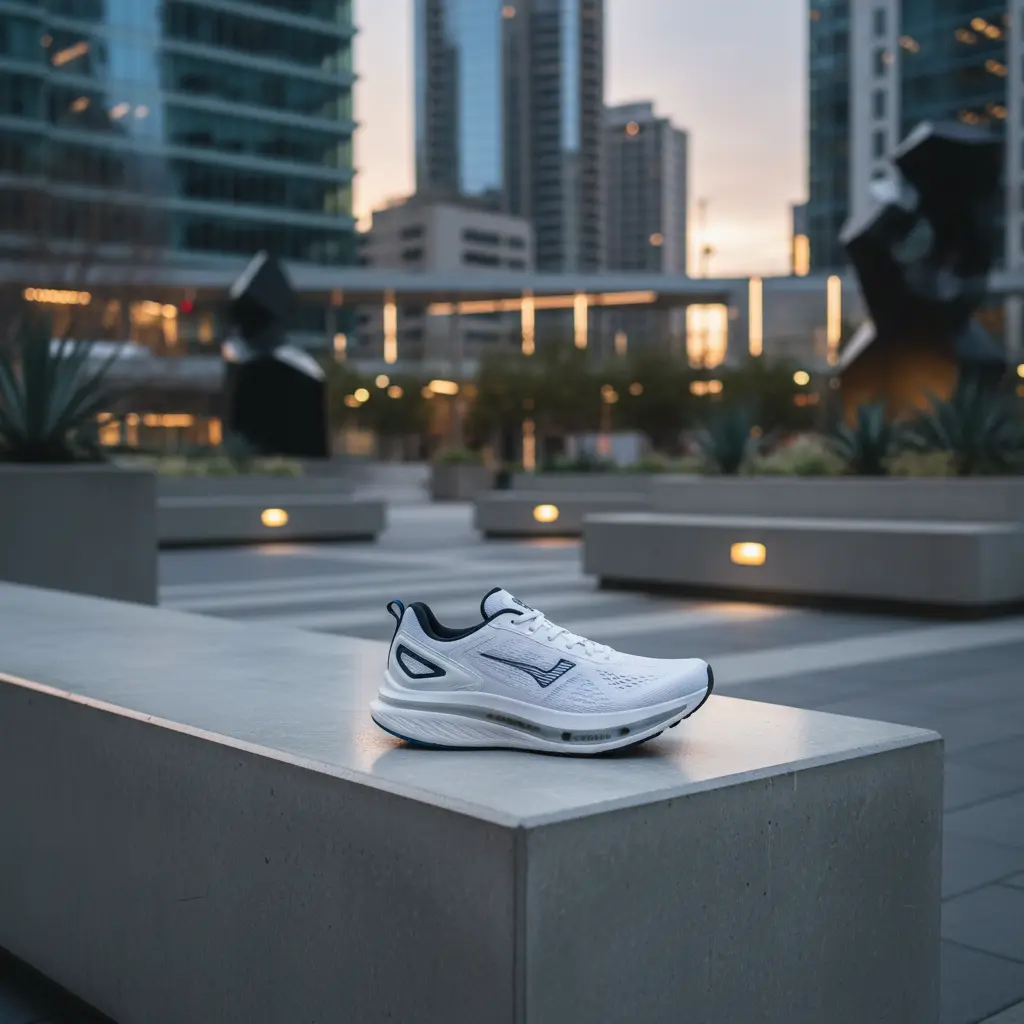
AI can generate a wide array of contextual scenes, from bustling cityscapes to serene home interiors, based on textual prompts. Users can describe the desired environment, mood, and even specific elements, allowing the AI to construct a unique backdrop that complements the product perfectly.
The Key Benefits of AI-Powered Lifestyle Photoshoots
AI-powered lifestyle photoshoots offer unparalleled advantages in terms of cost-efficiency, speed, and content scalability. They revolutionize how e-commerce businesses create and manage their visual assets, making high-quality content accessible to everyone.
Cost Reduction and Speed
One of the most significant benefits is the dramatic reduction in production costs and turnaround time. Eliminating the need for physical shoots means saving on models, locations, equipment, and crew, while images can be generated in minutes rather than weeks. This makes it ideal for businesses leveraging AI product photography for dropshipping.
Unmatched Scalability
AI platforms enable businesses to generate an almost unlimited number of unique lifestyle photos for their products. This scalability is invaluable for large product catalogs, A/B testing different visual approaches, and constantly refreshing content without breaking the bank.
Creative Versatility and A/B Testing
AI allows for immense creative freedom, letting users experiment with countless scenes, lighting conditions, and aesthetic styles. This makes it easy to A/B test various visual narratives to identify which images resonate most with target audiences and enhance Shopify product page images.
Comparing AI vs. Traditional Workflows for Lifestyle Images
AI workflows dramatically cut down on time, cost, and logistical complexity compared to traditional methods, while still delivering high-quality, conversion-focused visuals. This table outlines the key differences:
| Feature | Traditional Photoshoot | AI-Powered Workflow |
|---|---|---|
| Cost | High (models, location, equipment, crew) | Low (subscription/per-image fee) |
| Time to Production | Weeks to Months | Minutes to Hours |
| Scalability | Limited, expensive | Virtually unlimited, cost-effective |
| Creative Control | High (requires direction & setup) | High (via text prompts & templates) |
| Physical Product Required | Yes | No (can use manufacturer photos/3D renders) |
| Content Variety | Difficult & costly to achieve diversity | Easy to generate diverse scenes & styles |
Efficiency and Resource Allocation
AI optimizes efficiency by automating repetitive tasks and significantly reduces the human resources required for visual content creation. This allows teams to reallocate their efforts to strategic planning and other high-value activities, rather than logistical coordination.
Image Quality and Authenticity
While traditional photos can offer unparalleled authenticity, modern AI has advanced to produce highly realistic and convincing lifestyle images that resonate with consumers. The key is using specialized AI tools that prioritize photorealism and product integrity, ensuring the generated images look genuine.
Step-by-Step: Generating Lifestyle Photos with AI
Creating stunning lifestyle product photos with AI is a straightforward process, typically involving a few simple steps within a dedicated platform. Here's how you can do it using a tool like My UGC Studio, which offers a 'Zero Shipment' workflow, meaning you don't need to ship samples to create luxury lifestyle shots.
- Selecting the Right Platform: Choose an AI platform that specializes in product photography, like My UGC Studio, for optimal results. These platforms are engineered to handle product integration and maintain commercial-grade quality, contrasting with general-purpose AI tools.
- Uploading Your Product Image: Upload a clear, high-resolution photo of your product, preferably on a plain or high-contrast background. My UGC Studio recommends uploading a clear photo of your product, noting that high contrast backgrounds work best for precise segmentation. If you're creating virtual apparel, the platform's Virtual Apparel mode can help generate model-based lifestyle images.
- Defining Your Desired Scene: Use text prompts or select from a library of templates to describe your ideal lifestyle scene. Specify elements like location, lighting, time of day, and overall mood to guide the AI's generation process.
- Generating and Reviewing Outputs: Initiate the generation process and review the AI-produced lifestyle images. Most platforms allow for quick iterations and adjustments to fine-tune the results until they perfectly match your vision.
The Best Practices for AI Lifestyle Photos
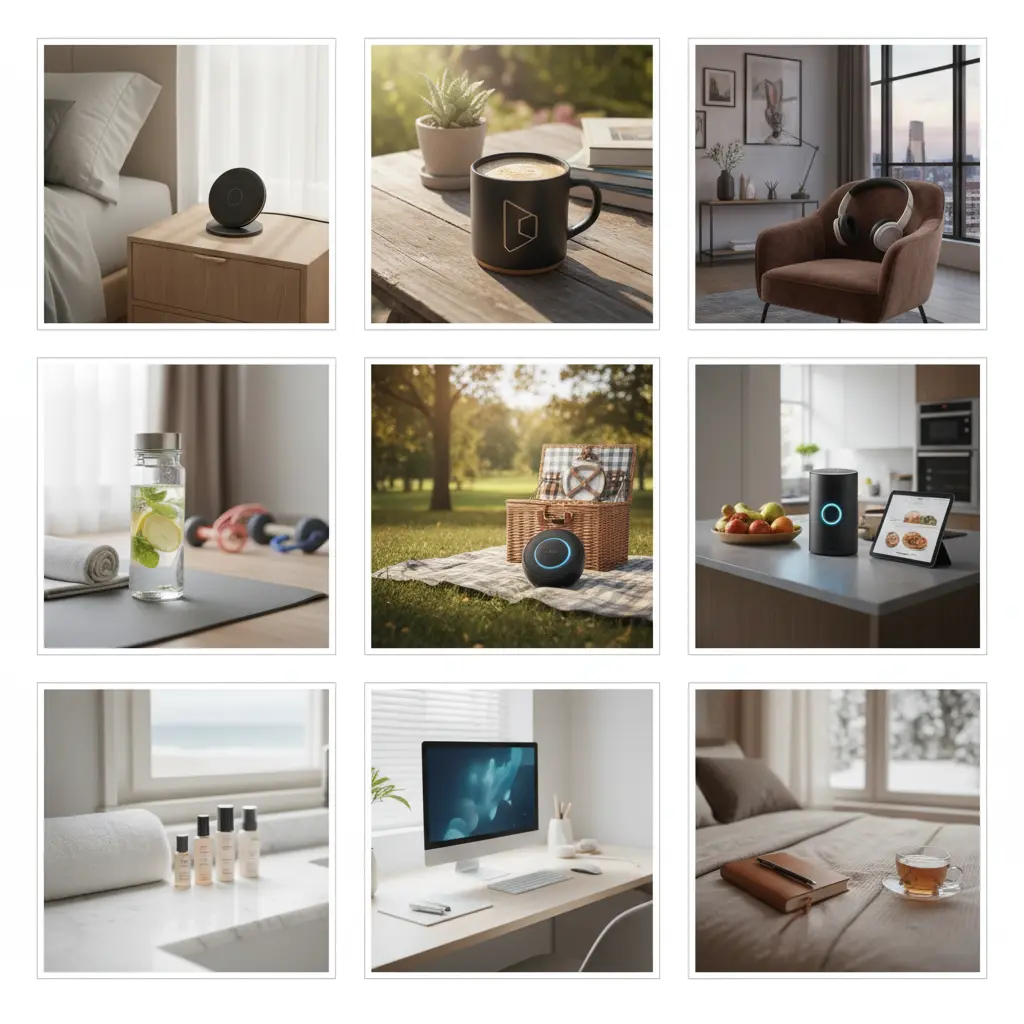
To achieve the best results with AI-generated lifestyle photos, focus on providing high-quality source materials and employing precise prompt engineering. These practices ensure the AI understands your vision and produces images that meet professional standards.
High-Quality Source Images
Always start with sharp, well-lit photos of your product, ideally on a clean background. The better the input image, the more accurately the AI can integrate it into new scenes, preserving details and realism.
Detailed Prompt Engineering
Craft descriptive and specific prompts, including details about the scene, lighting, mood, and desired aesthetic. The more specific you are, the less ambiguity the AI will face, leading to more accurate and compelling generations.
Maintaining Brand Cohesion
Ensure that your AI-generated lifestyle images align with your brand's overall aesthetic and messaging. Use consistent styles, colors, and themes across your visual content to maintain a cohesive brand identity and scale UGC content in dropshipping effectively.
Addressing Challenges: AI Realism and Consistency
While AI has made incredible strides, ensuring absolute realism and consistency across all generated images remains a key area of focus and requires strategic use of specialized tools. Achieving photorealistic quality and maintaining product accuracy are paramount for commercial applications.
Overcoming the 'Uncanny Valley'
The 'uncanny valley' effect, where AI-generated images look almost real but subtly off, can be avoided by utilizing advanced AI platforms that specialize in photorealism. These tools often incorporate human feedback loops and fine-tuned models to produce truly lifelike results.
Ensuring Product Accuracy
Maintaining consistent product details, such as color, texture, and dimensions, across various lifestyle shots is critical for brand integrity. Specialized AI solutions are designed to preserve these attributes more effectively than generic image generators.
“The future of e-commerce isn't just about selling products; it's about selling experiences. AI-generated lifestyle photos are the bridge to that immersive experience, making every product relatable and aspirational.”
— E-commerce Industry Analyst, 2026

The Future of E-commerce Visuals: What to Expect
The future of e-commerce visuals will be characterized by hyper-personalization, advanced interactive experiences, and seamlessly integrated AI design tools. AI will continue to evolve, making visual content creation even more intuitive and powerful.
Hyper-Personalization at Scale
AI will enable e-commerce businesses to tailor lifestyle images to individual customer preferences, showing products in contexts most relevant to each shopper. This level of personalization can significantly enhance user experience and conversion rates.
Integrated AI-Powered Design Tools
Expect tighter integration of AI into broader design and marketing suites, offering a unified workflow for visual content creation and deployment. This will further streamline the process from concept to publication, making creative automation a standard practice.
AI the Right Choice for Your Brand
AI-powered lifestyle product photography is a strategic advantage for brands looking to scale their visual content, reduce costs, and accelerate time-to-market. It's an ideal solution for businesses of all sizes, from startups to large enterprises.
Assessing Your Production Needs
Evaluate your current visual content production volume, budget, and desired speed. If you need to generate a large volume of diverse, high-quality images quickly and cost-effectively, AI is likely the optimal choice.
Evaluating ROI and Long-Term Value
Consider the return on investment from faster content creation, increased conversion rates, and reduced operational overhead. With platforms like My UGC Studio, you gain significant long-term value, knowing that on any paid plan, you own 100% of the commercial rights to your generated content, allowing unrestricted use for ads or social media.