The Evolving Landscape of Ecommerce Visual Content
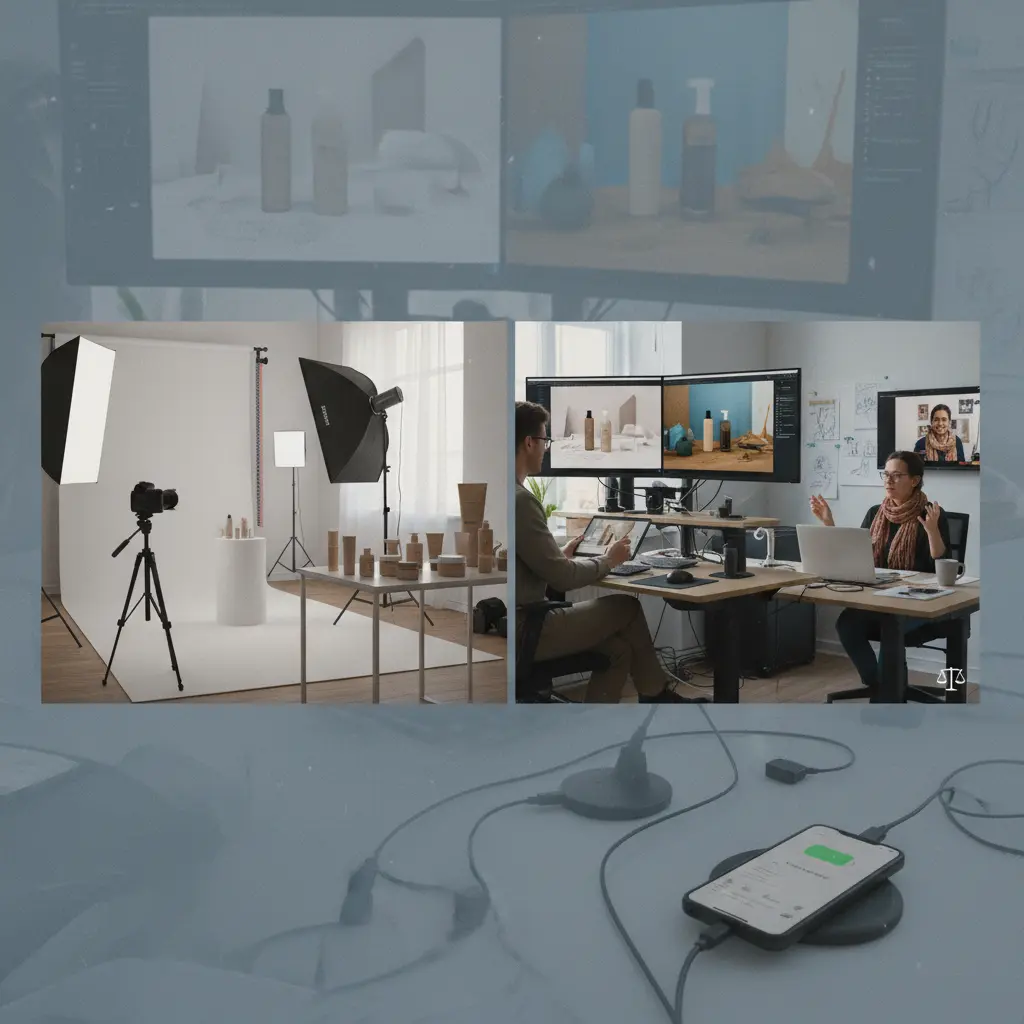
Ecommerce brands face an unending need for fresh, compelling product visuals. Ecommerce brands face an unending need for fresh, compelling product visuals. From high-conversion Shopify listings and dynamic social media ads to precisely localized content for global audiences, the demand for varied visual assets is substantial and always expanding. Historically, fulfilling this demand meant significant investments in equipment, dedicated studio space, models, and a team of creative professionals. While traditional photography delivers quality, it often brings considerable financial and logistical challenges, limiting a brand's capacity for rapid content scaling or experimenting with numerous visual styles. Artificial intelligence now provides a new approach to visual content creation. AI platforms generate realistic product photography, immersive lifestyle scenes, and even short video clips directly from existing product images. This is often achieved at a fraction of the cost and time of conventional methods. Recognizing the economic impact of this technological shift is essential for ecommerce businesses seeking to optimize their content budgets and enhance creative production workflows. A direct comparison of AI with established methods like in-house studios and freelance professionals highlights clear benefits, especially for brands prioritizing agility and cost-efficiency.
Understanding Traditional Product Photography Costs
Understanding Traditional Product Photography Costs.
Investing in an In-House Studio
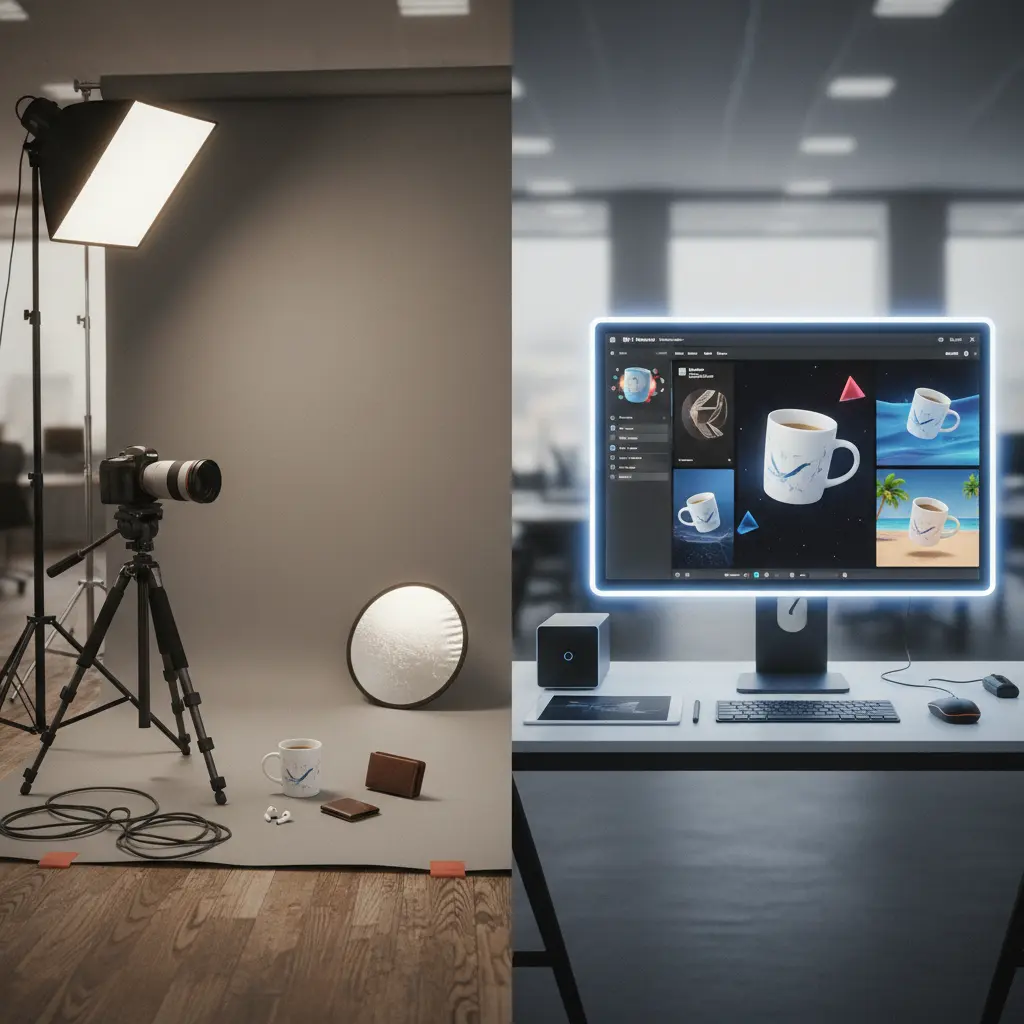
Creating an in-house photography studio demands substantial upfront capital and continuous operational expenditures. Creating an in-house photography studio demands substantial upfront capital and continuous operational expenditures. Initial outlays cover professional cameras, lighting equipment, various backdrops, essential props, and specialized editing software. Beyond physical gear, businesses must budget for studio space acquisition or lease, utility bills, and the salaries for full-time photographers, stylists, and retouchers. A foundational studio setup often surpasses $10,000 in equipment, with annual personnel costs for a skilled team member ranging from $50,000 to well over $100,000. While an internal team provides consistent brand control, it necessitates a high, steady volume of work to justify the significant fixed overhead. The per-image cost, though potentially lower for extremely large volumes, remains directly linked to labor hours and equipment wear, making quick stylistic adjustments or broad campaign visuals both expensive and time-intensive.
Engaging Freelance Photographers
Engaging freelance photographers offers a scalable solution, enabling brands to adjust creative production according to project demands. Engaging freelance photographers offers a scalable solution, enabling brands to adjust creative production according to project demands. These professionals typically bill either per project, per day, or per individual image. Daily rates can span from $500 to $2,500, fluctuating based on their experience and geographic location. Individual image rates often fall between $20 and $200, frequently accompanied by minimum project fees. While this method sidesteps the fixed financial commitments of an in-house studio, brands must still account for costs related to props, renting locations, and hiring models, which freelancers usually include or pass through in their proposals. Managing communication, brief adjustments, and project timelines can also introduce unforeseen costs. Freelancers provide specialized expertise for high-end campaigns or unique shoots, yet for routine product listing updates or testing numerous creative iterations, the total expenditure can rapidly escalate. This model serves smaller, focused projects effectively but struggles with high volume or demands for swift changes.
The Economic Advantages of AI Product Photography
The Economic Advantages of AI Product Photography.
Drastically Lowering Per-Image Costs
The primary appeal of AI in product photography lies in its ability to dramatically reduce the cost per image. The primary appeal of AI in product photography lies in its ability to dramatically reduce the cost per image. While conventional approaches often involve expenses ranging from $20 to over $200 per image, considering all overheads, AI tools can produce high-quality visuals for a fraction of that. Platforms such as My UGC Studio utilize credit-based models, leading to an effective cost often below $1 per image, and for simple variations or background adjustments, it can be as little as $0.05 to $0.10. This pricing structure empowers brands to create hundreds, even thousands, of distinct images without the linear cost escalation seen in traditional photography. The capacity to upload an existing product photo and swiftly generate a wide array of lifestyle shots, new backgrounds, or model variations without requiring a reshoot fundamentally changes the game for ecommerce businesses operating under budget constraints.
Unmatched Speed and Scalability
Beyond direct cost benefits, AI offers unparalleled advantages in terms of speed and scalability. Beyond direct cost benefits, AI offers unparalleled advantages in terms of speed and scalability. Producing a set of 50 new lifestyle images for a product typically takes mere minutes with AI, a stark contrast to the days or even weeks required for a traditional photoshoot, which includes planning, execution, and extensive post-production. This rapid output empowers brands to swiftly experiment with novel creative angles, respond to emerging market trends, and keep content fresh across all their selling channels. For extensive product catalogs or frequent product introductions, AI effectively removes production bottlenecks. Brands can generate a massive library of localized visuals or A/B test countless ad creatives, bypassing the logistical complexities and prohibitive expenses associated with conventional methods. This inherent efficiency shortens product time-to-market and enables more responsive marketing campaigns, directly influencing potential revenue.
Comparative Cost Analysis for Visual Production
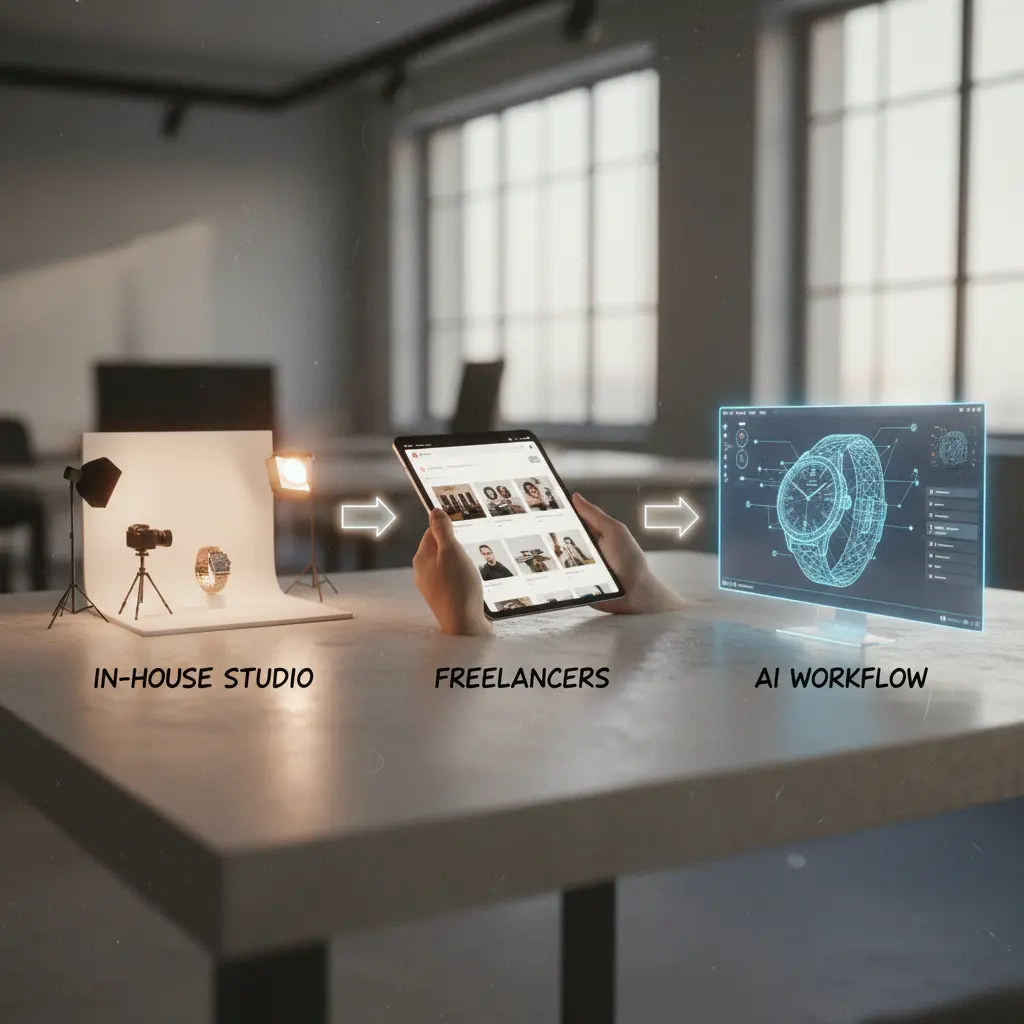
Selecting the optimal creative production method relies heavily on a brand's specific business needs, available budget, and required output volume. Selecting the optimal creative production method relies heavily on a brand's specific business needs, available budget, and required output volume. This comparative table outlines the key differences across the three main approaches to product visual creation, aiding in informed decision-making for ecommerce businesses.
| Feature/Metric | In-House Studio | Freelance Photographer | AI Product Photography |
|---|---|---|---|
| Upfront Investment | High (equipment, space, salaries) | Low to Moderate (project-based) | Very Low (subscription/credits) |
| Cost Per Image | Moderate to High (depends on volume) | Moderate to High (project-based) | Very Low (pennies to dollars) |
| Speed of Production | Slow (planning, shooting, editing) | Moderate (scheduling, shooting, revisions) | Very Fast (minutes to hours) |
| Scalability | Limited by team/equipment capacity | Moderate (depends on freelancer availability) | Extremely High (on-demand generation) |
| Consistency Control | High (internal guidelines) | Variable (depends on freelancer) | High (style presets, prompts) |
| Creative Iteration | Slow, costly for variations | Moderate, costly for variations | Rapid, inexpensive for variations |
| Content Diversity | Limited by physical assets/models | Variable (depends on freelancer's scope) | High (diverse backgrounds, models, styles) |
| Localization Effort | Manual reshoots or complex editing | Requires local freelancers or travel | Automated background/model changes |
| Ideal Use Case | High-volume, consistent brand imagery | Specialized, high-end campaigns | Rapid iteration, volume, diverse marketing |
Practical Scenarios for Budget-Friendly Visuals
Applying the economic advantages of AI product photography to specific ecommerce situations clearly illustrates its versatility and value across various content needs. Applying the economic advantages of AI product photography to specific ecommerce situations clearly illustrates its versatility and value across various content needs.
- New Product Launch for a Shopify Store:
Situation: A small Shopify brand is launching a new line of skincare products and needs 20 unique lifestyle images for product pages and social media. Their budget is tight.
Recommended Creative Approach: Use an AI platform like My UGC Studio. Upload existing product shots and generate various lifestyle scenes, showing the product in different bathroom settings or natural light conditions. This can be done in an hour for a fraction of the cost.
Alternative Option: Hire a junior freelance photographer for a half-day shoot, likely costing $500-$1000 for fewer images and a longer turnaround.
What To Avoid: Attempting a DIY photoshoot without proper equipment, which often results in inconsistent, unprofessional images.
Explanation: AI provides high-quality, diverse visuals quickly and affordably, crucial for a new brand to make an impact without overspending. For more on Shopify visuals, see our guide on creating Shopify product page images with AI. - Amazon A+ Content Refresh:
Situation: An Amazon seller needs to update A+ content for a top-selling kitchen gadget to include new lifestyle images that highlight different use cases and features. They require 30 images.
Recommended Creative Approach: Utilize AI to generate diverse kitchen environments and model interactions with the product, focusing on specific features for each image. This allows for quick A/B testing of different visual narratives within A+ modules.
Alternative Option: Commission a product photography studio for a multi-day shoot, incurring significant costs for models, props, and extensive post-production.
What To Avoid: Relying solely on basic product-on-white shots for A+ content, which fails to engage shoppers effectively.
Explanation: AI offers the speed and variety needed to refresh A+ content frequently, crucial for maintaining conversion rates on competitive platforms. Learn more about Amazon listing images with AI. - Rapid Creative Testing for Paid Ads (TikTok/Meta):
Situation: A brand is running paid ad campaigns on TikTok and Meta, needing 50-100 unique ad creatives weekly to prevent ad fatigue and test different hooks.
Recommended Creative Approach: Integrate AI image and video generation into the ad creative workflow. Use AI to rapidly produce variations of UGC-style images and short videos from existing product shots, testing different backgrounds, models, and emotional tones. This can also turn product images into short videos, as discussed in how to turn product images into TikTok, Reels, and PDP videos with AI.
Alternative Option: Continuously hire influencers or UGC creators, which is expensive and time-consuming for high volume and rapid iteration.
What To Avoid: Recycling the same few creatives for too long, leading to diminishing returns on ad spend.
Explanation: AI enables the scale and speed necessary for aggressive ad testing, directly impacting campaign performance and ROI. - Localizing Product Images for a New Market:
Situation: An apparel brand is expanding into the European market and needs culturally relevant lifestyle images for its product catalog and ads in Germany, France, and Italy.
Recommended Creative Approach: Use AI to localize product visuals. Generate images with models reflecting local demographics and backgrounds depicting European settings (e.g., Parisian cafe, German street scene) from the original product photos.
Alternative Option: Conduct separate photoshoots in each country, a logistically complex and extremely expensive undertaking.
What To Avoid: Using generic, non-localized images, which can alienate local audiences and reduce conversion rates.
Explanation: AI significantly reduces the cost and complexity of localization, allowing brands to tailor visuals for specific regional preferences efficiently. More insights can be found in our guide on how to localize ecommerce product creatives for global markets with AI. - Scaling UGC-Style Content:
Situation: A direct-to-consumer brand wants to incorporate more user-generated content (UGC) aesthetics into its marketing without relying solely on actual user submissions, which can be inconsistent.
Recommended Creative Approach: Leverage AI to generate authentic-looking UGC images. Upload product photos and prompt for scenes resembling genuine customer photos, such as products in home settings or casual, unposed interactions. For small Shopify brands, this workflow is detailed in UGC Content Workflow for Small Shopify Brands in 2026.
Alternative Option: Launching extensive influencer campaigns, which can be costly, or running contests to collect UGC, which yields unpredictable results.
What To Avoid: Over-produced, overly polished studio shots when the brand aims for an authentic, relatable feel.
Explanation: AI allows brands to achieve the desired UGC aesthetic at scale, maintaining consistency and brand messaging while capturing the authenticity consumers seek. - Bulk Updates for an Extensive Product Catalog:
Situation: A marketplace seller has an older product catalog with thousands of listings featuring outdated, inconsistent photography and needs to refresh them efficiently.
Recommended Creative Approach: Process the entire catalog through an AI platform. Use batch processing capabilities to apply consistent backgrounds, lighting, or lifestyle elements across all products. This transforms generic supplier photos into branded visuals within a short timeframe, as outlined in From Supplier Photo to High-Converting PDP Visuals in 30 Minutes with AI.
Alternative Option: Manual editing of thousands of images, an extremely labor-intensive and costly process, or reshooting everything, which is impractical.
What To Avoid: Leaving outdated product images that deter buyers and signal a lack of brand attention.
Explanation: AI provides the only truly scalable and cost-effective solution for overhauling large, legacy visual assets, ensuring a consistent and modern brand presentation.
Beyond Financial Savings: Operational Benefits
Although cost efficiency is a major reason for integrating AI into product photography, its true value extends significantly to enhancing operational efficiency and bolstering creative control. Although cost efficiency is a major reason for integrating AI into product photography, its true value extends significantly to enhancing operational efficiency and bolstering creative control. AI platforms effectively eliminate the common bottlenecks found in traditional creative production. The capability to generate numerous images within minutes allows marketing teams to respond immediately to emerging trends, craft highly targeted visuals for specific customer segments, or execute extensive A/B tests without considerable delays or additional budget allocations. Moreover, AI delivers a level of visual consistency that is difficult for human photographers to maintain, particularly across vast volumes or diverse projects. Once a brand's specific style guidelines or preferred environments are established, AI can accurately replicate them, ensuring cohesive branding across all visual assets. This consistency is fundamental for brand recognition and cultivating customer trust. The swift iteration cycle also promotes broader creative exploration; designers and marketers can experiment with countless variations, validate different concepts, and refine their visual strategies based on performance data, replacing subjective decisions with objective insights. Such agility provides a significant competitive edge in rapidly evolving ecommerce landscapes.
Seamlessly Integrating AI into Your Workflow
Integrating AI product photography into an existing content workflow is a direct process that boosts productivity without demanding a complete operational restructure. Integrating AI product photography into an existing content workflow is a direct process that boosts productivity without demanding a complete operational restructure. The initial step involves evaluating current visual assets to pinpoint areas where AI can offer immediate enhancements, such as refreshing outdated product pages or creating diverse lifestyle images for new marketing initiatives. Brands can start by leveraging AI tools to generate additional visuals for existing product listings or produce entirely new content for social media channels. The typical workflow begins with uploading clear, high-quality product images to an AI platform. From there, users define desired styles, backgrounds, models, or craft custom prompts to generate specific visual scenes. The resulting images are then downloaded and can be directly uploaded to ecommerce platforms like Shopify, integrated into marketplace listings on Amazon, or deployed in advertising creatives. For larger enterprises, AI serves as an invaluable rapid prototyping tool, enabling teams to visualize concepts quickly before committing to more costly traditional photoshoots. It also significantly simplifies localization efforts by creating culturally relevant imagery without logistical complexities. AI's adaptability means it can function as a primary generator for high-volume content or as a powerful supplement to human creative teams, allowing professional photographers to focus on high-concept, brand-defining campaigns. Explore our pricing plans to see how My UGC Studio can integrate with your operations.