AI Creative Testing and Why Does it Matter for Ecommerce in 2026
AI creative testing is the application of artificial intelligence and machine learning to evaluate, predict, and optimize the effectiveness of ad creatives for ecommerce. It matters in 2026 because of increasing ad fatigue, competition, and the demand for personalized, high-converting content across diverse platforms.
Defining AI Creative Testing
AI creative testing uses algorithms to process vast amounts of data, identifying patterns and correlations between creative elements and performance metrics. This includes analyzing visual components, ad copy, calls-to-action, and even emotional sentiment to understand what drives engagement and conversions.
Why Traditional Methods Fall Short
Traditional A/B testing is often too slow and limited in scope to keep pace with the dynamic demands of modern ecommerce advertising. It can only test a few variables at a time, leading to lengthy optimization cycles and missed opportunities for identifying nuanced creative insights.
The Urgency for 2026 Ecommerce Advertisers
In 2026, audience attention spans are shorter, ad costs are rising, and the need for fresh, highly relevant creatives is paramount. AI creative testing provides the speed and depth of insight necessary to cut through the noise and achieve scalable ad performance, especially for platforms like TikTok where AI UGC converts materially better than studio productions.
The Key Benefits of AI-Powered Creative Testing
AI-powered creative testing offers significant advantages, including enhanced ad performance, substantial cost reduction, faster iteration cycles, and deeper audience insights. These benefits collectively contribute to a more efficient and effective advertising strategy.
Comparison: Traditional A/B Testing vs. AI Creative Testing (2026)
Understanding the fundamental differences between traditional and AI-driven creative testing highlights the imperative for modern ecommerce.
| Feature | Traditional A/B Testing | AI Creative Testing (2026) |
|---|---|---|
| Speed of Analysis | Slow (weeks/days) | Fast (hours/real-time) |
| Number of Variables Tested | Limited (1-2 at a time) | Multivariate (hundreds/thousands) |
| Insight Depth | Basic (which variant wins) | Deep (why it wins, elements contributing) |
| Creative Generation | Manual | Automated variant suggestion/generation |
| Cost Efficiency | Can waste budget on underperformers | Optimizes spend pre-launch |
| Scalability | Low | High (adapts to large campaigns) |
| Human Input Required | High (analysis, iteration) | Strategic oversight, creative input |
Enhanced Ad Performance
AI identifies subtle creative nuances that human analysts might miss, leading to creatives that resonate more deeply with specific audience segments. This precision results in higher Click-Through Rates (CTR), better engagement, and ultimately, increased conversions.
Cost Reduction and ROI Boost
By predicting creative performance before significant ad spend, AI helps advertisers allocate budget more effectively, drastically reducing wasted spend on underperforming ads. This proactive optimization leads directly to a higher return on investment (ROI) for ad campaigns. Reducing CAC is a critical outcome of effective creative testing.
Faster Iteration and Scaling
AI's ability to analyze and generate creative variations rapidly accelerates the testing process from weeks to days or even hours. This agility allows ecommerce brands to quickly adapt to market trends and scale successful creative strategies across multiple campaigns and regions.
Deeper Audience Insights
Beyond simple performance metrics, AI provides granular insights into why certain creatives perform well, revealing underlying audience preferences and psychological triggers. These insights inform not only future ad creative but also broader marketing and product development strategies.

AI Creative Testing Work
AI creative testing typically involves a multi-stage process: data collection, feature extraction, predictive modeling, automated variant generation, and iterative optimization. This systematic workflow ensures continuous improvement of ad creatives.
Data Collection and Feature Extraction
The process begins with collecting vast datasets of historical ad performance, including visual elements, copy, audience demographics, and conversion metrics. AI then extracts relevant features from these creatives, such as color schemes, object placement, text length, and emotional tone.
Predictive Modeling
Machine learning models are trained on this extracted data to predict the likely performance of new or modified creatives based on their identified features. These models can forecast CTR, conversion rates, and even cost-per-acquisition (CPA) with increasing accuracy.
Automated Variant Generation
Some advanced AI platforms can not only analyze but also generate new creative variations based on insights from the predictive models. This allows for rapid ideation and creation of highly optimized assets, from minor text tweaks to entirely new visual compositions.

Iterative Optimization Cycle
Creative testing is not a one-time event but an ongoing cycle where new insights feed back into the system, continually refining and improving creative output. This iterative loop ensures that ad performance consistently improves over time.
Challenges Exist in AI Creative Testing and How Can They Be Solved
While powerful, AI creative testing presents challenges such as data quality issues, the need for human oversight, and integrating with existing workflows, all of which have viable solutions. Addressing these ensures successful implementation.
Ensuring High-Quality Data Input
Poor data quality can lead to inaccurate predictions, making clean, comprehensive, and well-labeled datasets crucial for effective AI training. Solutions involve robust data governance, automated data cleaning tools, and continuous monitoring of input data streams.
Balancing Automation with Human Creativity
Over-reliance on AI can sometimes lead to generic or uninspired creatives, emphasizing the need for human creative direction and strategic input. The ideal approach is a hybrid model where AI handles data-driven optimization, and human teams provide conceptual brilliance and brand oversight.
Integration with Existing Marketing Stacks
Integrating new AI tools with existing ad platforms, CRM systems, and analytics tools can be complex. Solutions involve choosing platforms with robust APIs and pre-built integrations, or developing custom connectors to ensure seamless data flow.
Which AI Creative Testing Platforms and Tools are Best for Ecommerce
The market offers a growing range of AI creative testing platforms, from specialized content generators like My UGC Studio to more general-purpose AI models, each with distinct advantages and use cases. Selecting the right tool depends on specific business needs and creative goals.
Specialized AI for Ecommerce Visuals (My UGC Studio)
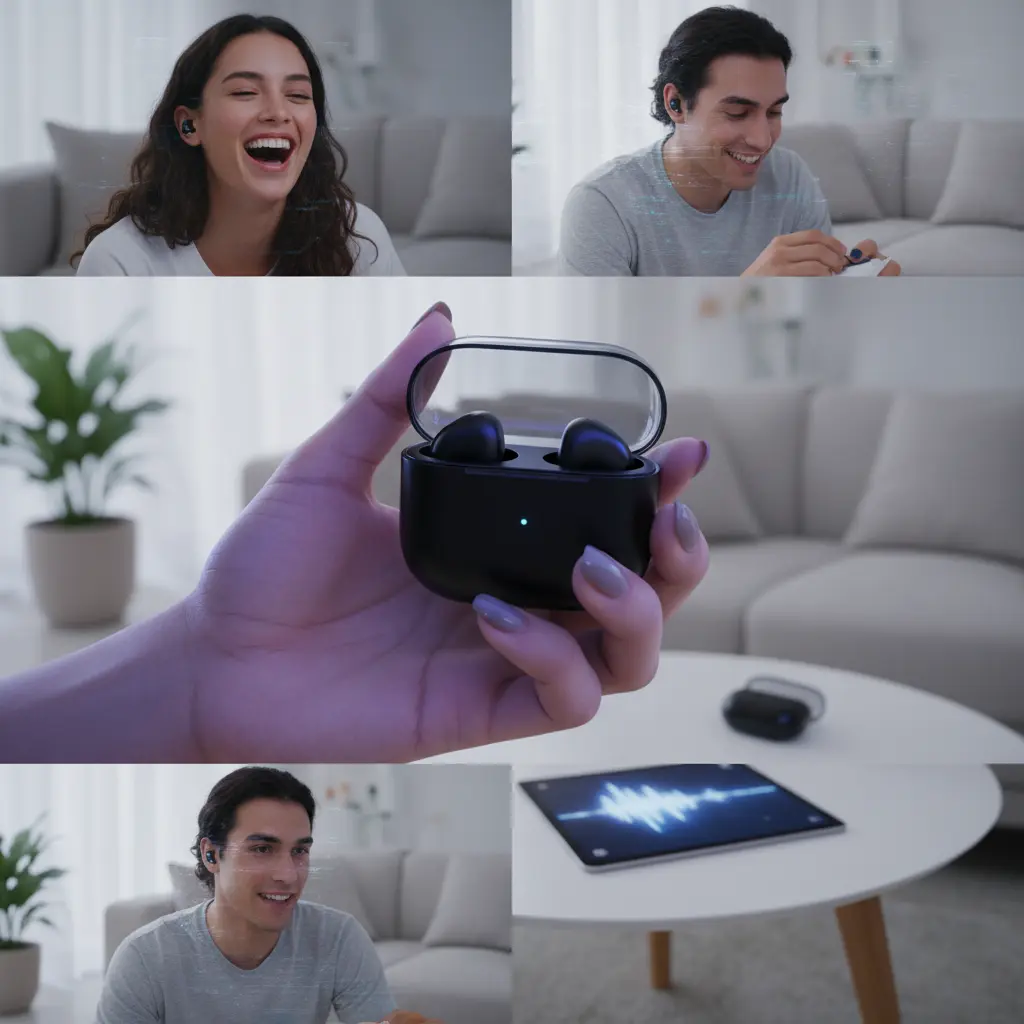
Platforms like My UGC Studio are purpose-built for ecommerce, focusing on generating high-converting, authentic UGC-style assets that resonate with modern audiences. This specialization means they excel at producing creatives that look like genuine social recommendations, converting significantly better than traditional studio ads. My UGC Studio helps ecommerce businesses across dropshipping, Amazon FBA, TikTok teams, and fashion brands own 100% commercial rights to their AI-generated content.
General-Purpose AI Limitations for Production
While tools like Midjourney, Stable Diffusion, or DALL-E can generate impressive initial concepts, they often require extensive manual iteration, prompt tuning, and post-production fixes to achieve ecommerce-ready quality. Issues like inconsistent product geometry, lack of realism, or improper placement mean they are generic building blocks, not production-ready solutions for product creatives without significant effort.
Choosing the Right Platform for Your Needs
The best platform aligns with your specific creative requirements, budget, and integration capabilities. For ecommerce businesses prioritizing authentic, high-converting social creatives without endless manual fixes, specialized platforms offer a clear advantage. Consider an AI UGC generator buyer guide for Shopify stores to make an informed decision.
You Best Implement AI Creative Testing in Your Workflow
Successful implementation of AI creative testing requires setting clear objectives, integrating diverse data sources, maintaining human oversight, and scaling your efforts strategically. Adhering to these practices maximizes AI's potential.
Step-by-Step: Implementing AI Creative Testing in Your Workflow
Successfully integrating AI creative testing into your ecommerce ad strategy involves a structured, iterative process.
- Assess Your Current Creative Workflow: Identify pain points, data sources, and the volume of creatives you currently produce and test. This forms your baseline.
- Define Clear Goals & KPIs: Determine what you aim to achieve with AI (e.g., measurable increase in CTR, measurable reduction in CAC). These metrics will guide your AI models.
- Select the Right AI Platform: Choose a tool that aligns with your specific needs, whether a specialized platform like My UGC Studio for generating high-converting UGC, or a broader analytics tool.
- Integrate Data Sources: Connect your AI platform to all relevant data points—ad platforms, CRM, website analytics, and historical creative data.
- Start with a Pilot Campaign: Begin with a smaller, controlled campaign to test the AI's recommendations and validate its predictive accuracy before full-scale deployment.
- Analyze & Iterate: Continuously monitor results, review AI insights, and refine your creative strategy. Use the feedback loop to improve both human and AI performance.
- Scale & Optimize: Once confident, expand AI creative testing across more campaigns and products, leveraging its power for continuous optimization and performance uplift.
Define Clear Campaign Objectives
Before deploying AI, clearly define what success looks like for your ad campaigns, whether it's increasing CTR, lowering CPA, or boosting conversion rates. These objectives will guide the AI's optimization process and help measure its impact.
Integrate Comprehensive Data Sources
Feed your AI system with a rich blend of data, including past ad performance, website analytics, customer demographics, and market trends. The more data points the AI has, the more accurate its predictions and recommendations will be.
Maintain Human Oversight and Refinement
AI is a powerful assistant, not a replacement for human marketers. Regularly review AI-generated insights and creatives, applying strategic judgment and brand consistency. Use AI to augment your team's capabilities, not to fully automate creative strategy.
Scale Your Testing Efforts Gradually
Start with smaller, targeted campaigns to test the efficacy of your AI creative testing setup, then gradually expand its application to broader campaigns. This allows for fine-tuning the system and building confidence in its recommendations. To scale UGC content in dropshipping with AI without wasting ad budget, a phased approach is key.
"In the hyper-competitive landscape of 2026 ecommerce, AI is not just an advantage; it's the fundamental operating system for effective creative strategy. Those who fail to test and optimize with AI will simply be outmaneuvered."
The Future Trends in AI Creative Testing: Personalization and Predictive Analytics
The future of creative testing in ecommerce will be shaped by increasingly sophisticated AI, hyper-personalization, and advanced predictive analytics that anticipates consumer behavior. These trends will drive even more effective and efficient ad strategies.
Hyper-Personalization at Scale
AI will enable the creation and testing of dynamically personalized ad creatives, tailored not just to audience segments but to individual preferences in real-time. This means variations in visuals, copy, and calls-to-action unique to each viewer.
Anticipating Consumer Behavior
Predictive analytics, powered by AI, will move beyond simply reacting to performance to forecasting future trends and consumer reactions. This proactive approach will allow brands to design creatives that are inherently more likely to succeed.
Generative AI for Endless Creative Assets
The capabilities of generative AI will continue to evolve, making it possible to produce an unprecedented volume and variety of high-quality creative assets with minimal human input. This will fuel continuous testing and optimization loops.
AI Creative Testing Right for Your Ecommerce Business
AI creative testing is highly beneficial for ecommerce businesses looking to gain a competitive edge, optimize ad spend, and scale their marketing efforts in 2026. It's particularly impactful for businesses with large ad budgets or those generating a high volume of creative content.
Assessing Your Current Ad Volume and Spend
If your business runs numerous ad campaigns, tests a wide array of creatives, or has a significant advertising budget, AI creative testing offers substantial efficiency gains and ROI improvements. The larger the scale, the more pronounced the benefits.
The Need for Competitive Advantage
In a crowded ecommerce landscape, staying ahead means continuously optimizing every aspect of your marketing. AI creative testing provides that edge by ensuring your ads are always performing at their peak.
Adapting to 2026 Marketing Realities
With privacy changes, rising acquisition costs, and evolving platform algorithms, traditional marketing tactics are less effective. Embracing AI is a strategic necessity for sustainable growth in the modern digital advertising environment.