Ignoring Brand Voice and Visual Consistency
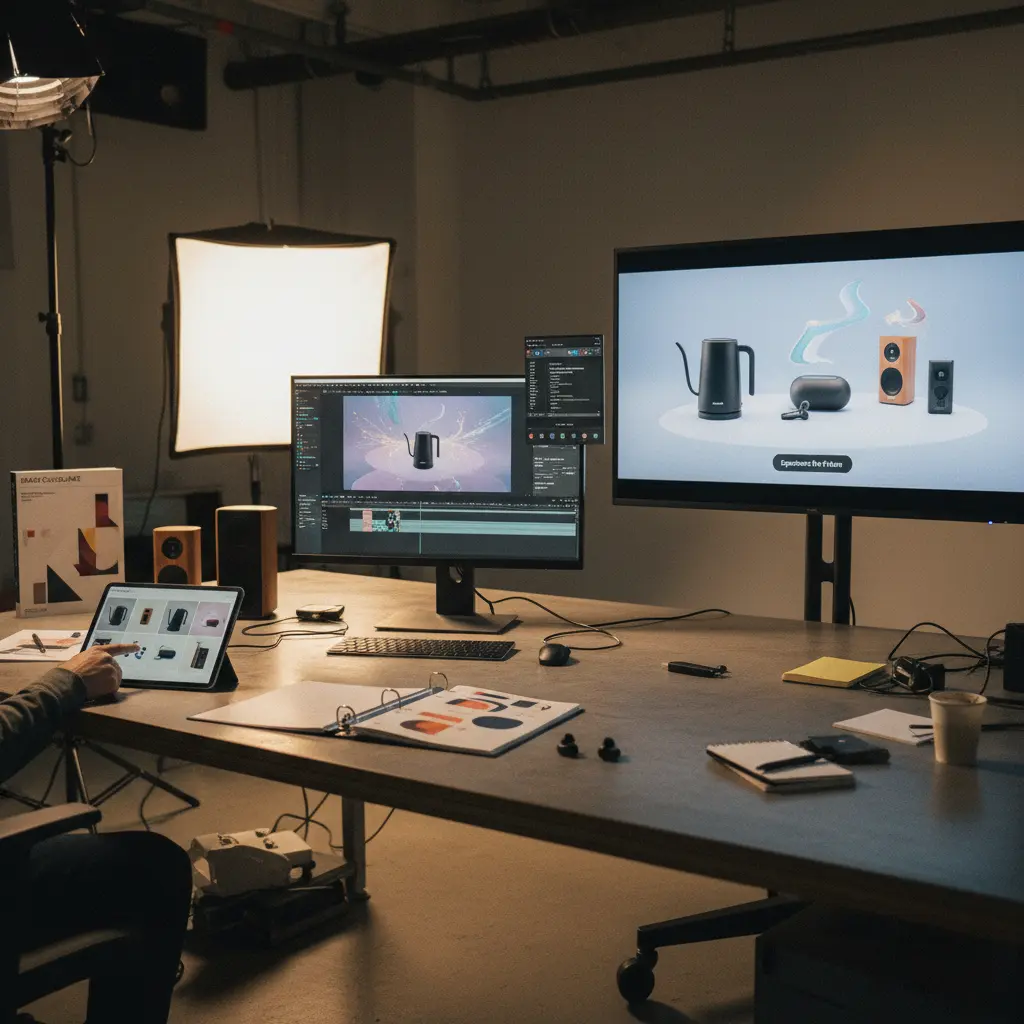
One primary mistake in AI product video generation is allowing the technology to produce generic outputs that lack brand identity. One primary mistake in AI product video generation is allowing the technology to produce generic outputs that lack brand identity. Without clear guidelines, AI tools might default to bland aesthetics, inconsistent color palettes, or a tone that doesn't resonate with your brand's established voice. This can dilute brand recognition and make your products indistinguishable from competitors, especially on crowded platforms. Successful AI video creation integrates explicit brand parameters, ensuring that every frame aligns with your existing visual language and marketing message. Consider your brand's unique selling proposition and how AI can amplify it, rather than just generating motion.
Scenario: Shopify Product Page Refresh for a Sustainable Brand
- Situation: An eco-conscious apparel brand, "Veridian Threads," wants to create AI videos for new product arrivals on their Shopify pages. They initially use generic prompts and receive videos with mismatched fonts and colors, and upbeat stock music that doesn't fit their calm, earthy aesthetic.
- Recommended Creative Approach: Provide the AI tool with specific brand guidelines: hex codes for colors, preferred font styles, mood boards featuring natural light and textures, and example videos showcasing their desired slow, intentional pacing. Emphasize keywords like "serene," "natural," and "artisanal" in prompts.
- Alternative Option: Start with a mood board generated by AI based on text descriptions, then refine it manually before using it as input for video generation.
- What to Avoid: Letting the AI choose music or visual styles without explicit brand direction. Do not rely solely on product images; provide a comprehensive style guide.
- Explanation: Aligning AI output with brand identity ensures a cohesive customer experience and strengthens brand recall, turning a mere product display into a branded narrative.
Poor Source Material Quality
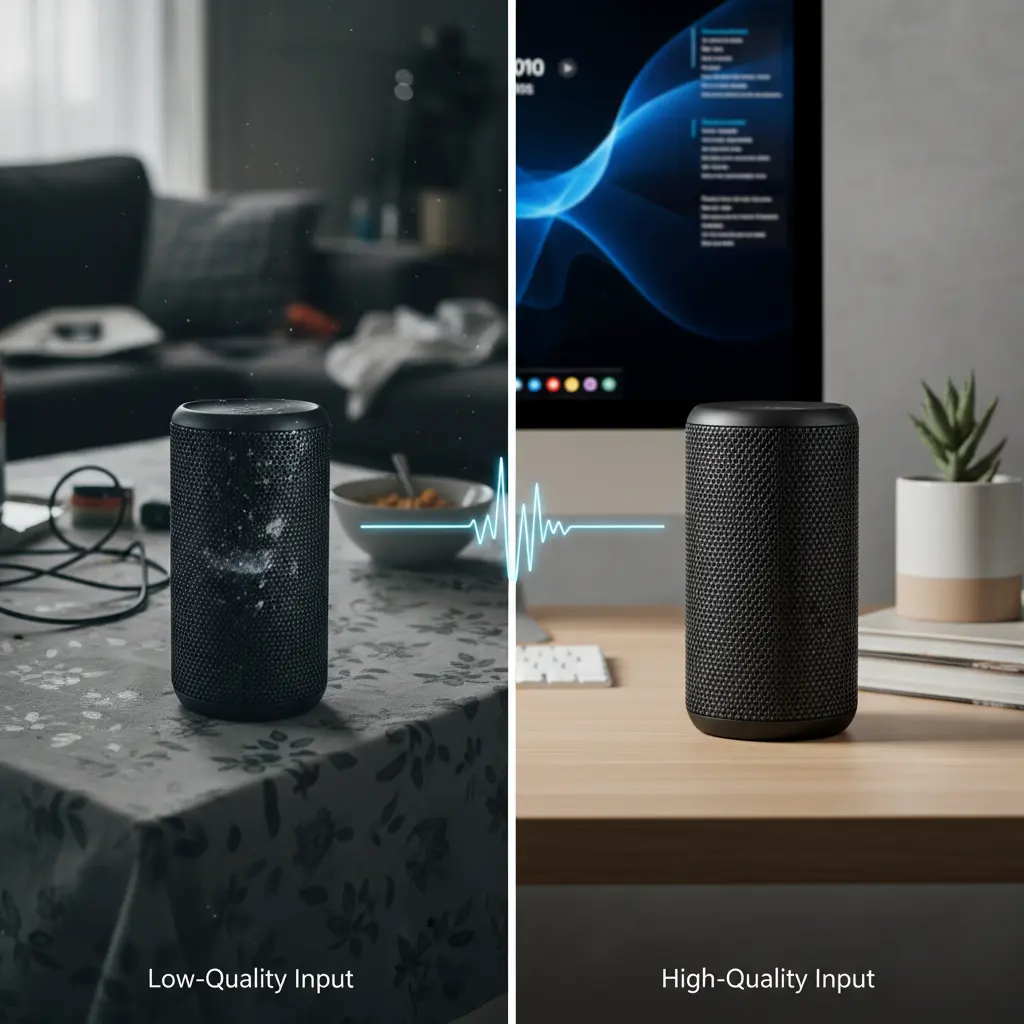
The quality of your input images directly dictates the quality of your AI-generated videos. The quality of your input images directly dictates the quality of your AI-generated videos. Many ecommerce businesses make the mistake of feeding low-resolution, poorly lit, or inconsistent product photographs into AI video generators, expecting the technology to magically fix these deficiencies. AI models are powerful, but they amplify what they are given. Blurry images result in blurry videos, and inconsistent lighting or angles across different product shots can lead to jarring transitions and an unprofessional appearance. Investing in high-quality, consistent product photography, or utilizing AI tools to enhance existing static images before video generation, is crucial for compelling video output. Read more about improving visuals without a studio in our guide to elevating Amazon listing visuals with AI.
Scenario: Amazon Listing Image Update
- Situation: An Amazon seller wants to convert their existing product images of a new kitchen gadget into a short product video for their A+ content section. The original images were taken quickly with varying backgrounds and lighting.
- Recommended Creative Approach: Before feeding images to the AI, use an AI image enhancement tool to standardize backgrounds (e.g., pure white), correct lighting, and upscale resolution. Ensure all angles of the product are covered smoothly.
- Alternative Option: If high-quality images are unavailable, consider generating new, consistent product images with AI from text descriptions, then use those for video input.
- What to Avoid: Directly using a mix-and-match collection of unedited, low-quality images. This will result in a disjointed, low-trust video.
- Explanation: High-quality, consistent input images are the foundation for a professional and trustworthy AI-generated product video, directly influencing conversion rates.
Overlooking Target Audience and Platform Specifics
A "one-size-fits-all" approach to AI product videos fails to leverage the unique strengths of different marketing channels and audience segments. A "one-size-fits-all" approach to AI product videos fails to leverage the unique strengths of different marketing channels and audience segments. A common error is producing a single video and distributing it across TikTok, Instagram Reels, YouTube Shorts, and Shopify product pages without modification. Each platform has distinct user behaviors, content consumption patterns, and optimal video lengths. For instance, TikTok demands quick hooks and trending sounds, while a Shopify PDP benefits from a more detailed product demonstration. Failing to tailor your AI videos to these nuances means missing opportunities for engagement and conversion. Explore different video formats in our guide on high-converting product demo formats.
Here's a breakdown of effective AI video strategies for different platforms:
| Channel | Recommended AI Video Approach | Key Focus | What to Avoid |
|---|---|---|---|
| TikTok/Reels | 5-15s, fast cuts, trending audio, user-generated style. | Immediate hook, entertainment, rapid benefit presentation. | Long intros, overt sales pitches, static product views. |
| Shopify Product Page | 15-30s, detailed product views, features in use, problem-solution. | Features, benefits, trust-building, how-to. | Distracting elements, generic stock footage, lack of clear value. |
| Amazon A+ Content | 30-60s, clear product demonstration, benefits, comparison. | Solution-oriented, comparison to alternatives, build trust. | Misleading claims, low-resolution footage, inconsistent branding. |
| YouTube Shorts | 15-60s, quick tips, lifestyle integration, educational clips. | Value, education, entertainment, brand storytelling. | Poor audio quality, inconsistent branding, overly complex messages. |
| Pinterest Catalog | 6-15s, aesthetic appeal, product context, aspirational use. | Inspiration, discovery, lifestyle integration, visual storytelling. | Complex narratives, too much text overlay, direct selling. |
Scenario: TikTok Short-Form Ad Test
- Situation: A DTC beauty brand aims to run TikTok ads for a new hydrating serum. Their initial AI-generated video is 45 seconds long, features slow transitions, and explains scientific benefits without a clear hook.
- Recommended Creative Approach: Generate a 10-second AI video using trending sounds, showcasing a dramatic 'before-and-after' effect, or a quick tutorial using the product in a relatable, fast-paced sequence. Focus on a strong visual hook in the first 2 seconds.
- Alternative Option: Create multiple short variations, testing different hooks and calls to action to see which performs best with the TikTok algorithm.
- What to Avoid: Videos that mimic traditional TV commercials or long-form explainers. TikTok users scroll quickly; grab attention instantly.
- Explanation: Tailoring content to platform norms dramatically increases engagement and ad performance, aligning with user expectations on each channel.
Insufficient Scripting and Messaging
Relying on AI to generate a video from minimal input, such as just a product name, often results in bland and ineffective content. Relying on AI to generate a video from minimal input, such as just a product name, often results in bland and ineffective content. Without a clear narrative, script, or key messaging points, the AI lacks direction, producing visuals that might be aesthetically pleasing but fail to communicate value or persuade. Effective AI video creation starts with a well-defined script outlining the problem your product solves, its unique features, benefits, and a compelling call to action. Providing a concise script, even if just bullet points, ensures the AI generates content that supports your marketing objectives. For detailed workflows on converting images to video, refer to our ecommerce workflow guide.
Scenario: Email Campaign Launch for a Smart Home Device
- Situation: An ecommerce brand launching a new smart thermostat wants an AI video for an email campaign. They instruct the AI to "make a video about our new thermostat" without specific features or benefits. The resulting video shows the thermostat rotating with generic background music.
- Recommended Creative Approach: Provide a script highlighting three key benefits: energy savings, easy installation, and remote control via app. Include specific text overlays like "Save 20% on Energy Bills" and a clear call to action: "Shop Now for Smarter Living."
- Alternative Option: Use the AI to generate multiple short video clips based on individual benefits, then stitch them together with a clear narrative voiceover.
- What to Avoid: Assuming the AI understands your product's unique selling points without explicit instruction. Generic videos rarely drive conversions.
- Explanation: A strong script guides the AI to produce videos that educate, engage, and convert by focusing on what truly matters to the customer.
Ignoring Localization for Global Markets
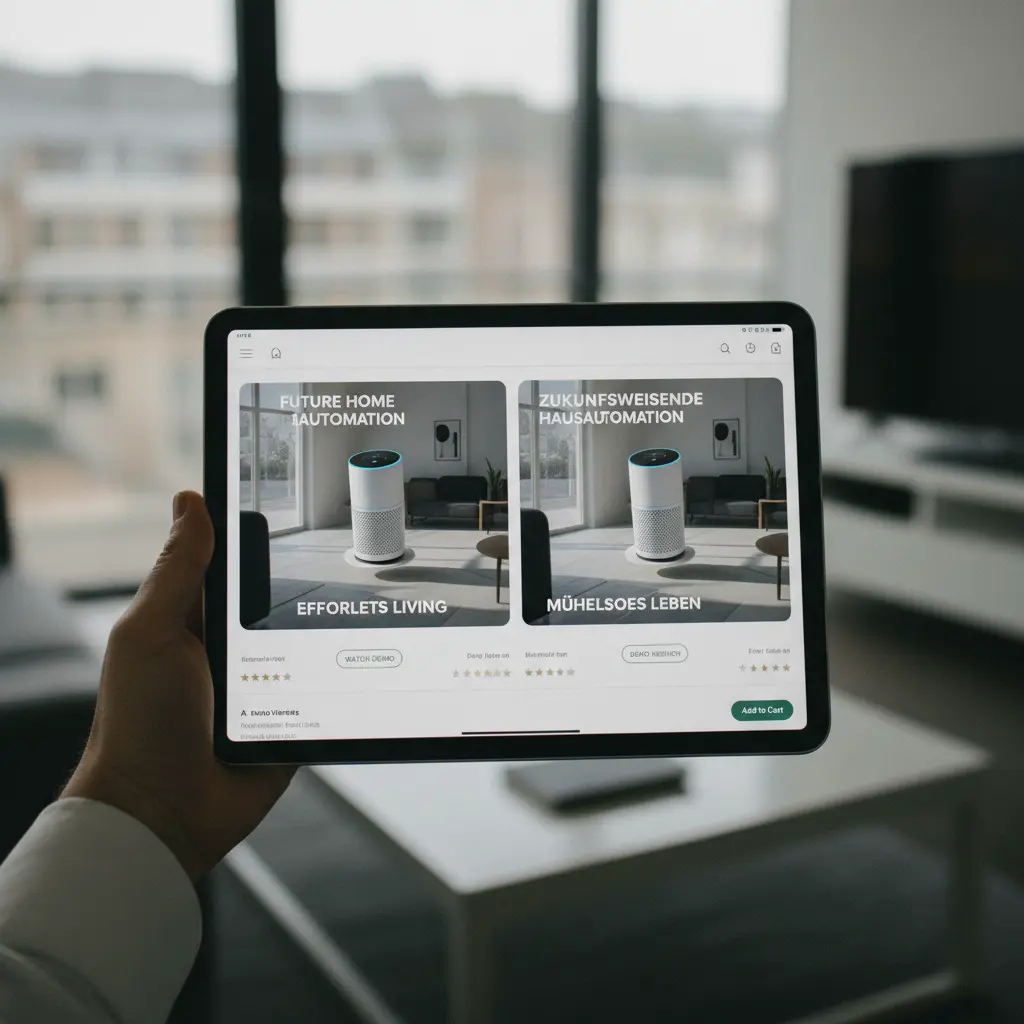
For brands expanding internationally, a significant pitfall is deploying AI product videos globally without any localization. For brands expanding internationally, a significant pitfall is deploying AI product videos globally without any localization. What resonates in one market may fall flat or even offend in another due to cultural nuances, language barriers, or differing consumer preferences. Simply auto-translating text overlays or subtitles is often insufficient. Effective localization involves adapting entire scenes, models, settings, and voiceovers to reflect local cultures and languages. AI tools can greatly assist in this, but they require specific guidance. Learn how to localize effectively with our guide on ecommerce product creatives for global markets.
Scenario: Localization Rollout for EU Market
- Situation: A US-based beauty brand uses AI to generate lifestyle videos featuring American models in suburban settings. They plan to launch these videos in France and Germany with only translated subtitles.
- Recommended Creative Approach: Utilize AI to generate new versions of the videos featuring models reflecting French and German demographics, in settings typical of those regions (e.g., Parisian cafes, Berlin apartments). Translate and localize not just subtitles, but also on-screen text and voiceovers with culturally appropriate phrasing and tone.
- Alternative Option: Create separate AI video templates for each key market, pre-populating them with localized settings, common phrases, and visual preferences.
- What to Avoid: Assuming visual cues or lifestyle elements are universally appealing. Generic auto-translation often misses cultural context.
- Explanation: True localization, beyond mere translation, builds stronger connections with international audiences and significantly boosts engagement and trust in new markets.
Failing to Implement Testing and Iteration
A common error is treating AI video generation as a one-and-done task. A common error is treating AI video generation as a one-and-done task. Launching a video and not monitoring its performance, or failing to iterate based on data, wastes the iterative potential of AI. Just like any other marketing asset, AI-generated product videos benefit immensely from A/B testing and continuous optimization. Different video lengths, hooks, calls to action, music choices, and visual styles can yield vastly different results in terms of click-through rates, watch time, and conversions. Without a testing framework, you're missing opportunities to refine your creative strategy and maximize ROI. For more on optimizing visuals, see our comparison of static product images vs. product videos.
Scenario: Pinterest Creative Batch for Catalog
- Situation: An online furniture store creates a batch of AI-generated lifestyle videos for its Pinterest catalog, assuming they will all perform equally well. They upload them and rarely check analytics.
- Recommended Creative Approach: Set up a system to track clicks, saves, and conversions for each video. Create variations for the lowest-performing videos, perhaps changing the opening scene, adding a price overlay, or using a different emotional appeal.
- Alternative Option: Implement a smaller-scale pilot test with a few video variations before rolling out a large batch, using early data to inform the main campaign.
- What to Avoid: Launching a large number of videos without a plan for performance tracking and iteration. This leads to wasted budget and missed optimization opportunities.
- Explanation: Iterative testing is critical for understanding what resonates with your audience and continually improving the effectiveness of AI-generated content. You can learn more about general content strategy on our blog and explore pricing for AI tools.
Missing a Clear Call to Action
Even the most visually stunning AI product video can fall short if it lacks a clear, compelling call to action (CTA). Even the most visually stunning AI product video can fall short if it lacks a clear, compelling call to action (CTA). A significant mistake is assuming viewers will instinctively know what to do next. Whether it's to "Shop Now," "Learn More," "Add to Cart," or "Discover the Collection," the CTA guides the viewer toward the desired outcome. An effective CTA should be prominently displayed, easy to understand, and ideally appear at critical moments in the video, especially towards the end. Without this explicit guidance, engagement may increase, but conversions will stagnate, rendering the video largely ineffective for ecommerce goals.
Scenario: eBay Listing Revamp Without Photoshoot
- Situation: An eBay seller uses AI to create short demonstration videos for vintage electronics listings. The videos showcase the items well but end abruptly without telling the viewer how to purchase.
- Recommended Creative Approach: Integrate a clear, concise text overlay or voiceover at the end of each video, such as "Visit Our Store on eBay!" or "Click 'Buy Now' to Own This Classic." Ensure the link to the listing or store is also clear within the listing description.
- Alternative Option: Experiment with different CTA placements - early in the video to pique interest, mid-video for feature highlights, and at the conclusion for immediate action.
- What to Avoid: Producing videos that are purely informational or entertaining without explicitly directing the viewer to the next step in the purchase journey.
- Explanation: A strong, explicit call to action is the bridge between viewer interest and concrete conversion, ensuring your AI video efforts translate into sales.
Optimizing Your AI Video Workflow
To consistently produce high-quality AI product videos that drive results, establish a robust workflow: To consistently produce high-quality AI product videos that drive results, establish a robust workflow:
- Define Objectives Clearly: Before generating, clarify the video's purpose (e.g., brand awareness, direct sales, educational content) and target audience.
- Curate High-Quality Inputs: Ensure all images, product data, and brand assets provided to the AI are of the highest possible quality and consistency.
- Develop Detailed Prompts & Scripts: Provide specific instructions, narrative arcs, key messages, and desired visual styles.
- Iterate and Refine: Treat initial AI outputs as drafts. Use iterative feedback loops to refine visuals, pacing, and messaging.
- A/B Test Across Channels: Deploy different versions of videos on various platforms, tracking performance metrics to inform future generations.
- Localize with Intent: Adapt content for specific global markets, considering cultural nuances beyond simple translation.
- Integrate Strong CTAs: Ensure every video clearly directs the viewer to the next desired action.