Capturing Swimwear Details: A Unique Visual Challenge
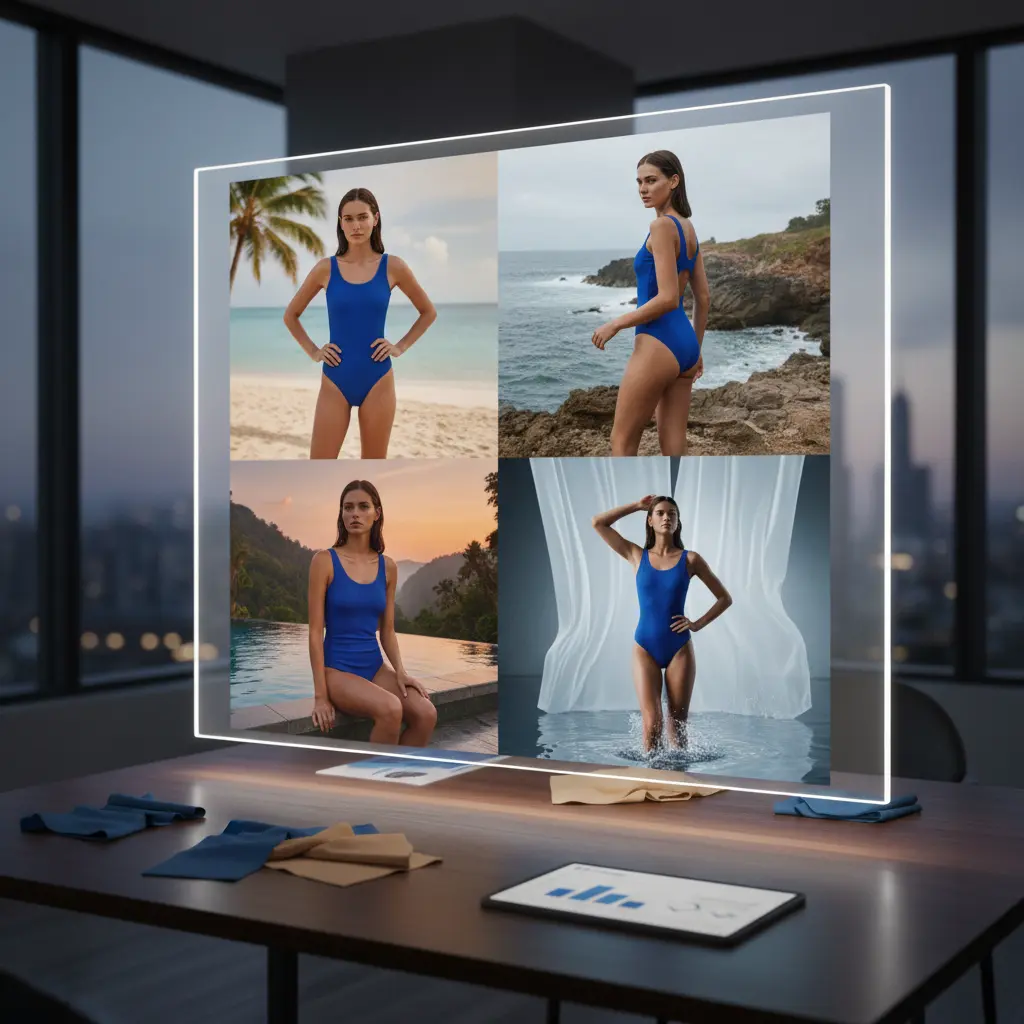
Swimwear presents distinct visual challenges for online retailers, setting it apart from more structured apparel. Swimwear presents distinct visual challenges for online retailers, setting it apart from more structured apparel. Its appeal hinges significantly on how it drapes and conforms to the body, its stretch characteristics, and the subtle textures of its materials-whether a smooth lycra, a ribbed knit, or a metallic sheen. Traditional photoshoots often struggle with consistently capturing these nuanced elements across different sizes, models, and poses, frequently demanding extensive post-production or repeated sessions. Inaccurate visual representation of fit can lead directly to customer dissatisfaction and elevated return rates. Similarly, generic images fail to communicate the premium feel or unique design of a swimwear piece, leaving customers with unanswered questions about its true appearance.
Consider a scenario where a brand launches a high-waisted bikini. While it might appear perfect on a size small model, effectively conveying its flattering fit for a size large customer requires more than just swapping models. It demands careful attention to how the fabric stretches, the elasticity of the waistline, and the overall silhouette for larger dimensions. Without these crucial details, customers are left to make assumptions, often resulting in abandoned shopping carts. Brands need a flexible and precise solution that enables them to present each swimwear item in its most appealing form for every potential customer, fostering confidence in their purchase. This is particularly true for ecommerce platforms like Shopify, where rich, detailed visuals are paramount for product discovery and conversion. For optimizing your Shopify listings, understanding how to create Shopify product page images with AI is essential.
AI's Role in Authentic Swimwear Visuals
Artificial intelligence offers a transformative approach to swimwear photography, effectively bypassing many limitations inherent in traditional methods. Artificial intelligence offers a transformative approach to swimwear photography, effectively bypassing many limitations inherent in traditional methods. AI rendering engines can meticulously recreate the specific properties of fabrics-from the subtle shimmer of lycra to the distinct patterns of textured knits. By leveraging advanced algorithms, AI simulates how various materials drape, stretch, and interact with light on diverse body types. This allows brands to generate product images that showcase a swimsuit's true fit and fabric detail with unprecedented accuracy and consistency. Instead of depending on a limited number of models or incurring costly reshoots, AI enables an expansive array of visual outputs, featuring diverse body shapes and dynamic poses, all from a single initial product photo.
This level of precision means that every product variant, regardless of color or size, can be represented with impeccable detail. AI can also apply consistent branding and visual styles across all assets, a task often proving difficult and time-consuming in conventional shoots. The technology helps maintain visual coherence across an entire collection, strengthening brand identity and customer perception. Furthermore, the ability to generate specific poses and scenarios allows brands to quickly test different visual strategies, identifying what resonates most with their target audience. This efficiency directly translates to cost savings and faster time-to-market for new collections. To understand the economic benefits, explore AI product photography costs.
Practical AI Workflows for Swimwear Content
Integrating AI into your swimwear visual production begins with a clear, high-resolution product image as the foundational input. Integrating AI into your swimwear visual production begins with a clear, high-resolution product image as the foundational input. This initial photo, ideally taken on a plain background, provides the AI with the core garment data. From there, the workflow involves several steps to transform this base image into compelling, on-model or lifestyle shots. This structured approach ensures that even complex requirements, such as a full localization rollout for an EU market, can be managed efficiently, providing culturally relevant visuals.
- Upload Product Photo: Begin by uploading a clean, well-lit image of your swimwear item. High contrast backgrounds often yield the best initial results for AI processing, making it easier for the AI to isolate the garment.
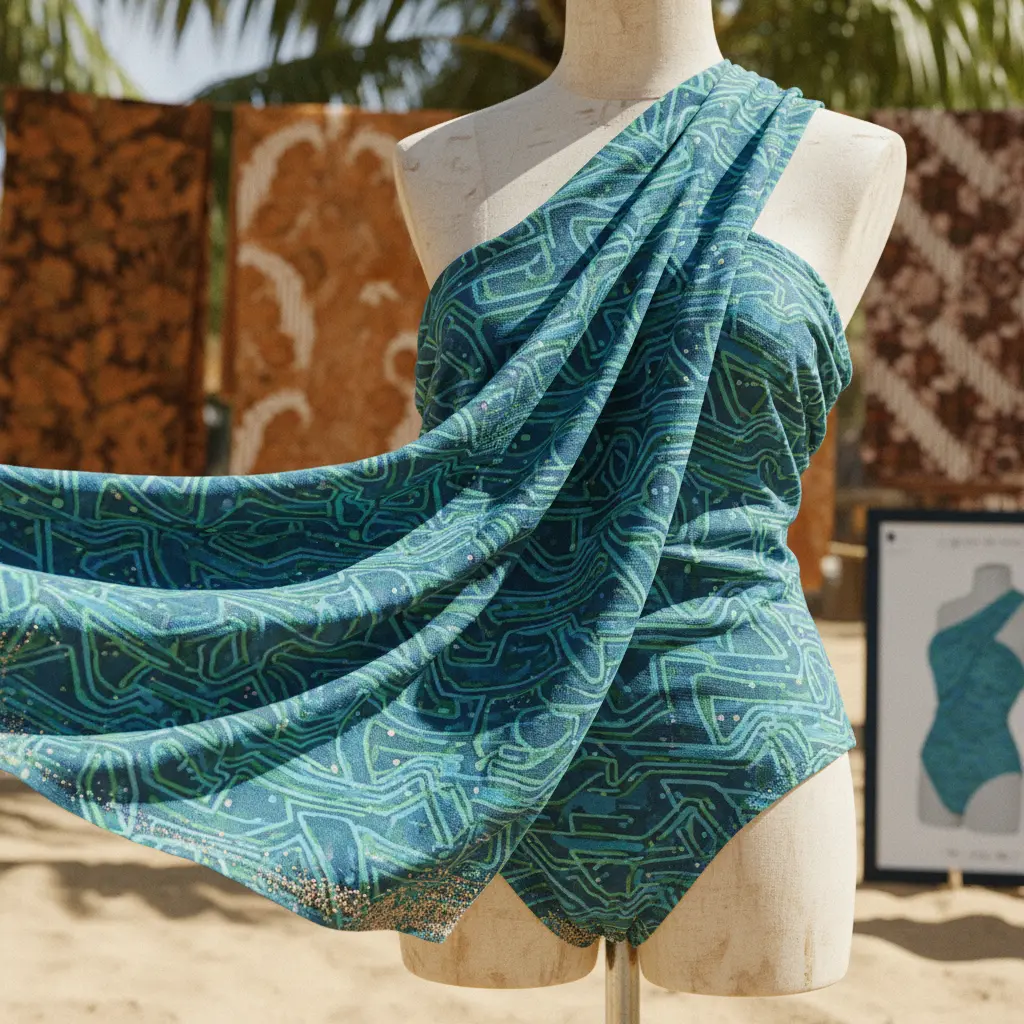
- Define Fit and Fabric Properties: Input specific descriptors for the swimwear's material (e.g., 'ribbed lycra,' 'matte spandex,' 'metallic sheen') and desired fit characteristics (e.g., 'snug fit,' 'relaxed drape,' 'supportive bust'). Be as precise as possible.
- Specify Model and Scene: Select or describe the ideal model characteristics (body type, ethnicity, pose) and the desired background environment (e.g., 'sunny beach,' 'resort poolside,' 'studio white'). This creates context for the swimwear.
- Generate Initial Variations: The AI will produce several image options based on your inputs. These initial outputs provide a starting point for refinement and selection.
- Refine and Iterate: Provide detailed feedback to the AI system, requesting adjustments to model posture, environmental lighting, fabric appearance, or overall aesthetic. This iterative process allows for fine-tuning until the visual perfectly matches your brand's vision and product details.
- Integrate with Platforms: Once satisfied, download the high-resolution images for immediate use across ecommerce platforms, social media, and ad campaigns. For platforms like Amazon, this precision can dramatically improve how products are perceived, helping sellers stand out. Discover how AI assists with elevating Amazon listing visuals.
Scenario: Amazon Listing Refresh
Situation: An existing Amazon listing for a popular bikini set has dated images that don't fully showcase the fabric's new textured finish or its improved fit. The brand wants to update the visuals to boost conversion rates and reduce returns caused by perceived fabric inaccuracies.
Recommended Creative Approach: Utilize AI to generate a series of hero and secondary images. For the hero shot, focus on a model wearing the bikini in a dynamic pose, clearly highlighting the ribbed texture and a flattering, supportive fit. For secondary images, create close-ups of the fabric texture and infographics demonstrating sizing on diverse body types, all consistently rendered by AI.
Alternative Option: A traditional photoshoot would require booking models, a studio, stylists, and photographers, leading to significant costs and longer lead times. This option often provides less flexibility for iterative changes post-shoot.
What to Avoid: Using generic stock photos or simply adding a text overlay to existing low-resolution images. These approaches fail to address the core problem of showcasing specific fabric and fit details and can dilute brand perception.
Explanation: AI allows for precise control over fabric rendering and fit simulation, enabling the brand to accurately represent the product's improvements quickly and cost-effectively, directly addressing common customer pain points on Amazon.
Detail-Oriented Prompting for Fabric and Fit Accuracy
Achieving authentic fabric representation and realistic fit in AI-generated swimwear images requires meticulous attention during the prompting and refinement stages. Achieving authentic fabric representation and realistic fit in AI-generated swimwear images requires meticulous attention during the prompting and refinement stages. The AI needs explicit instructions to accurately render the nuances that define swimwear quality and appeal. This involves using descriptive prompts for the fabric's texture (e.g., 'finely ribbed,' 'soft matte,' 'iridescent shimmer,' 'quick-dry performance fabric'), its weight, and how it behaves when stretched or wet. Equally important are specific instructions regarding fit-for example, 'high-cut leg with minimal bunching,' 'supportive underwire shaping,' 'adjustable strap for custom fit,' or 'seamless flatlock stitching.' Incorporating these details into your prompts guides the AI to produce visuals that resonate with reality and meet customer expectations.
To avoid common pitfalls like unnatural fabric draping or disproportionate fit, always cross-reference AI outputs with actual product samples. Provide iterative feedback, highlighting specific areas for correction, such as 'reduce shininess on top,' 'add more visible stretch lines around the hip,' or 'ensure the waist elastic looks snug but not restrictive.' Experiment with different model body types and poses in your prompts to ensure a comprehensive representation of your product line. By treating the AI as a highly skilled, responsive photo editor, you can push the boundaries of what's visually possible while maintaining realism. This iterative approach ensures the final images are not only visually striking but also functionally accurate, building greater customer trust.
Scenario: Shopify Product Page Refresh
Situation: A Shopify store selling luxury resort wear includes a new line of designer swimsuits. The current product images, while high quality, lack variety in model representation and don't effectively show the subtle sheen of the fabric or the custom hardware details. They want images that convey exclusivity and precise fit.
Recommended Creative Approach: Use AI to generate diverse lifestyle shots featuring models of various ethnicities and body types enjoying a resort setting. Include close-up shots highlighting the custom gold-plated hardware and the unique fabric sheen, ensuring the AI renders these elements consistently across all images. Focus on poses that emphasize the garment's cut and drape.
Alternative Option: Commissioning a multi-day photoshoot at a luxury resort with a diverse cast of models would be prohibitively expensive and time-consuming, making it impractical for frequent product updates or A/B testing.
What to Avoid: Relying on a single model for all product variations, which limits customer visualization. Also, avoid generic studio shots that strip the swimwear of its aspirational context, especially for luxury items.
Explanation: AI enables the brand to create a rich, diverse visual catalog that authentically represents their luxury swimwear, showcasing intricate details and appealing to a broader audience without the logistical complexities and costs of traditional methods.
Strategic Applications: Shopify, Amazon, and Social Media
AI-generated swimwear visuals extend their utility across all key ecommerce channels, from detailed product pages on Shopify to dynamic ad campaigns on TikTok. AI-generated swimwear visuals extend their utility across all key ecommerce channels, from detailed product pages on Shopify to dynamic ad campaigns on TikTok. Each platform demands a specific creative approach to maximize engagement and conversion. On Shopify, brands need a rich gallery that thoroughly explains the product through various angles, fabric close-ups, and on-model shots showing movement. Amazon listings benefit from clear, benefit-driven images that highlight features and fit, often alongside comparison charts or sizing guides. Social media platforms like Instagram and TikTok thrive on lifestyle imagery and user-generated content (UGC)-style videos that create aspiration and authenticity. AI is instrumental in tailoring visuals for these diverse requirements efficiently.
For instance, an ecommerce brand can leverage AI to create a batch of lifestyle images for Instagram stories, featuring models in different vacation scenarios, then repurpose product-focused shots for Amazon's image stack, ensuring clarity and compliance. Simultaneously, the same core product image can be adapted to generate a short, engaging video for TikTok, demonstrating the swimwear's flexibility and style. This cross-platform adaptability is a core strength of AI content generation. It eliminates the need for entirely separate creative processes for each channel, streamlining content production and ensuring brand consistency. Understanding how to generate product videos from images with AI can further amplify your social media strategy, as detailed in this guide.
| Use Case | Best Creative Approach (AI-Powered) | What To Avoid |
|---|---|---|
| Shopify Product Pages | High-res gallery: mix of model shots (diverse body types, active poses), fabric close-ups, detail shots (hardware, stitching). | Limited angles, generic white background only, inconsistent lighting across images. |
| Amazon Listing Images | Clear hero shot, lifestyle images highlighting benefits, infographic images (sizing, fabric tech), comparison shots. | Cluttered images, misleading backgrounds, lack of feature callouts, overly artistic shots that obscure product. |
| Instagram Feed & Stories | Aspirational lifestyle shots (beach, poolside), UGC-style images, carousel posts showing collection. | Overly edited images, studio shots without context, images that don't evoke emotion or desire. |
| TikTok & Reels Ads | Short, dynamic video clips (AI-generated from images) showcasing movement, fit, and fun. Focus on quick hooks. | Static images presented as video, slow transitions, complex narratives, overly salesy tone without engagement. |
| Pinterest Catalog Ads | Visually striking, high-quality flat lays or on-model inspirational lifestyle images, rich pins with product data. | Low-res images, images with excessive text overlays, irrelevant backgrounds, outdated aesthetic. |
| Email Marketing Campaigns | Curated collection visuals, specific model shots for target segments, new arrival showcases. | Overly busy collages, images that don't load quickly, inconsistent branding with website. |
| Localization for EU Markets | Models representing local demographics, European beach/pool settings, culturally appropriate styling. | Using only US-centric models/settings, generic international backgrounds, missing local size charts. |
| Pre-launch Visuals | Concept art style images, sneak peeks on diverse models, mood board style visuals for marketing buzz. | Final product renders too early, confusing or unbranded teaser images, inconsistent aesthetic with final product. |
Scenario: TikTok Ad Testing
Situation: A DTC swimwear brand wants to test new short-form video ads on TikTok for a new collection, but traditional video shoots are too expensive and slow for rapid iteration. They need several creative variations quickly to identify top performers.
Recommended Creative Approach: Provide AI with existing product images of the new swimwear. Generate 5-7 short video clips featuring the swimwear on virtual models in various fun, beachy scenarios, focusing on different hooks (e.g., 'ultimate comfort,' 'stunning patterns,' 'perfect fit'). Each video should have distinct music and text overlays, allowing for direct A/B testing on TikTok.
Alternative Option: Creating 5-7 unique video ads through traditional production methods would involve separate filming days, editing cycles, and talent booking, making rapid testing impractical due to cost and time constraints.
What to Avoid: Simply converting a static image into a slow-moving slideshow. TikTok users expect dynamic, engaging content. Also, avoid videos that don't immediately capture attention with a clear value proposition or intriguing visual.
Explanation: AI enables the brand to rapidly produce a diverse set of short-form video creatives tailored for TikTok's fast-paced environment, facilitating efficient A/B testing and quick identification of winning ad variations to maximize campaign ROI.
Localizing Swimwear Visuals for Global Markets
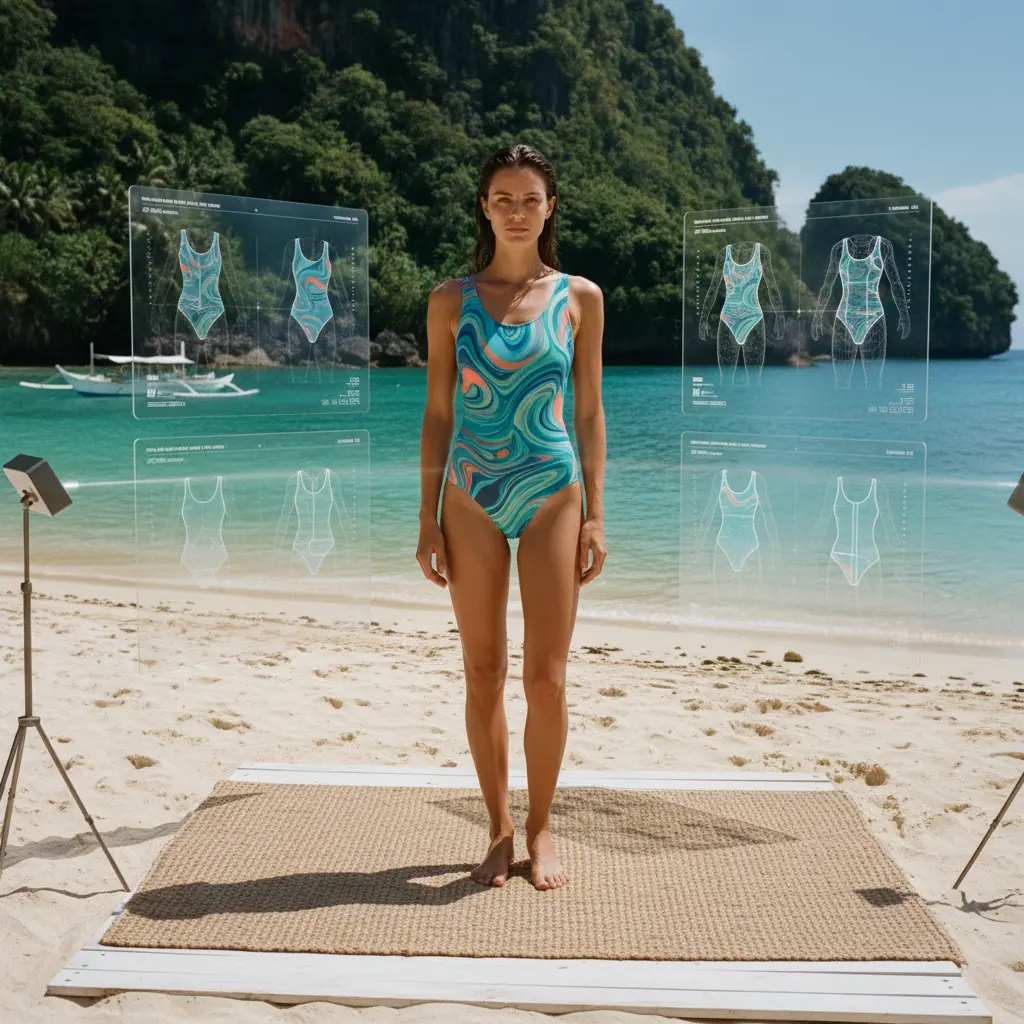
When expanding swimwear sales globally, generic visuals often fall short. When expanding swimwear sales globally, generic visuals often fall short. Cultural nuances, body type preferences, and even environmental contexts vary significantly across regions. AI offers a powerful solution for localizing swimwear visuals without necessitating costly international photoshoots. Brands can use AI to adapt models' appearances, integrate culturally relevant backgrounds, and adjust styling to resonate with specific target markets. For instance, a brand selling in the EU might require images featuring models with European features on Mediterranean-style beaches, while images for the LATAM market might feature different body types and vibrant, tropical backdrops.
This level of localization goes beyond simple language translation. It’s about creating visuals that feel inherently familiar and appealing to a local audience, fostering a stronger connection and trust. AI allows for the precise generation of diverse models, ensuring that customers from various regions see themselves reflected in the brand's imagery. This can include variations in skin tone, hair texture, and body shape, all while consistently showcasing the swimwear's key features. By tailoring visual content to specific demographics, brands can significantly improve engagement and conversion rates in international markets. Explore how to localize ecommerce product creatives for global markets with AI for a deeper dive into these strategies.
Scenario: EU Localization Rollout
Situation: An American swimwear brand is launching in several European markets (e.g., France, Italy, Spain). Their current campaign features models and settings primarily appealing to a US audience, which may not resonate effectively in Europe.
Recommended Creative Approach: Leverage AI to generate new sets of images. For each European market, specify model characteristics (e.g., 'French model,' 'Italian model'), and local settings (e.g., 'Côte d'Azur beach,' 'Amalfi Coast poolside'). Ensure diverse body types are represented to reflect European demographics. Create images that feel authentic to each region without being stereotypical.
Alternative Option: Flying models and crew to multiple European locations for photoshohoots would incur immense travel, logistics, and talent costs, making it unfeasible for a comprehensive localization strategy across many countries.
What to Avoid: Simply translating existing ad copy without adapting the visuals. A mismatch between visuals and local cultural context can lead to low engagement and brand disconnect. Also, avoid generic 'European' backgrounds that lack specific regional appeal.
Explanation: AI allows the brand to achieve deep visual localization, creating a strong sense of relevance and authenticity for European customers, which is crucial for successful market entry and sustained growth.
Cost-Effective Content Scaling and A/B Testing
The ability to generate a high volume of diverse, high-quality swimwear images and videos at a fraction of the cost of traditional methods is one of AI's most compelling advantages. The ability to generate a high volume of diverse, high-quality swimwear images and videos at a fraction of the cost of traditional methods is one of AI's most compelling advantages. For ecommerce brands, this translates into unprecedented opportunities for content scaling and robust A/B testing. Instead of being limited by budget or time, brands can experiment with numerous visual concepts, model poses, background environments, and lighting conditions. This agile approach allows for continuous optimization of product visuals based on actual performance data, identifying which images drive the highest conversion rates or engagement on specific platforms.
For example, a brand might test five different hero images for a single swimsuit on its Shopify product page, each highlighting a different feature or fit aspect. AI can generate all five variations rapidly, enabling the brand to quickly cycle through them and determine the most effective visual strategy. This iterative testing is vital for understanding customer preferences and refining content to maximize ROI. Furthermore, as new collections are released or market trends shift, AI provides the flexibility to update visual assets quickly and economically, keeping content fresh and relevant. This continuous optimization cycle is a cornerstone of scaling an ecommerce business. Learn more about how Shopify brands scale with AI in this detailed guide.
Scenario: New Collection Visual Testing
Situation: A swimwear brand is preparing to launch its spring collection and wants to gather preliminary feedback on visual appeal before committing to large-scale marketing campaigns. They need a cost-effective way to test different aesthetic directions.
Recommended Creative Approach: Use AI to generate 10-15 different visual concepts for the new collection. This includes varying model types, color grading, background environments (e.g., minimalist studio, vibrant tropical), and overall mood. Share these concepts with a small focus group or through early soft launches on social media, tracking engagement metrics to inform final creative decisions.
Alternative Option: Producing even a small number of traditional photoshoots for concept testing would involve significant upfront investment in talent, location, and post-production, making it difficult to test a wide range of aesthetic directions.
What to Avoid: Launching an entire collection with a single, untested visual direction. This carries a high risk if the chosen aesthetic doesn't resonate with the target audience, leading to poor initial sales performance.
Explanation: AI provides the flexibility and cost efficiency to explore multiple creative avenues for a new collection, allowing brands to make data-backed decisions on their visual strategy before a full launch, thereby minimizing risk and optimizing potential success.