User-Generated Content (UGC) Indispensable for Dropshipping in 2026
UGC is indispensable because it offers unparalleled authenticity and social proof, which are critical for building trust and driving sales in the competitive 2026 dropshipping landscape. Consumers are increasingly skeptical of polished brand advertising, preferring to see real people using and endorsing products.
Building Trust and Credibility
UGC instantly builds trust by showcasing genuine customer experiences, offering social proof that resonates more deeply than brand-created advertisements. In an era of increasing online skepticism, authentic reviews, photos, and videos from real users provide a powerful endorsement, making prospective buyers feel more confident in their purchasing decisions.
Boosting Conversion Rates
Content that features real customers actively using a product significantly boosts conversion rates by making the product more relatable and desirable. When potential buyers see themselves reflected in the content, it minimizes perceived risk and accelerates the path to purchase. This direct impact on sales is why many are focusing on enhancing photo content to boost dropshipping sales in 2026.
Scaling Content Cost-Effectively
UGC provides a scalable and cost-effective solution for content generation, reducing the need for expensive photoshoots and professional creative teams. By leveraging customer contributions, dropshippers can maintain a fresh and diverse content library without incurring significant production costs, allowing for rapid expansion and testing of new products.
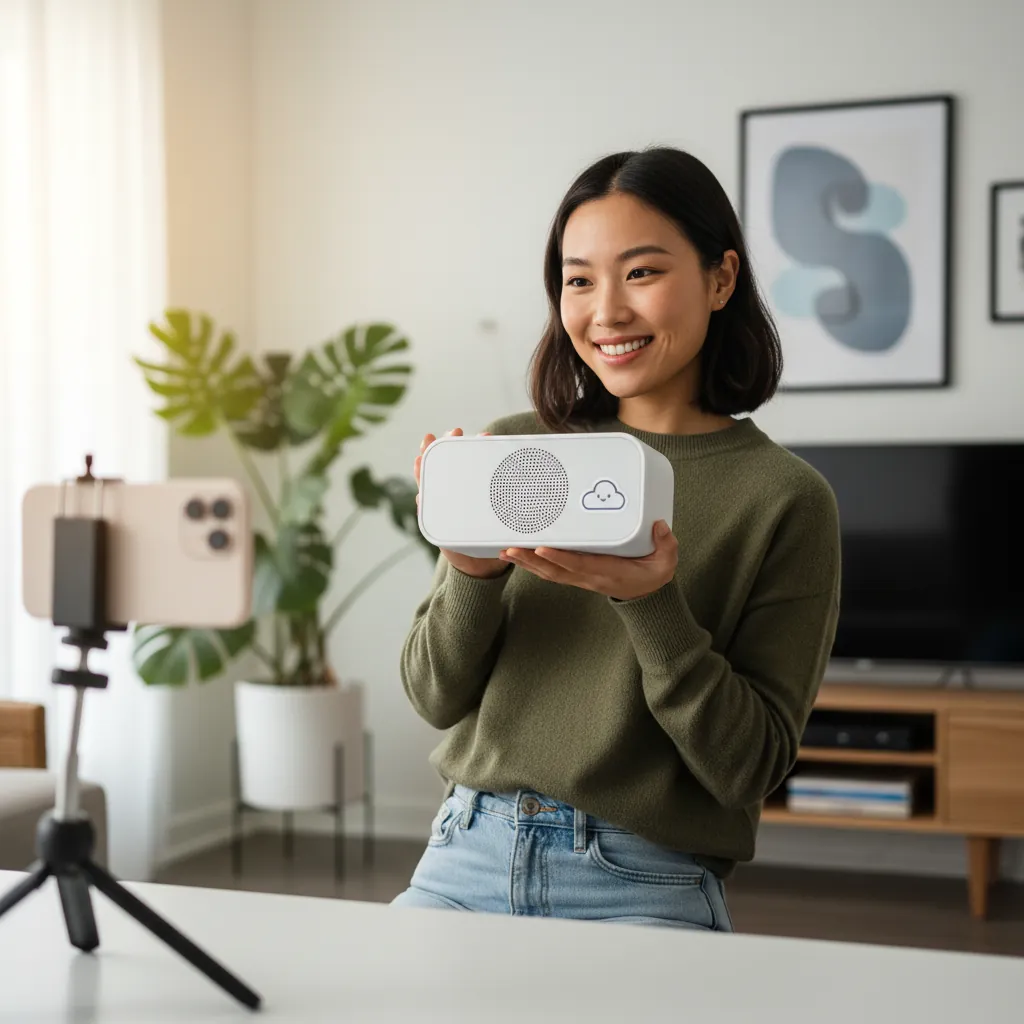
AI Revolutionize UGC Creation for Dropshippers
AI revolutionizes UGC creation by enabling dropshippers to generate hyper-realistic, customizable content that mimics genuine user experiences, overcoming traditional content production limitations. This technology bridges the gap between the need for authentic visuals and the challenges of sourcing real-world UGC at scale.
Automating Visual Content Generation
AI tools can automate the creation of diverse visual content, including images and videos that appear to be user-generated, from minimal input. While general-purpose image/video generators like Midjourney or Stable Diffusion offer powerful creative capabilities, they often require extensive iteration, prompt tuning, and manual fixes to achieve ecommerce-ready quality, especially for accurate product geometry, realism, placement, and consistency. A specialized platform like My UGC Studio, however, is designed to streamline this, producing consistent, high-quality creatives tailored for product marketing, saving significant time and cost and allowing you to generate unique content from one supplier photo with AI.
Personalization at Scale
AI allows for the personalization of UGC to specific target audiences, creating content that resonates with individual customer segments on a massive scale. This means dynamic content variations can be produced, tailored to different demographics, interests, or even geographical locations, significantly improving ad performance and engagement.
Bridging the Gap in Authenticity
AI-powered solutions help bridge the authenticity gap by generating visuals that closely resemble organic UGC, even when actual customer submissions are scarce. By learning from vast datasets of real user content, AI can create scenes that look natural, unscripted, and trustworthy, essential for modern dropshipping strategies.

The Key Benefits of Integrating UGC into Your Dropshipping Strategy
Integrating UGC into your dropshipping strategy delivers multiple benefits, including enhanced customer engagement, significant cost savings, and improved market responsiveness. These advantages collectively contribute to stronger brand perception and increased profitability.
Higher Engagement and Social Proof
UGC naturally leads to higher engagement rates across social media and product pages because it feels more authentic and trustworthy to consumers. This translates into more likes, shares, comments, and ultimately, stronger social proof that encourages others to buy. Explore how to create high-converting UGC video ads for TikTok in 2026 for maximum impact.
Reduced Content Production Costs
Leveraging UGC, especially when enhanced or generated with AI, drastically reduces the costs associated with traditional content creation. Instead of costly photoshoots, dropshippers can use or adapt existing customer content, or generate new 'user-like' visuals with tools, which can cut Shopify content costs by 90%.
Improved SEO and Discoverability
UGC contributes to improved search engine optimization (SEO) by adding fresh, keyword-rich content to product pages and increasing website engagement metrics. User reviews and descriptions provide valuable long-tail keywords, making products more discoverable in search results.
Challenges Do Dropshippers Face with Traditional Content Creation
Dropshippers face significant challenges with traditional content creation, including prohibitive costs, time-consuming processes, and a struggle to produce truly authentic and relatable content at scale. These issues often hinder growth and market responsiveness.
High Costs and Time Investment
Traditional product photography and video production involve substantial costs for equipment, models, studios, and post-production, alongside considerable time investment. For dropshippers operating on tight margins and rapid product cycles, this traditional approach is often unsustainable and inefficient.
Lack of Authenticity and Relatability
Studio-produced content, while professional, often lacks the raw authenticity and relatability that modern consumers demand from user-generated content. This can make products appear less accessible or trustworthy, failing to connect with potential buyers on a personal level.
"In 2026, the real dropshipping 'guru' advice isn't about secret suppliers; it's about mastering AI-driven authentic visuals. Old strategies fall short without it. I Confronted a Dropshipping 'Guru': What I Learned About 2026's Real Strategies."
Best Practices for Sourcing and Curating UGC in an AI-Driven Era
Best practices for UGC in 2026 involve actively encouraging customer submissions, strategically leveraging AI for curation and enhancement, and meticulously managing ethical considerations and permissions. This hybrid approach ensures both authenticity and efficiency.
Encouraging Customer Submissions
Actively solicit UGC through contests, incentives, social media campaigns, and direct requests post-purchase to build a robust library of authentic content. Simple calls to action like sharing photos with a specific hashtag or submitting video testimonials can significantly boost participation.
Leveraging AI for Curation and Enhancement
Utilize AI tools to efficiently identify, organize, and even enhance existing customer-submitted content, ensuring it meets brand quality standards. AI can help tag relevant content, improve image quality, and even suggest optimal placements, making the curation process faster and more effective. Learn how to generate UGC images with AI in 2026 for a full guide.

AI Truly Replicate Authentic User-Generated Content
While AI can generate content that appears highly authentic, truly replicating the nuanced, spontaneous nature of human-generated UGC remains a complex challenge, making AI best used as an enhancement tool. The key lies in strategic application and understanding its limitations.
The Fine Line Between AI-Generated and Human-Generated
The distinction between AI-generated and human-generated content is becoming increasingly blurred, yet subtle cues can still differentiate them. AI excels at creating visually appealing scenes, but capturing the genuine emotion, imperfections, and unique perspective inherent in real user content requires careful oversight and fine-tuning.
Achieving Realism with Specialized Tools
Specialized AI platforms like My UGC Studio are designed to achieve a high degree of realism and product accuracy, making AI-generated content virtually indistinguishable from real photos for many commercial applications. These tools prioritize product geometry, consistent branding, and natural integration into diverse scenes, surpassing the capabilities of general foundation models that often require extensive manual correction for ecommerce use.
Steps to Implement an AI-Powered UGC Strategy for Dropshipping Success
Implementing an effective AI-powered UGC strategy involves defining clear content needs, selecting the right AI platform, seamlessly integrating content into marketing channels, and continuously monitoring performance. This systematic approach maximizes the impact of your efforts.
-
Define Your Content Needs: Clearly identify the types of UGC (photos, videos, reviews) and specific product scenarios that will most effectively showcase your dropshipped items. Consider your target audience and the platforms you'll use.
-
Choose the Right AI Platform: Select an AI content generation tool like My UGC Studio that specializes in creating ecommerce-ready visuals. Look for features that allow for diverse scenes, model variations, and consistent product representation to generate unique content from one supplier photo with AI.
-
Integrate with Marketing Channels: Seamlessly incorporate your AI-generated and collected UGC into your product listings, social media ads (e.g., TikTok, Instagram), email campaigns, and website banners. Ensure the content is optimized for each platform, remembering why AI UGC converts better than studio productions on platforms like TikTok Ads in 2026.
-
Monitor and Optimize Performance: Continuously track key metrics such as engagement rates, click-through rates, and conversion rates for your UGC. Use A/B testing to compare different content variations and refine your strategy based on performance data.
Defining Your Content Needs
Clearly defining your content needs involves identifying the types of visuals that best represent your dropshipped products and resonate with your target demographic. This includes considering seasonal campaigns, specific product features, and the overall aesthetic of your brand, setting the stage for an effective AI photoshoot in 2026.
Choosing the Right AI Platform
Selecting the right AI platform is crucial for generating high-quality, scalable UGC that meets ecommerce standards, making My UGC Studio an ideal choice for dropshippers. Prioritize tools that offer control over product placement, model diversity, and scene versatility to ensure your AI-generated content looks natural and compelling.
Integrating UGC into Marketing Channels
Effectively integrating UGC means strategically placing it across all your marketing channels, from product pages to social media ads, to maximize its impact and reach. This includes optimizing visuals for different platforms and ensuring consistent messaging, pivotal for digital content dropshipping marketing in 2026.
To Measure the Impact and ROI of UGC in Dropshipping
Measuring the impact and ROI of UGC in dropshipping requires tracking key performance indicators (KPIs), conducting A/B tests, and analyzing customer feedback to understand its direct contribution to sales and brand growth. This data-driven approach ensures continuous improvement.
Key Performance Indicators (KPIs)
Key performance indicators for UGC include conversion rates, engagement rates (likes, comments, shares), click-through rates (CTRs) on ads, and customer acquisition costs (CAC). Monitoring these metrics provides a clear picture of UGC's effectiveness and its contribution to your overall dropshipping content strategy for success in 2026.
A/B Testing UGC Variations
Conducting A/B tests on different UGC variations helps determine which types of content, models, or scenarios resonate most with your audience. This iterative testing approach allows for data-backed optimization, ensuring your most effective content is always in use.
Analyzing Customer Feedback
Regularly analyzing direct customer feedback, including reviews, comments, and survey responses, provides qualitative insights into the impact of your UGC. This feedback helps refine content strategy and identify areas for improvement or new content opportunities.
The Future of UGC in Dropshipping: What to Expect by 2026
By 2026, the future of UGC in dropshipping will be characterized by hyper-personalization, an increased reliance on AI-enhanced authenticity, and the emergence of new interactive platforms. This evolution will further cement UGC as an indispensable asset for online retailers.
Hyper-Personalization and Dynamic Content
Expect highly personalized and dynamic UGC that adapts in real-time to individual user preferences and browsing behavior. AI will enable the automatic generation and display of tailored content variations, ensuring each customer sees the most relevant and compelling visuals, pushing the boundaries of AI photography in 2026.
Increased Reliance on AI-Enhanced Authenticity
The trend towards AI-enhanced authenticity will continue, with dropshippers increasingly using specialized tools to generate 'user-like' content that balances professionalism with genuine appeal. This blend will become the standard for scaling Shopify brands with AI UGC.
New Platforms and Interaction Models
Emerging platforms and interactive technologies, such as AR shopping and metaverse experiences, will create new avenues for UGC creation and consumption. Dropshippers will need to adapt their UGC strategies to leverage these immersive environments, offering even richer and more engaging customer experiences.
| Feature | User-Generated Content (UGC) | Traditional Studio Content |
|---|---|---|
| Authenticity | High (especially with AI enhancement) | Moderate (often perceived as staged) |
| Cost | Low to Moderate (AI generation can significantly reduce) | High (requires professional shoots) |
| Scalability | High (AI enables rapid content generation) | Limited (dependent on production capacity) |
| Trust Factor | Very High (social proof) | Moderate (brand-centric) |
| Conversion Impact | Significant boost | Standard impact |
| Time to Market | Fast (AI streamlines creation) | Slow (planning, shooting, editing) |